
 Search



 Pioneer of Tibet Tourism for Overseas Travelers since 1984!


The deep, calming sound of a Tibetan prayer bowl is one of the most memorable sounds you may encounter during a journey through Tibet. These traditional metal bowls have been used for centuries in Tibetan Buddhist practices, meditation, and spiritual rituals, creating a unique connection between sound, mindfulness, and inner reflection.
More than a simple musical instrument, Tibetan prayer bowls reflect the rich traditions and craftsmanship of Tibetan culture. Their long-lasting vibrations and distinctive tones offer travelers a glimpse into the spiritual side of Tibet and the meaning behind its ancient practices.
Let’s explore the traditions, craftsmanship, and cultural meanings behind Tibetan prayer bowls, and discover where you can experience them in Tibet.
What is a Tibetan Prayer Bowl?
A Tibetan prayer bowl is a traditional metal bowl used in Tibetan Buddhist religious and spiritual practices. They are traditionally made from a metal alloy of copper, tin, zinc, and iron.
Tibetan prayer bowls are widely known as singing bowls. The term “singing bowl” comes from the way the bowl seems to sing when the mallet moves around its edge. Instead of producing only one short note like a bell, the bowl creates a complex and lasting vibration.
Tibetan prayer bowls are traditionally used by Buddhist monks and meditation practitioners during meditation, prayers, and spiritual practices. You’ll commonly hear them at the start or end of meditation and as a way to mark transitions during religious rituals. The resonant chiming of the bowls adds to the spiritual atmosphere, helping worshippers focus their minds on meditation or prayer.
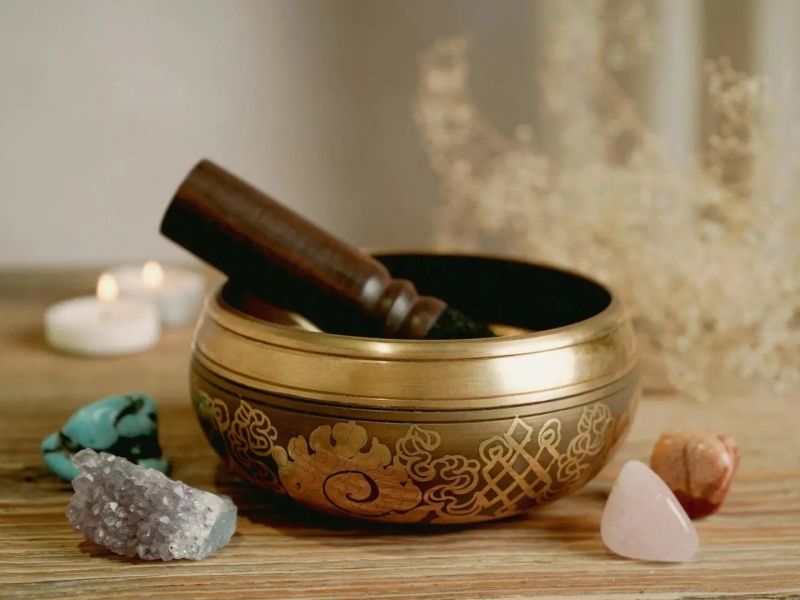 The Tibetan prayer bowl is a traditional ritual object used in Tibetan Buddhism.
The Sacred Sound of Tibetan Prayer Bowls: A Bridge Between Meditation and Spirituality
Tibetan Prayer bowls produce sounds in two primary ways. The bowl can be struck on the side with a mallet to produce a deep tone that rings out for up to 60 seconds. The mallet can also be rubbed along the rim to produce a long, resonant chime that can be sustained for much longer. Unlike a bell that produces only one note, prayer bowls create complex harmonic overtones.
These sounds help create a transition from ordinary daily activity into a quieter state of mind. The first sound of the bowl can serve as a signal to begin meditation. As the sound gradually fades, the listener is able to focus on their breathing and the present moment. This practice is also an important part of many Tibet meditation retreats, where you can experience traditional meditation techniques in a peaceful environment.
In Tibetan Buddhist traditions, sound has an important connection with prayer and spiritual practice. Mantras, prayers, chanting, bells, drums, and other ritual sounds are all part of the religious atmosphere found in Tibetan monasteries. Sound can help focus attention and create a sense of connection between the individual and the wider spiritual practice.
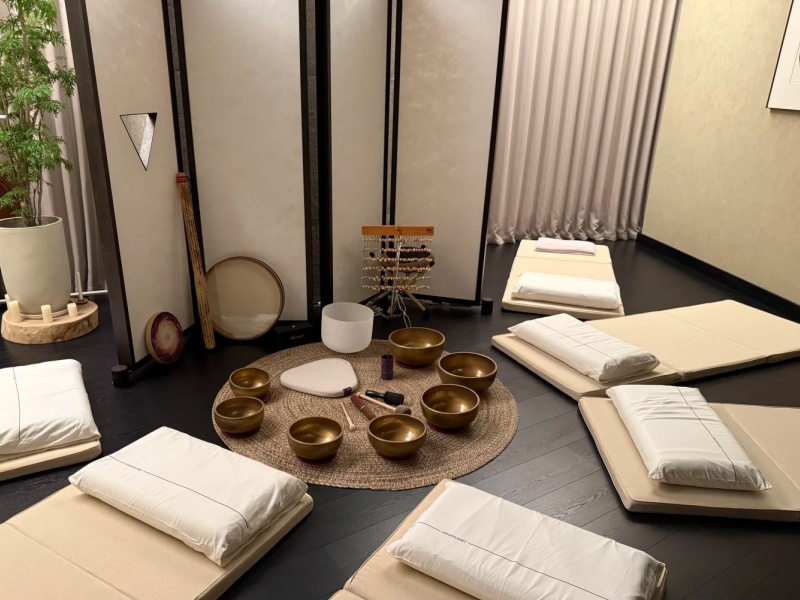 A serene indoor space prepared for Tibetan sound healing and meditation sessions.
How Tibetan Prayer Bowls Are Crafted: From Metal to Melody
The sound of a prayer bowl begins with its craftsmanship. Traditional bowls are made from metal and shaped through processes that may include heating, hammering, shaping, and polishing. As one of the traditional Tibetan handicrafts, prayer bowls reflect the skills and artistic traditions passed down through generations.
Handmade bowls show small variations in their surfaces. These imperfections reflect the traditional process used to create the bowl and give each one a unique sound.
Larger bowls produce deeper sounds at a lower pitch, while smaller bowls create higher tones. The thickness of the metal, the shape of the bowl, the materials used, and the craftsmanship all influence the final sound.
No two bowls sound alike, no matter how similar the appearance. The size, shape, and composition of the metals used change the character of the sound they produce. One may produce a warm, deep tone, while another may have a brighter or higher sound. When choosing a prayer bowl, it is done more by ear than by its appearance.
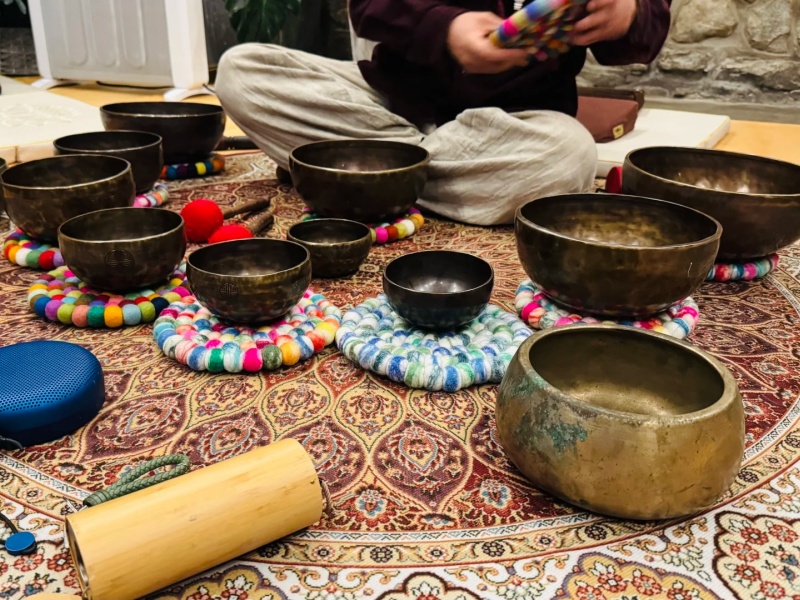 Handcrafted Tibetan prayer bowls in various sizes showcasing traditional artisan craftsmanship.
Where Can You Experience Tibetan Prayer Bowls in Tibet?
Visiting Tibetan monasteries is one of the most meaningful ways to experience Tibetan prayer bowls. Prayer halls and meditation spaces commonly use them as part of religious practices. Often, visitors are welcome to observe ceremonies that are taking place, just remember not to disturb the worshippers.
Another way to experience Tibetan prayer bowls is through meditation and cultural activities. Some meditation centers, retreats, and Tibet meditation tours will introduce you to the use of singing bowls. These experiences can provide a more focused environment than a busy market.
A short meditation session with a prayer bowl is one of the best ways to understand why the sound has become so closely associated with meditation. You can hear the bowl, feel its vibration, and observe how the atmosphere changes when the sound gradually fades into silence.
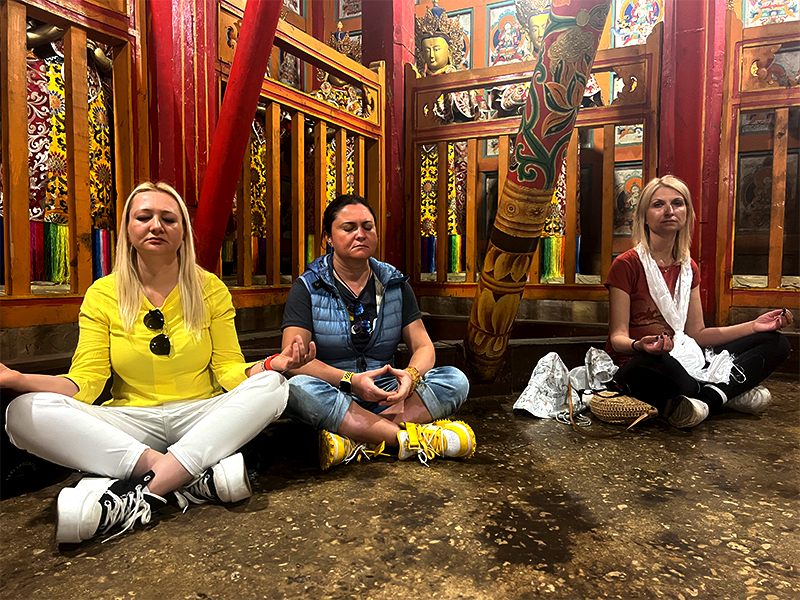 Visit a Tibetan monastery and experience a Tibetan meditation retreat with the soothing sounds of Tibetan prayer bowls.
Can You Buy a Tibetan Prayer Bowl in Tibet?
Yes. A Tibetan prayer bowl can be a meaningful cultural souvenir to bring home from your Tibet journey. They are commonly found in handicraft shops, souvenir markets, and stores selling traditional Tibetan objects.
In Lhasa, Barkhor Street is one of the most popular places to look for Tibetan prayer bowls. Many travelers visit this historic area during their Tibet tour, and the surrounding shops and stalls offer a wide range of Himalayan crafts, including singing bowls, prayer wheels, and other traditional items.
The Window of Tibet Bazaar is another convenient place to explore local handicrafts. Located in central Lhasa, this indoor market offers a variety of Tibetan cultural products in one place.
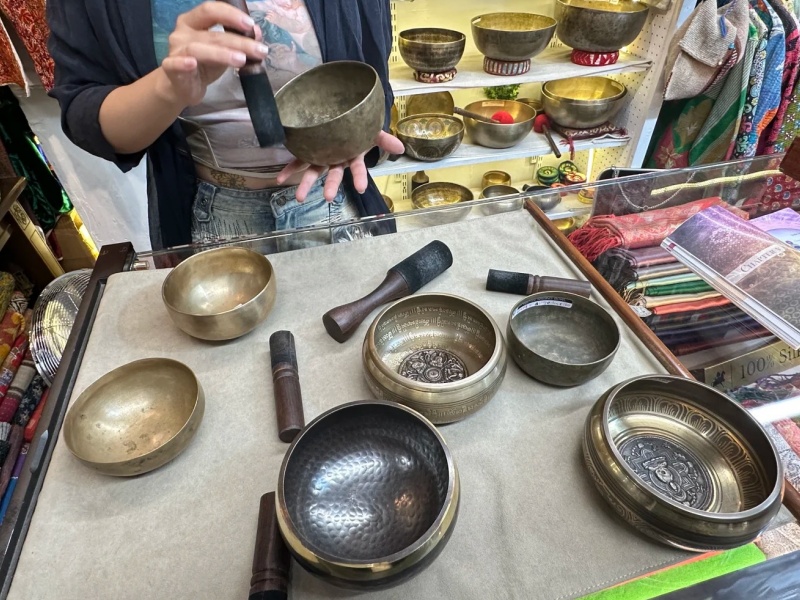 It is easy to find Tibetan prayer bowls in a local market.
Tips for Choosing a Tibetan Payer Bowl
When buying a prayer bowl, the first thing to consider is what you are looking for. Most Tibetan prayer bowls available in tourist markets are modern-made pieces designed as cultural souvenirs. These can still be beautiful and enjoyable to use, but their prices should generally be reasonable.
Traditional handmade bowls and older pieces usually cost more because of the craftsmanship involved. Handmade bowls may show small hammer marks and slight surface irregularities, which are natural signs of the traditional production process.
When choosing a prayer bowl, listen to its sound first. Ask the seller to play several bowls and compare the tone, vibration, and how long the sound continues. The best choice is not always the most expensive one or the bowl with the most decorative design, but the one whose sound feels right to you.
You should also consider the size and weight before purchasing. Larger bowls may create deeper sounds, but they can also be heavier and more difficult to carry during your Tibet journey.
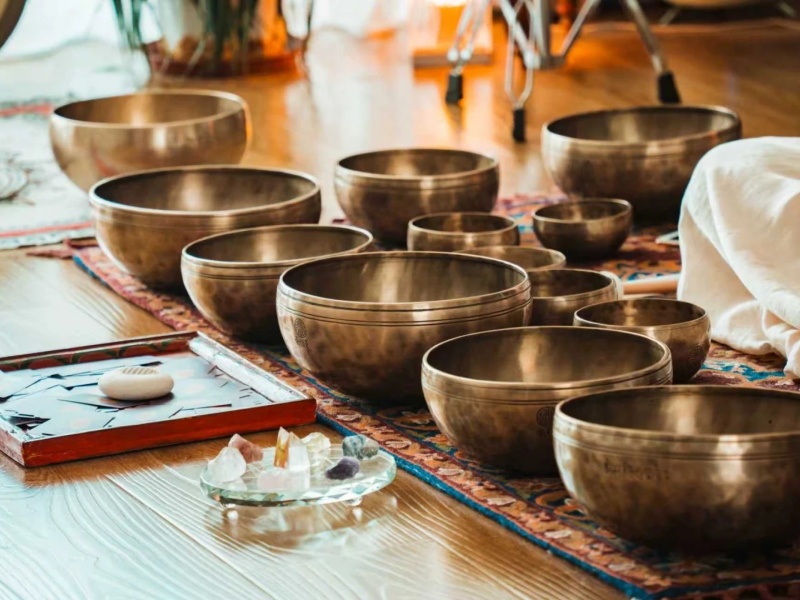 Selecting a Tibetan prayer bowl in the size that suits your needs.
Conclusion
The Tibetan prayer bowl is much more than a decoration. Its deep, resonant sound is closely connected with meditation, prayer, and the spiritual atmosphere of Tibet.
In Tibetan Buddhism, sound plays an important role in religious practices, from chanting and mantras to the use of prayer bowls during meditation. Experiencing these sounds during a visit to a monastery or a Tibet meditation retreat offers travelers a deeper understanding of Tibetan culture and traditions.
If you are interested in experiencing the authentic sound of Tibetan prayer bowls, feel free to contact us. We are happy to help arrange a Tibet journey with deeper cultural experience.


"Tibetan Prayer Bowl: The Spiritual Singing Bowl Behind the Sacred Sound of Tibet"