
 Search
 Pioneer of Tibet Tourism for Overseas Travelers since 1984!

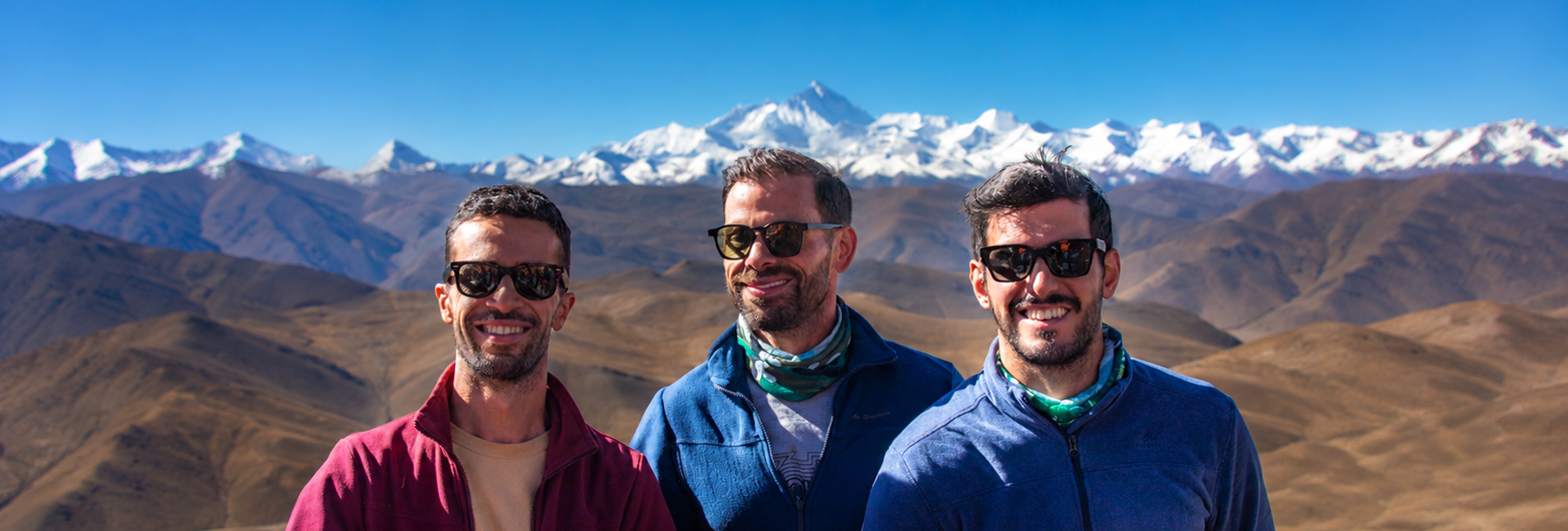
Mount Kailash is one of the most remote destinations in Tibet. Located more than 1,200 km from Lhasa, the journey involves long-distance travel, high altitude, changing weather, and a three-day kora that reaches 5,630 meters at Dolma La Pass. A little preparation can make a big difference.
I’m Keldor, a local Tibetan tour guide from Tibet Vista. I’ve spent years guiding travelers across Tibet, including many journeys to Mount Kailash, and I’ve seen the questions and challenges that often come up along the way.
So, I’ve put together the 10 Mount Kailash travel tips I most often share with my guests, covering when to go, how to prepare for the altitude and kora, what to bring, and what to expect along the way.
1. Plan Your Mount Kailash Trip at Least One Month in Advance
If you are planning to visit Mount Kailash, my first advice is simple: start early and don’t leave the arrangements until the last minute.
A Mount Kailash trip requires more travel documents than a regular Tibet tour. Depending on your nationality and route, you may need a Chinese Visa, Tibet Travel Permit, the Frontier Pass, and Military Permit for the Ngari region.
Except for your Chinese visa, you don’t need to apply for other required travel documents yourself. Once your itinerary and travel dates are confirmed, we will arrange the required permits and let you know which passport and visa documents to provide.
From our experience, I recommend confirming your Mount Kailash trip at least one month in advance. Six to eight weeks gives you more comfortable preparation time. If you plan to travel during the busy summer season or during the Saga Dawa Festival, arrange your trip even earlier, as guides, vehicles, and accommodation around Mount Kailash can fill up quickly.
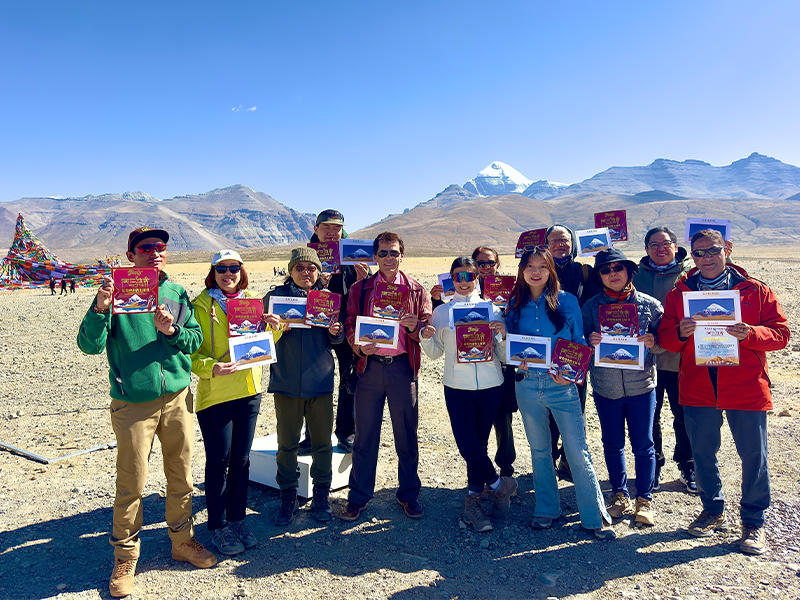
Planning at least a month in advance helps ensure a smoother journey to Mount Kailash.
2. Visit Mount Kailash Between April and October
April to October is the main travel season for Mount Kailash, but the experience can be quite different depending on when you go.
April to May is generally cool and relatively dry. There is still plenty of snow on the surrounding mountains, and clear days can offer beautiful views of Mount Kailash. Mornings and nights are cold, so warm clothing is essential.
June to August brings warmer temperatures and is also the busiest period. There is more chance of rain during the summer months, although the Mount Kailash region is generally drier than central Tibet.
Saga Dawa Festival usually falls in May or June, depending on the Tibetan lunar calendar. It falls on the 15th day, or full moon, of the fourth Tibetan lunar month. If your trip falls around this time, you will see many Tibetan pilgrims coming to Mount Kailash for the kora, creating a particularly strong pilgrimage atmosphere.
September to October is another best time to visit Mount Kailash. The weather is cooler, visibility can be excellent, and there are generally fewer travelers than in summer. The first week of October is an exception because of China’s National Day holiday.
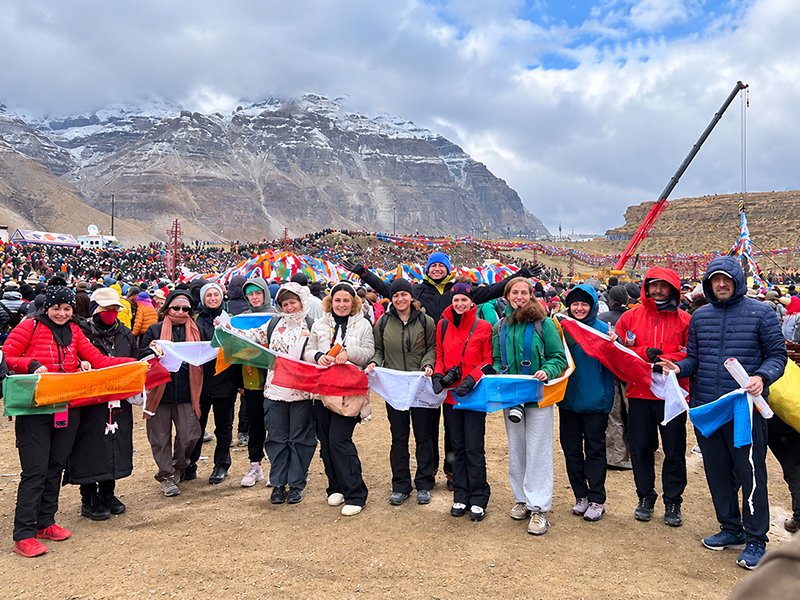
Experience the grand Saga Dawa Festival at Mount Kailash.
3. Prepare Your Body for Long Trekking Hours on the 3-Day Kailash Kora
The Mount Kailash trek is about 52 km over 3 days, with the entire trek above 4,600 m. You don’t need to be an experienced trekker, but you should be comfortable walking for several hours at a time.
Day 1 starts with an eco-bus ride from Darchen to Tarboche Square, followed by about 13 km of trekking to Dirapuk Monastery. Take this first day slowly and save your energy.
Day 2 is the day you really need to prepare for. You trek about 24 km, cross Dolma La Pass at 5,630 m, and then make a long descent toward Zutulpuk. Keep a steady pace and don’t try to keep up with faster trekkers.
Day 3 is easier, with at least 7 km of walking before the final section back to Darchen can usually be completed by vehicle.
For preparation, focus on endurance, not speed. In the months before your trip, do more long walks, hiking, uphill walking, or stair climbing. If possible, practice walking for several hours on consecutive days.
And one practical tip: don’t bring brand-new trekking shoes to Kailash. Break them in during your training, and do a few longer walks with the daypack you plan to carry.
| Kora Day | Trekking Distance | Route | Main Challenge |
|---|---|---|---|
| Day 1 | About 13 km | Darchen – Dirapuk | Gradual ascent to about 5,050 m |
| Day 2 | About 24 km | Direpuk – Dolma La – Zutulpuk | Dolma La at 5,630 m; hardest day |
| Day 3 | About 12 km | Zutulpuk – Darchen | Easier walking; final 5 km can be by vehicle |
4. Don’t Rush to Mount Kailash and Take Time to Acclimatize Before the Kora
Mount Kailash is much higher than Lhasa. From Lhasa (3,650 m) to Darchen (4,675 m), you gain more than 1,000 meters in altitude, and the kora climbs even higher to Dolma La Pass at 5,630 m.
That’s why I recommend spending two or three nights in Lhasa first and then traveling overland from Lhasa to Mount Kailash rather than rushing straight to Darchen. The route through Shigatse (3,840 m) and Saga (about 4,600 m) allows your body more time to adjust as you gradually move higher.
Once you reach Darchen, stay overnight before starting the kora. Take it easy, drink enough water, eat well, and get a good night’s rest. You’ll appreciate that extra time when you start walking the next morning.
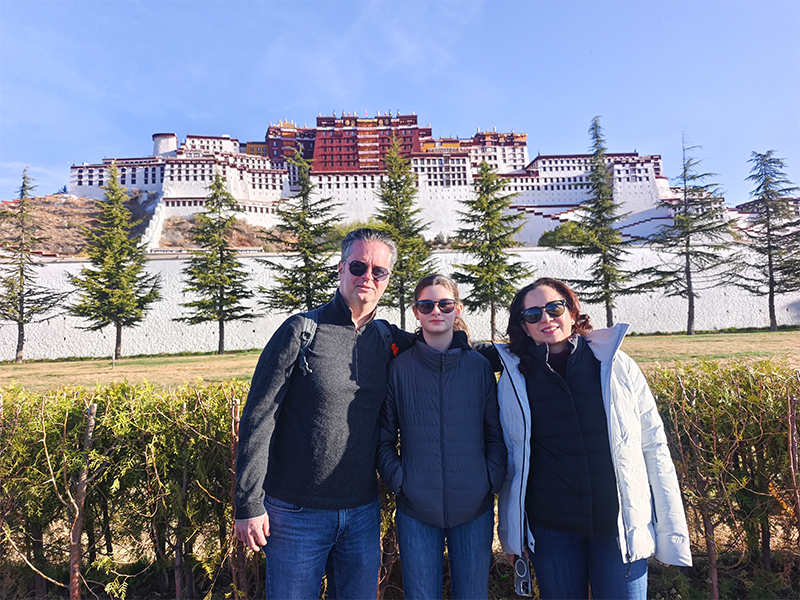
Spend a few days in Lhasa to acclimatize before heading to Mount Kailash.
5. Listen to Your Body and Never Push Through Serious Altitude Sickness
With the Mount Kailash altitude reaching 5,630 m at Dolma La Pass, some altitude discomfort during the kora is not unusual. A mild headache, tiredness, nausea, or poor sleep can happen, but the important thing is to pay attention to whether your symptoms are getting worse.
If you develop a severe or worsening headache, repeated vomiting, confusion, extreme weakness, difficulty walking normally, or shortness of breath while resting, tell your Tibetan tour guide immediately. These can be warning signs of serious altitude illness and should never be ignored.
One thing I always tell our guests is: finishing the kora is never more important than your health. If you are struggling seriously on Day 1, it is still relatively straightforward to turn back to Darchen. Once you continue farther into the kora, getting back becomes more difficult.
Listen to your body, keep your guide informed, and never push yourself just because other trekkers are continuing.
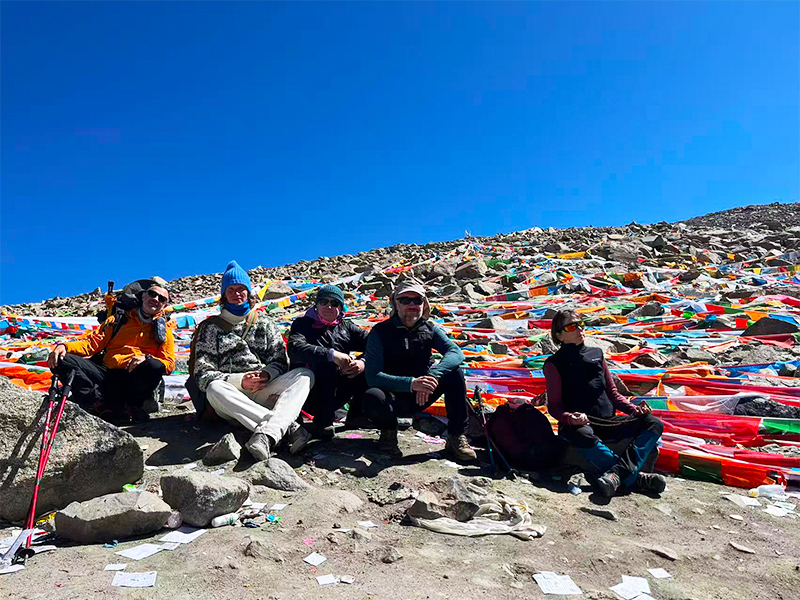
You can take a short break and monitor your condition while crossing Dolma La Pass.
6. Be Prepared for Basic Food and Accommodation During the Kailash Kora
One thing I always tell travelers before the kora is to be prepared for simple food and basic ccommodation during the Kailash Kora. At this altitude and in such a remote area, the guesthouses at Dirapuk and Zutulpuk offer only basic facilities.
Expect shared rooms with simple beds and thick quilts, usually without heating. Restrooms are basic and shared, and showers are generally not available during the kora, so bring wet wipes and hand sanitizer.
Meals are also simple. You’ll usually find basic choices such as instant noodles, fried rice, soup, tsampa, Tibetan tea, and hot water. I recommend carrying a few snacks you know you can eat easily at altitude, such as energy bars, chocolate, nuts, or dried fruit.
A light sleeping bag or sleeping bag liner can also make the nights more comfortable. You don’t need to carry too much. The important thing is to come prepared for simple conditions for two nights.
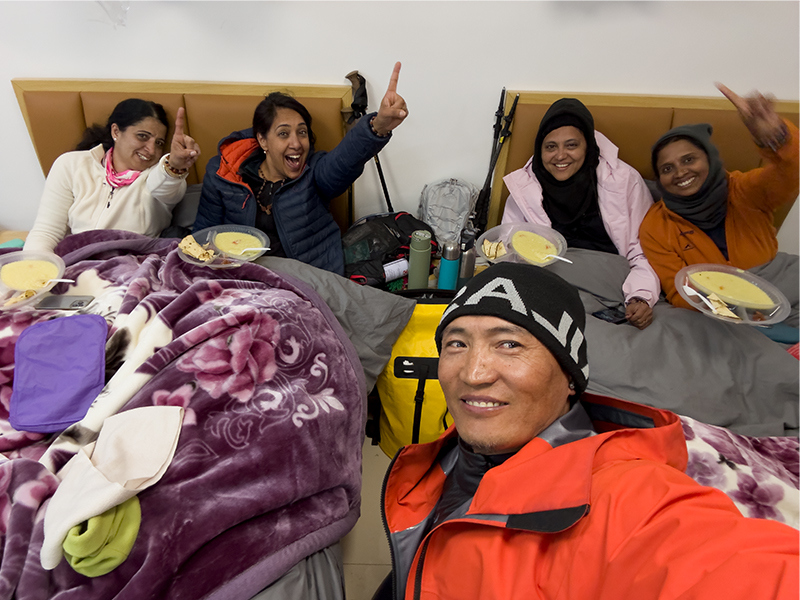
Enjoy a simple meal at a basic guesthouse along the Mount Kailash Kora.
7. Dress in Layers for the Fast-Changing Weather Above 5,000 Meters
Weather around Mount Kailash can change quickly, especially when you are trekking above 5,000 meters. It may be sunny when you start walking, then turn cold and windy as you climb higher.
The best way to prepare is to dress in layers. Wear a thermal base layer, add a fleece or other warm middle layer, and keep a windproof and waterproof jacket on top. This makes it easy to add or remove clothing as the temperature changes.
One thing I always remind our guests is not to leave warm clothing behind just because the morning looks sunny. Keep a down jacket, gloves, and a warm hat in your daypack, especially for the climb to Dolma La Pass.
Sun protection is just as important at this altitude. Bring high-SPF sunscreen, sunglasses, lip balm, and a sun hat. A buff or scarf is also useful for protecting your face from the wind and dust.
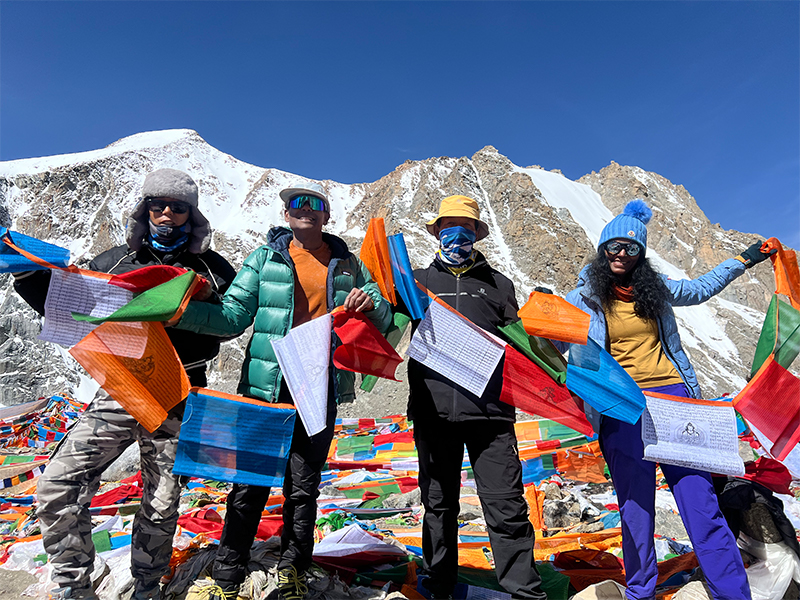
Dress in layers to stay warm and protect yourself from the strong sun during the Mount Kailash Kora.
8. Pack Light and Carry Your Daily Essentials with You
The lighter your daypack, the easier the kora will feel, especially on the climb to Dolma La Pass. Leave your main luggage in Darchen and carry only what you really need for the three-day trek.
I usually recommend keeping your daypack at around 4 kg or less if possible. You don’t need to carry three days of food and water from the start. Bring what you need for the day and refill or buy simple supplies along the route when available.
When deciding what to pack for the Mount Kailash Kora, keep these essentials in your daypack:
- Water and energy snacks for the day
- A down jacket or other warm layer
- Waterproof jacket and trousers
- Sunscreen, lip balm, and sunglasses
- Personal medications and blister plasters
- Headlamp
- Power bank
- Wet wipes, hand sanitizer, and toilet paper
One thing I always tell guests is to pack for what you will actually use, not for every possible situation. A few unnecessary items may not feel heavy in Darchen, but you will notice the extra weight when climbing above 5,000 meters.
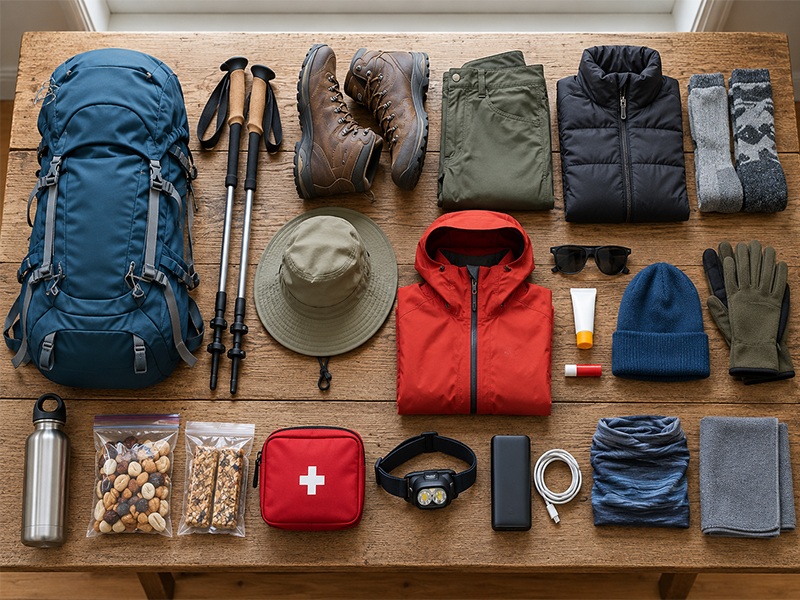
Practical clothing, trekking equipment, and personal supplies for the high-altitude journey.
9. Hire a Porter or Yak If You Need Extra Support
If you are worried about carrying your belongings during the kora, don’t wait until you are exhausted to ask for help.
You can hire a porter with a yak or horse to carry your belongings, which can make the kora much easier at high altitude. The service can usually be shared with other members of your group, allowing you to split both the load and the cost.
If you would like to hire a porter, let your travel consultant know when booking your Mount Kailash tour. You can also tell your guide on the day you arrive in Darchen, so there is enough time to arrange the service before you start the kora the following morning.
Tipping your porter after the kora is appreciated but is not included in the tour price. The amount can depend on the service and your experience.
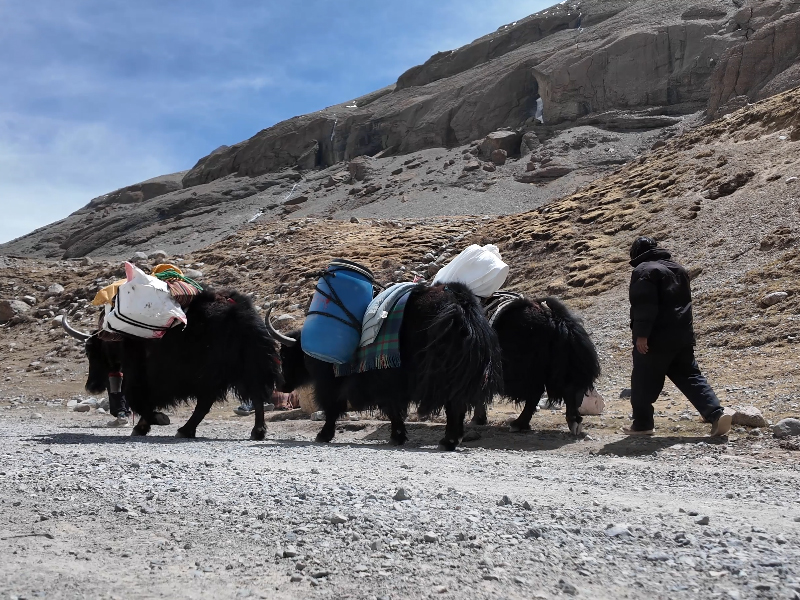
You can hire a porter with yaks to carry your luggage during the Mount Kailash Kora.
10. Respect Local Pilgrims and Religious Traditions at Mount Kailash
For us Tibetans, Mount Kailash is much more than a mountain or a trekking destination. It is one of our most sacred pilgrimage sites, and every year, many Tibetans travel a long way to complete the kora, pray, and show their devotion.
When you walk the kora, you will share the trail with local pilgrims. Some walk slowly while chanting prayers, some spin prayer wheels, and some complete the entire route with full-body prostrations. Give them space and allow them to follow the kora at their own pace.
Most Tibetan Buddhist pilgrims walk the kora clockwise, while followers of the Bon tradition traditionally go in the opposite direction. Follow your guide and respect the pilgrimage practices you see along the way.
Please do not climb Mount Kailash or disturb mani stones, prayer flags, offerings, or other sacred objects along the route. Around monasteries and religious sites, keep your voice down and follow the instructions of your guide.
I also recommend asking before photographing local pilgrims, especially when they are praying or performing prostrations. Photography may also be restricted inside monasteries, so check with your guide before taking pictures.
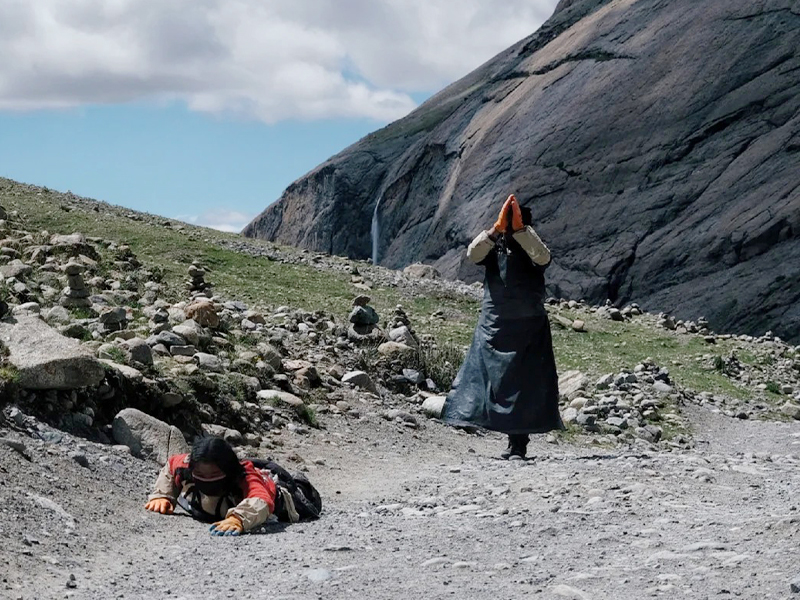
Please respect local pilgrims performing prostrations along the Mount Kailash Kora.
Conclusion
The Mount Kailash Kora is challenging, but good preparation can make the journey safer and more enjoyable. Take your time, listen to your body, and experience this sacred mountain with respect.
For us Tibetans, Mount Kailash is a very special place, and we are always happy to share it with travelers. Contact us and let our local Tibet travel experts help you plan and arrange your journey to Mount Kailash.

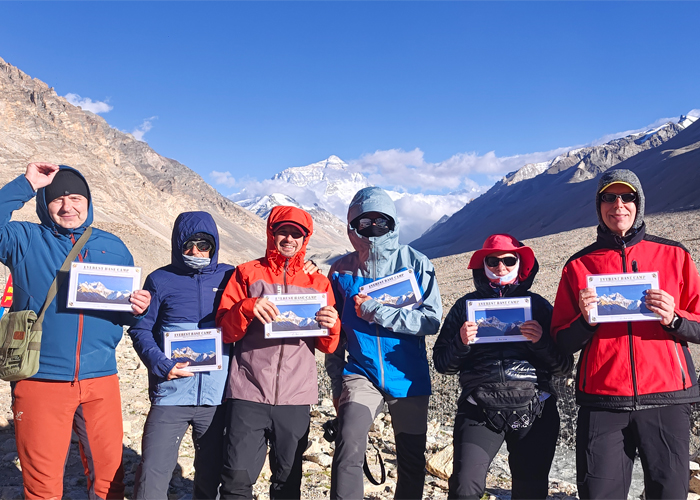
"Top 10 Mount Kailash Travel Advice from Our Tibetan Tour Guide – Keldor"