
 Search
 Pioneer of Tibet Tourism for Overseas Travelers since 1984!

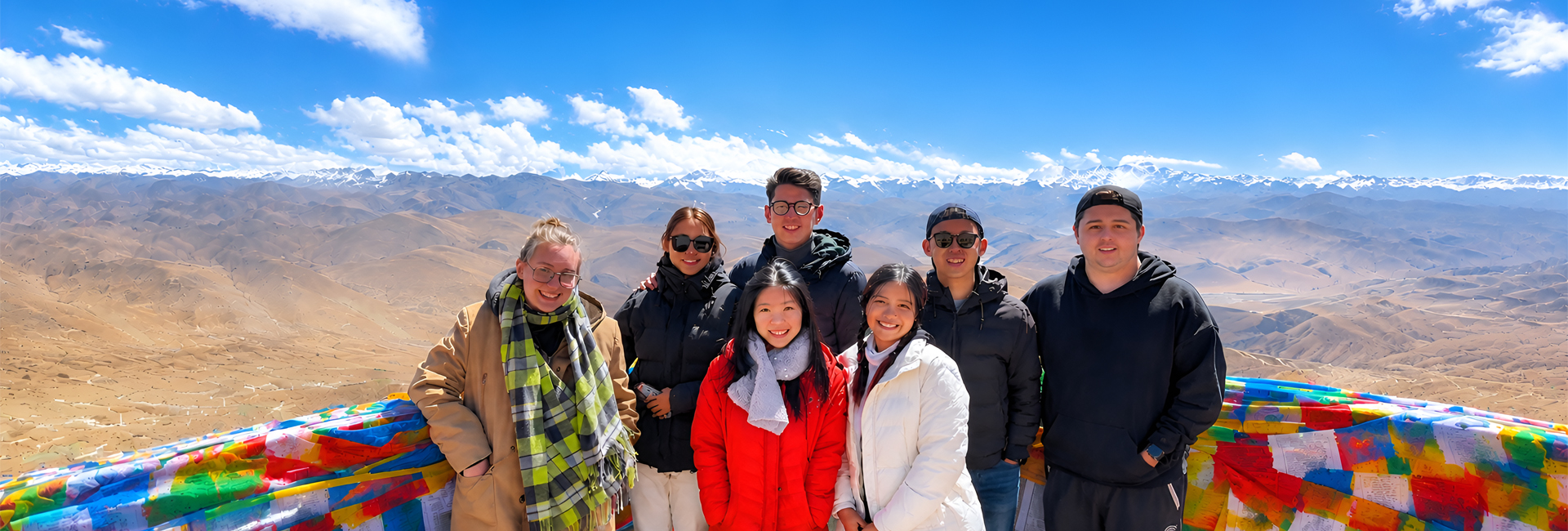
Water is always something to pay attention to when traveling internationally, and in Tibet, it’s particularly important. At 3,500 meters and above, your body loses fluid faster than at sea level. Staying hydrated helps prevent dehydration and keeps you more comfortable, but it does not prevent altitude sickness on its own. Where that water comes from matters too.
For most travelers, the simple answer is to drink bottled or properly boiled water in Tibet rather than tap water. This is a practical precaution because tap water is not always filtered for direct drinking, not because the water supply or basic facilities along Tibet’s established travel routes are unsafe.
Can You Drink Tap Water in Tibet During the Tour?
It is not recommended to drink tap water directly in Tibet
Although Tibet has abundant rivers, lakes, springs, and groundwater, the presence of natural freshwater does not mean that what comes out of the tap is automatically safe to drink.
For tourists, the easiest rule is to use sealed bottled water or boiled water for drinking. This practical rule applies throughout Tibet, including rural areas and long road trips, because tap water may not be filtered for direct consumption.
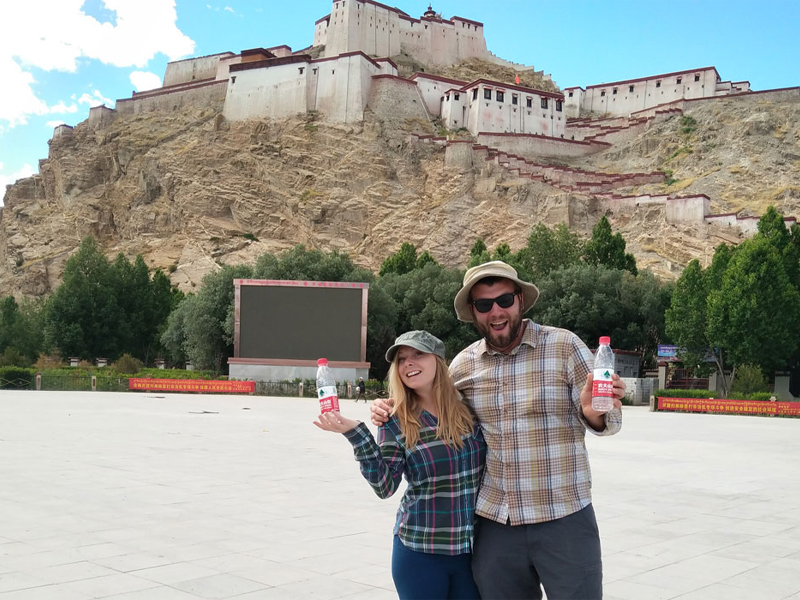
Bottled water is the safest and most convenient choice for travelers in Tibet.
Can You Drink Hotel Kettle Water in Tibet?
Is Boiled Hotel Water Safe to Drink in Tibet?
Yes, if the water has been properly boiled. Hotels, guesthouses, and other accommodations commonly provide kettles or access to hot water. Travelers can use boiled water to make tea, coffee, or other drinks and refill a thermos or reusable bottle before heading out for the day.
If you are unsure whether water in your accommodation has actually been boiled, use bottled water instead.
When using a kettle yourself, start with fresh water and bring it to a proper boil. For water collected from an uncertain source, additional treatment may be necessary.
Does Boiling Water at High Altitude Make It Safe?
Yes, boiling can kill disease-causing microorganisms even at high altitude, but water boils at a lower temperature as altitude increases.
At 3000 meters, water boils at 90°C, and at 5,000 m it boils at 82-83°C. These temperatures are still hot enough to kill the bacteria, viruses, and parasites that cause travelers’ illnesses. To help ensure safety, the US CDC recommends holding the boil for 3 minutes at altitudes above 2,000 meters.
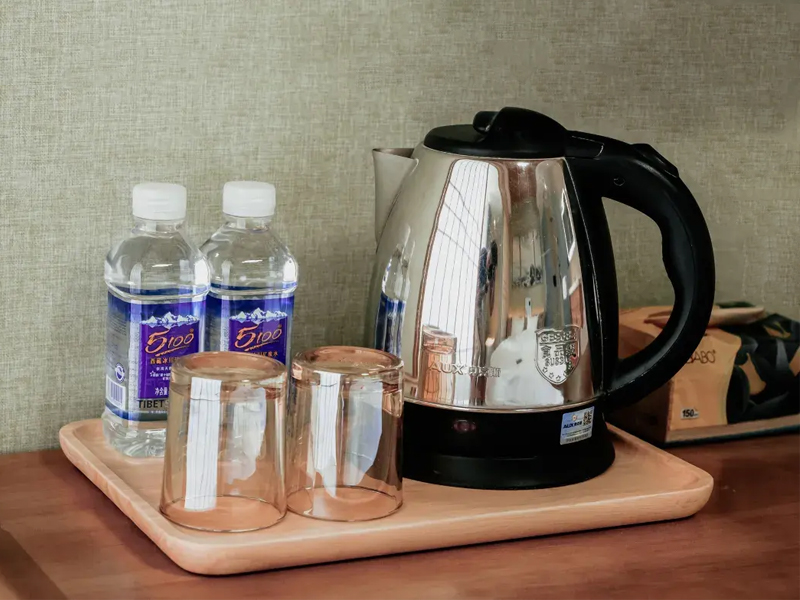
Many hotels in Tibet provide bottled water and an electric kettle for making hot drinking water.
Is Tap Water Safe for Daily Hygiene in Tibet?
Can You Brush Your Teeth with Tap Water?
You can normally use tap water for brushing your teeth in hotels and guesthouses along Tibet’s main travel routes. If you personally prefer to be extra cautious, you can use bottled or boiled water, but this is usually not necessary for routine brushing.
What About Washing Your Face and Taking a Shower?
You can use hotel and guesthouse tap water for washing your face and taking a shower. The main concern is ingestion rather than normal contact with the water.
Normal contact with tap water is not a concern, although it is still best not to drink it directly. Accommodation along Tibet’s main travel routes normally provides hot-water shower facilities. The main exceptions are the three days of the Mount Kailash Kora and the night at Everest Base Camp, when we generally recommend skipping a shower because of the high altitude and cold conditions, not because the water is unsafe.
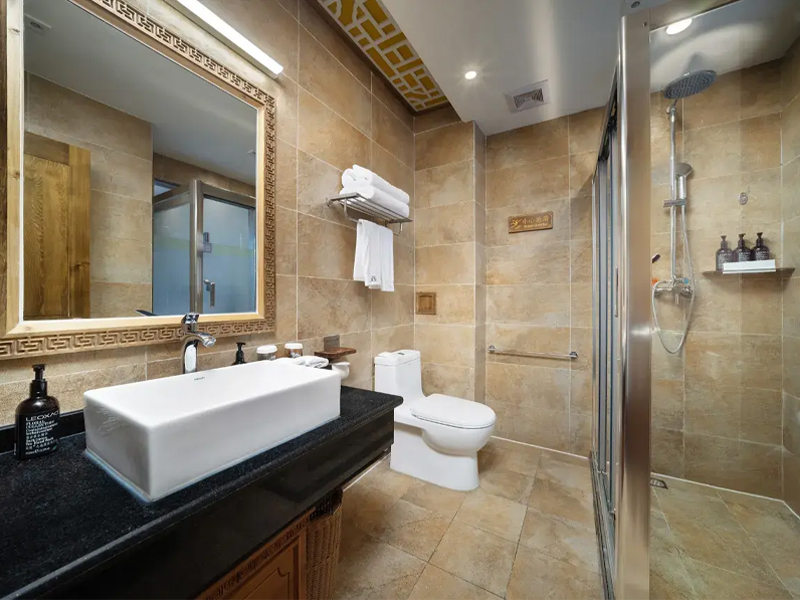
Hotel tap water in Tibet can be used for brushing your teeth, washing your face, and showering.
Where Can You Get Safe Drinking Water During a Tibet Trip?
In Lhasa and Major Cities
In Lhasa, Shigatse, Nyingchi, and other major towns, bottled drinking water is easy to find in hotels, restaurants, supermarkets, and shops. Prices are very reasonable, around 3- 4 CNY for a 500ml bottle, and 7-8 CNY for 1.5 liters. Common brands include Nongfu Spring, Wahaha, and locally bottled waters such as 5100. Check that the cap seal is intact before buying.
Hotels also commonly provide boiled water, so carrying a reusable bottle or thermos can reduce the number of disposable bottles you need.
During Longer Tibet Tours and Road Trips
Water becomes more important to plan for when traveling to remote areas such as Everest Base Camp, Ngari, Mount Kailash, or other high-altitude destinations.
Your tour vehicle will normally carry drinking water, but it is sensible to bring your own bottle or thermos and refill it whenever safe drinking water is available.
For multi-day trekking routes, carry enough water for the day’s journey and follow your guide’s advice about where you can refill. During the Mount Kailash trek, for example, travelers are advised to drink 3-4 liters of bottled water each day.
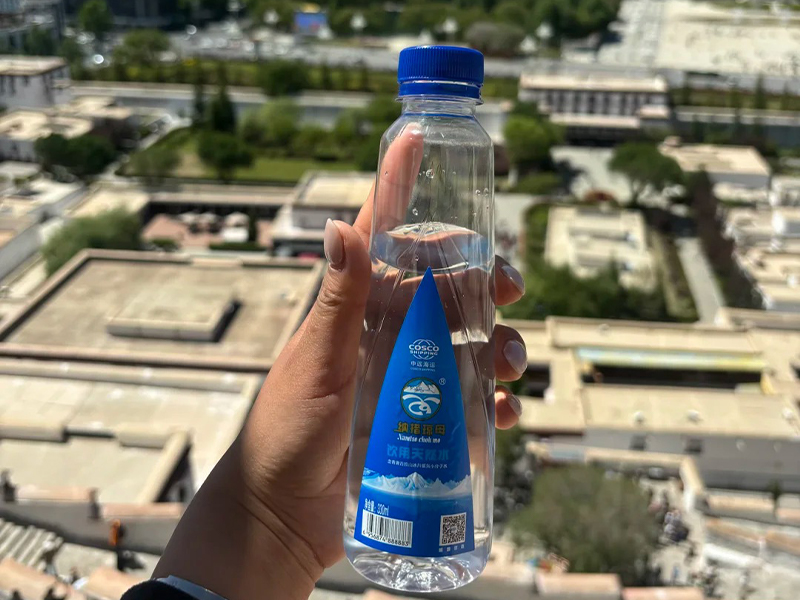
Bottled water is easy to find in shops and convenience stores in towns across Tibet.
Can You Drink Natural Spring Water or Glacier Water in Tibet?
Many Tibetans grow up drinking water collected from trusted natural springs. As a local Tibetan, I did too. My family still collects spring water from the mountains behind Drepung Monastery or Sera Monastery in Lhasa and uses it to make butter tea or sweet tea. We particularly enjoy using this natural water.
However, you should not drink from an unfamiliar spring, river, lake, or glacier on your own. Ask your Tibetan guide first. Your local guide knows which natural water sources are commonly used by nearby communities and which ones you should avoid.
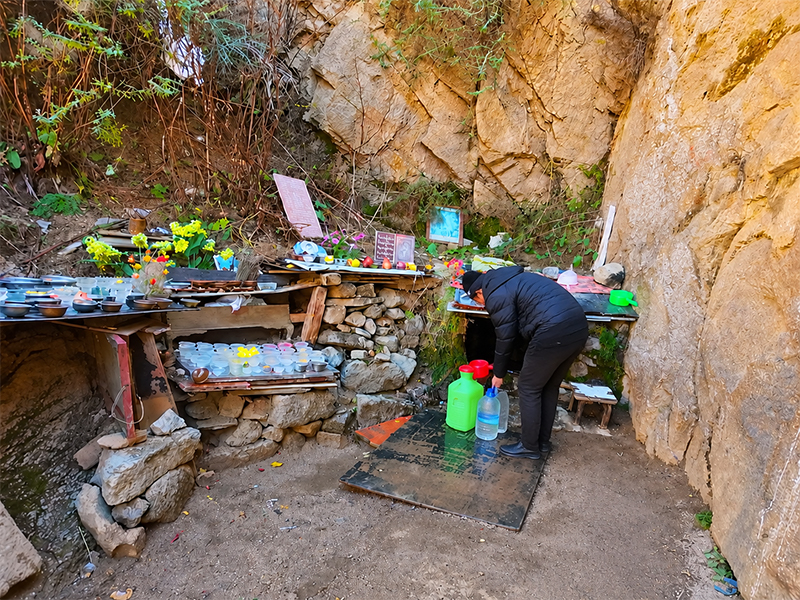
People collect spring water from the hillside behind Sera Monastery in Lhasa.
Drinking Water Tips for Tibet Travelers at High Altitude
Drink Enough Water to Stay Hydrated
Staying hydrated is very important in Tibet. At altitude, you lose moisture through faster, deeper breathing and through very dry air, often without feeling thirsty.
Many travelers aim for around 3 to 4 liters a day, but the amount you need depends on your body, activity level, and the weather. Sip steadily rather than gulping water in one go, and do not force yourself to drink excessive amounts.
Bring a Reusable Water Bottle or Thermos
A reusable bottle or insulated thermos is very useful on a Tibet trip.
You can fill it with bottled or boiled water at your hotel before sightseeing or setting off on a road journey. A thermos is particularly convenient in Tibet’s cold climate because you can carry warm drinking water or tea throughout the day.
It also helps reduce the number of disposable plastic bottles used during your trip.
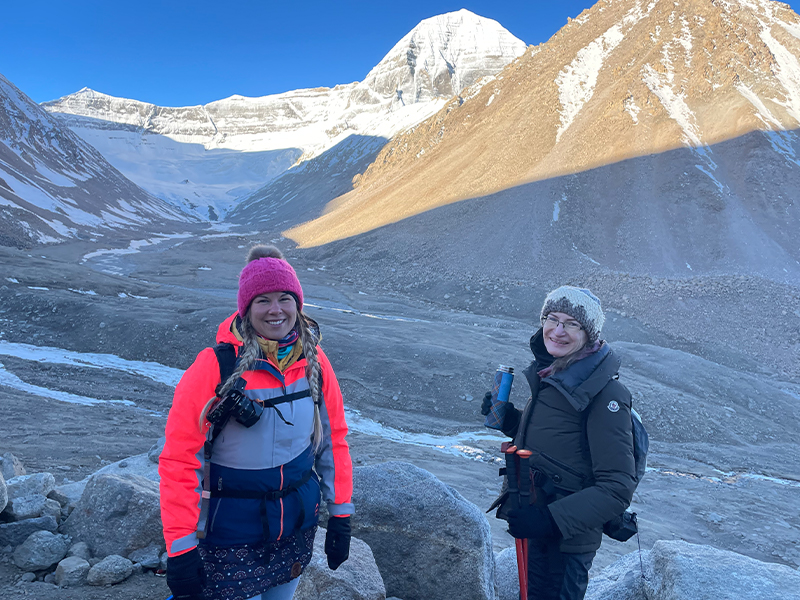
Carrying a thermos makes it easier to drink warm water regularly while traveling at high altitude in Tibet.
Conclusion
So, can you drink tap water in Tibet? For travelers, it is better not to drink it directly. Choose sealed bottled water or properly boiled and treated water instead.
Hotel kettle water is generally a practical option when it has been properly boiled. Tap water can normally be used for brushing your teeth, washing your face, showering, and other everyday hygiene. The main point is not to drink untreated tap water directly.
Most importantly, plan your water supply before heading into remote areas. A reusable bottle or thermos and enough drinking water for the day’s journey can help keep your Tibet trip comfortable, especially while your body is adjusting to the high altitude.

"Is Drinking Water Safe in Tibet? Can I Drink Tap Water During a Tibet Trip?"