
 Search

 Pioneer of Tibet Tourism for Overseas Travelers since 1984!

Cordyceps Sinensis (冬虫夏草) is a rare medicinal fungus, also known as the caterpillar fungus. It grows naturally in high-altitude areas, usually between 3,500 and 4,500 meters above sea level, across Tibet and other parts of the Tibetan Plateau. Nagqu in northern Tibet is one of the best-known producing areas for high-quality wild Cordyceps.
With its limited growing environment, short harvest season, and traditional uses in traditional Tibetan and Chinese medicine, Cordyceps Sinensis has become one of the most valued natural treasures in Tibet. During your Tibet trip, you can learn about this unique product through local markets, Tibetan medicine shops, and traditional food experiences.
What Is Cordyceps Sinensis? What Are the Unique Features?
Cordyceps Sinensis, also called caterpillar fungus, is one of the most famous natural herbs found on the Tibetan Plateau. Although many people think it is a mushroom, it is actually a parasitic fungus that grows on ghost moth caterpillars.
Its Chinese name, Dong Chong Xia Cao (冬虫夏草), means “winter worm, summer grass.” In winter, it lives inside the caterpillar beneath the ground. In spring and early summer, a thin brown shoot grows out of the caterpillar and appears above the soil like a blade of grass. This is how it gets its famous name.
Wild Cordyceps only grows in a few high-altitude areas, usually above 4,000 meters on the Tibetan Plateau. After harvesting, it is carefully dried and has been used in traditional Tibetan and Chinese medicine for centuries.
Today, Cordyceps Sinensis is known around the world for its rarity, traditional uses, and high value.
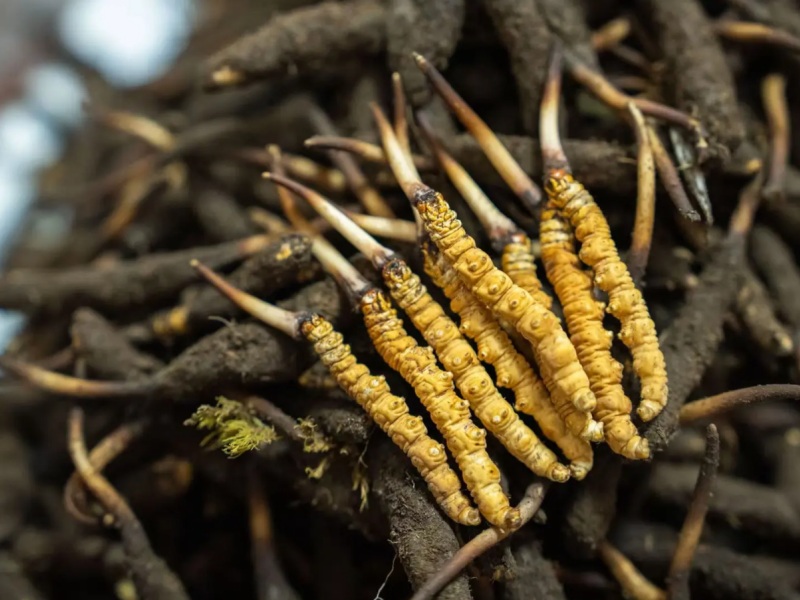
Wild Cordyceps Sinensis has a caterpillar body and a thin fungal stalk growing from it.
Why Cordyceps Sinensis Is So Highly Valued
Cordyceps Sinensis has long been valued in traditional Tibetan medicine. Its rarity, difficult harvesting process, and limited supply have made it one of Tibet’s most valuable natural herbs.
Rare Natural Growing Conditions
Wild Cordyceps Sinensis only grows in a few high-altitude areas between 3,500 and 5,000 meters above sea level. It needs a cold climate, clean environment, and special grassland ecosystem to grow naturally.
Among all producing areas, Nagqu in northern Tibet is famous for producing some of the highest-quality wild Cordyceps. Because it only grows in limited regions, the natural supply is always low.
A Short Harvest Season and Hand Collection
Cordyceps can only be harvested once a year, usually from May to June. The collecting season lasts only a few weeks, so the annual supply is naturally limited.
During the harvest season, local Tibetans travel to high-altitude alpine grasslands, often above 4,000 meters, where wild Cordyceps grows naturally. The tiny brown shoot is only about the size of a matchstick, making it difficult to spot among the grass.
Collectors walk slowly across the grasslands and carefully search the ground for each piece. Once they find one, they use a small knife to gently dig it out without damaging the caterpillar body. A complete specimen is worth much more than a broken one, so every piece is collected with great care.
Finding Cordyceps takes patience, experience, and a good eye. The work is slow and physically demanding, but it is also one of the main reasons why genuine wild Cordyceps is so valuable.
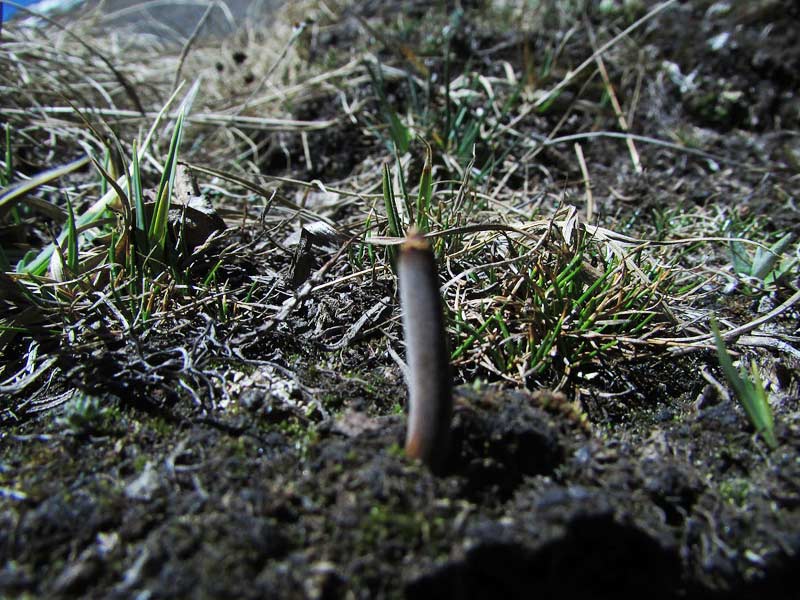
Cordyceps Sinensis grows naturally in the high-altitude grasslands of Tibet.
Traditional Health Benefits and Uses
For hundreds of years, Cordyceps Sinensis has been an important part of traditional Tibetan and Chinese medicine. It is traditionally used as a natural tonic and is believed to help:
- Support general wellbeing and promote vitality.
- Improve stamina, physical strength, and endurance.
- Help the body recover from weakness, fatigue, and periods of physical stress.
- Support respiratory and cardiovascular health.
- Promote healthy circulation and maintain balanced body functions.
- Strengthen the immune system and support natural resistance.
- Support kidney and liver health according to traditional beliefs.
- Maintain energy levels and overall vitality.
- Support sexual health and vitality.
- Help people maintain youthful energy and wellbeing.
In traditional Tibetan medicine, Cordyceps has also been used as part of herbal formulas for a wide range of health conditions. These traditional uses have been passed down for centuries and remain popular today.
Today, Cordyceps is commonly used in different ways. It is often added to chicken or yak soup, made into herbal tea, soaked in traditional liquor, or used in nourishing dishes. Because it is precious, only a small amount is usually used each time.
Traditionally, people use about 0.3 to 0.7 grams per day, which is around one to two pieces depending on the size. Since Cordyceps is a traditional herbal product, it is best to ask a healthcare professional if you plan to use it regularly.
The benefits mentioned above come from traditional Tibetan and Chinese medicine. Many people value Cordyceps as a natural tonic, but personal experiences may vary.
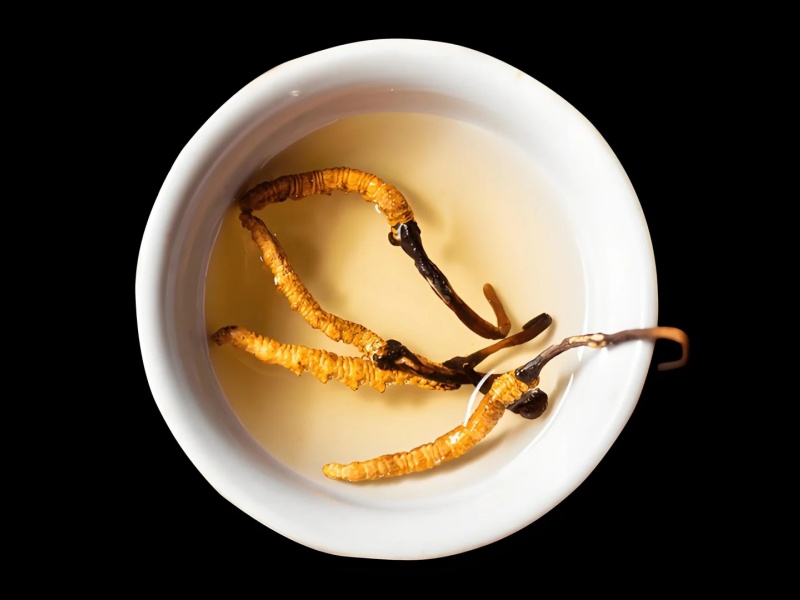
Cordyceps Sinensis is traditionally brewed as tea or added to nourishing dishes.
Strong Market Demand and Limited Supply
Every year, many people in Tibet, China, and other Asian countries buy genuine wild Cordyceps. However, only a limited amount can be harvested during the short collecting season.
Because the supply is limited and the demand remains high, genuine wild Cordyceps continues to be one of the most valuable natural products in Tibet. High-quality Cordyceps from Nagqu is especially sought after because of its excellent reputation and quality.
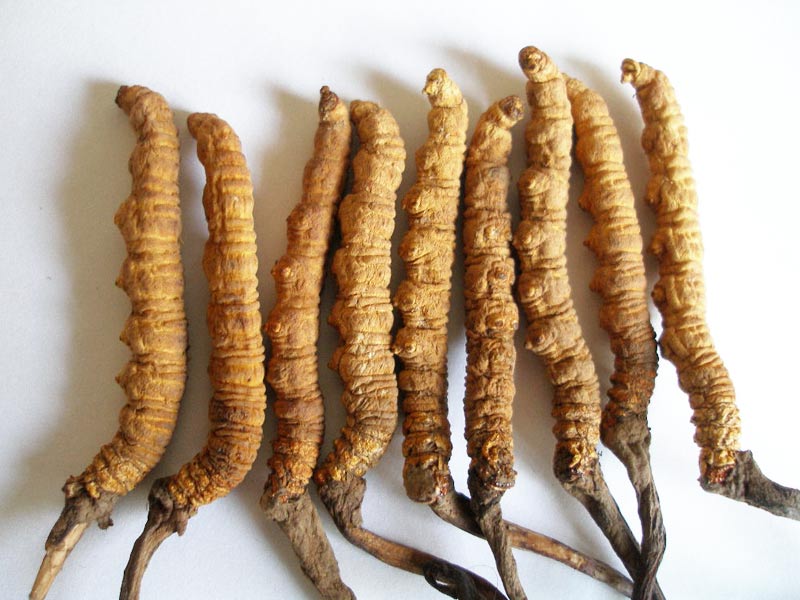
High-quality Cordyceps Sinensis is highly valued in Tibetan markets.
Nagqu: Home of Tibet’s Best Cordyceps Sinensis
The Tibetan Plateau is the main natural home of Cordyceps Sinensis. It grows in parts of Tibet, Qinghai, Sichuan, Gansu, Yunnan, and the Himalayan regions of Nepal, Bhutan, and northern India. Among all these producing areas, Nagqu in northern Tibet is famous for producing some of the highest-quality wild Cordyceps.
Located at an average altitude of about 4,500 meters, Nagqu has vast alpine grasslands and a cold, clean environment. These natural conditions make it one of the best places for wild Cordyceps to grow.
Every year from late May to early July, local families head to the grasslands to harvest Cordyceps Sinensis. They carefully search for the small brown shoots growing above the ground. During this time, you may see temporary tents across the grasslands and people working from early morning until evening.
Some Tibet tour routes pass through Nagqu during the harvest season. While visitors cannot enter the harvesting areas, they can see the harvest from the roadside and learn about this unique tradition from local guides. You can also buy genuine Cordyceps Sinensis from licensed Tibetan medicine shops and trusted local stores in Tibet.
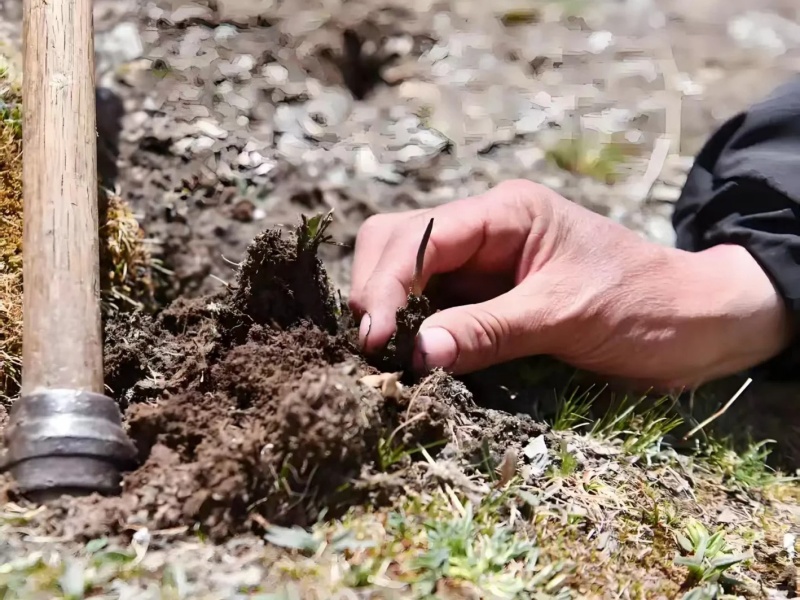
Wild Cordyceps Sinensis is carefully collected by hand during the short harvest season in Tibet.
Cordyceps Sinensis Prices in Tibet
Cordyceps Sinensis is usually sold by the gram in Tibet. In general, small Cordyceps costs around USD 15 – 20 per gram. Medium-sized Cordyceps usually sells for USD 20 – 40 per gram. Large, complete Cordyceps often costs USD 40 – 50 or more per gram. The very best Nagqu Cordyceps can even sell for over USD 100,000 per kilogram.
| Quality | Typical Features | Reference Price* |
|---|---|---|
| Standard | Small size, shorter stalk, some soil or slight damage | USD 15-20/g |
| Good | Medium size, complete body, natural color | USD 20-40/g |
| Premium | Large body, long unbroken stalk, clean and well preserved | USD 40-50+/g |
| Premium Nagqu | Large, well-shaped, natural golden-brown color, harvested in Nagqu | USD 50+/g |
The price mainly depends on the place of origin, size, color, and overall quality. Cordyceps from Nagqu is usually the most valuable. Larger, complete specimens with a natural color and good appearance are generally worth more than smaller or damaged ones.
Prices may also change every year depending on the harvest. A smaller harvest usually means higher prices.
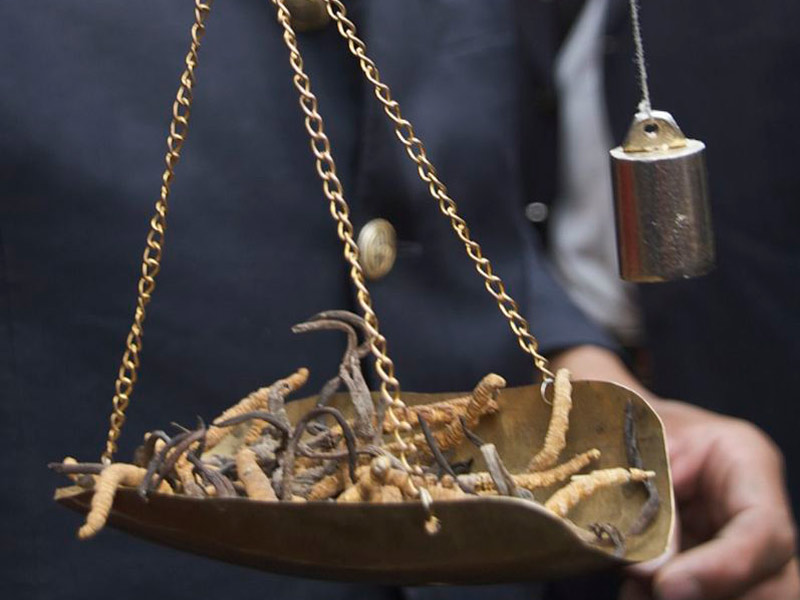
Weighing Cordyceps Sinensis is a common step when buying it by weight in Tibet.
Buying Cordyceps Sinensis : Who Should Buy It & How to Choose
Buying Cordyceps Sinensis is a personal choice. Some travelers buy it as a special gift or souvenir from Tibet. Others are interested in it because of its long history in traditional Tibetan and Chinese medicine.
Cordyceps Sinensis may be a good choice for people who want to:
- Support their energy and reduce tiredness
- Maintain physical strength and stamina
- Support overall health and vitality
- Take care of their wellness during periods of physical weakness or recovery
- Try a traditional natural tonic that has been valued for centuries
Fake Cordyceps can be found in some markets, so it’s helpful to know a few simple ways to identify genuine products before buying. Here are a few simple things to look for:
- Appearance: Genuine Cordyceps has a complete caterpillar body with a naturally attached fungal stalk. It has eight pairs of legs, but only the four pairs in the middle are easy to see. The front and rear pairs are much smaller and harder to notice. Fake products often have all eight pairs of legs clearly visible and neatly arranged.
- Texture: Genuine Cordyceps is slightly flexible and should not break easily. Fake products are often dry and brittle.
- Color: Good-quality Cordyceps has a natural light brown to golden-brown color. Avoid products that look unusually bright, yellow, or artificially polished.
- Smell: Authentic Cordyceps has a light mushroom-like smell. Fake products may have little smell or an unusual odor, such as wood or sulfur.
- Water Test: When soaked in water, genuine Cordyceps keeps its natural color. Poor-quality or fake products may release color and turn the water darker.
- Price: Genuine wild Cordyceps is always valuable. Prices that are much lower than similar products should be treated with caution.
If you’re traveling with us, our local Tibetan guides are always happy to help. With years of local experience, they can help you compare different grades and recommend reliable local shops.
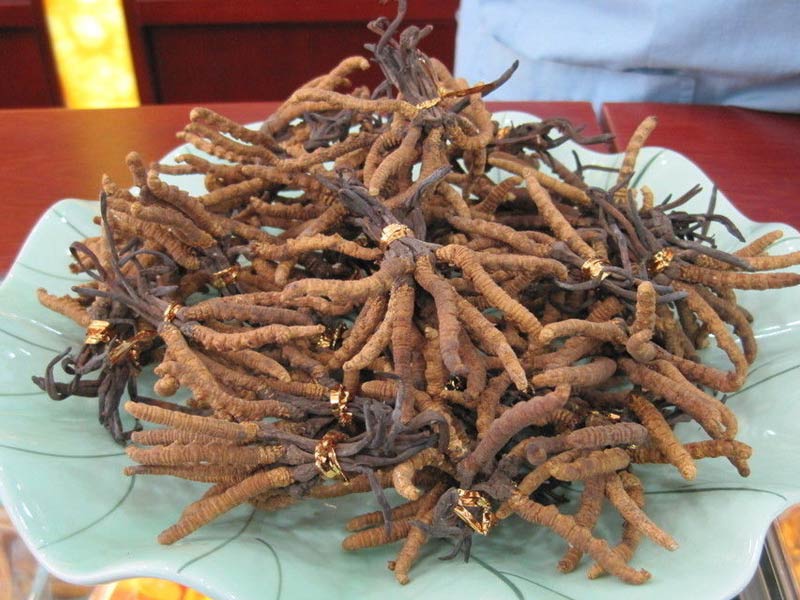
Wild Cordyceps Sinensis displayed for sale in a Tibetan medicine shop.
Can You Try Cordyceps Sinensis During Your Tibet Trip?
You can try Cordyceps Sinensis during your Tibet trip without buying a large amount. There are several ways to try this famous Tibetan specialty.
One of the most popular ways is in traditional Tibetan soups. Some restaurants in Lhasa serve yak soup or chicken soup cooked with a few pieces of Cordyceps. The herb has a mild earthy flavor and is traditionally added as a nourishing ingredient.
If you travel to Nyingchi, you may also find Stone Pot Chicken with Cordyceps. This is a popular local dish made with free-range chicken, and other Tibetan herbs. It is one of the most popular local dishes in eastern Tibet.
Some Tibetan medicine shops also sell Cordyceps tea or herbal drinks. This is a good option if you simply want to taste it before deciding whether to buy any.
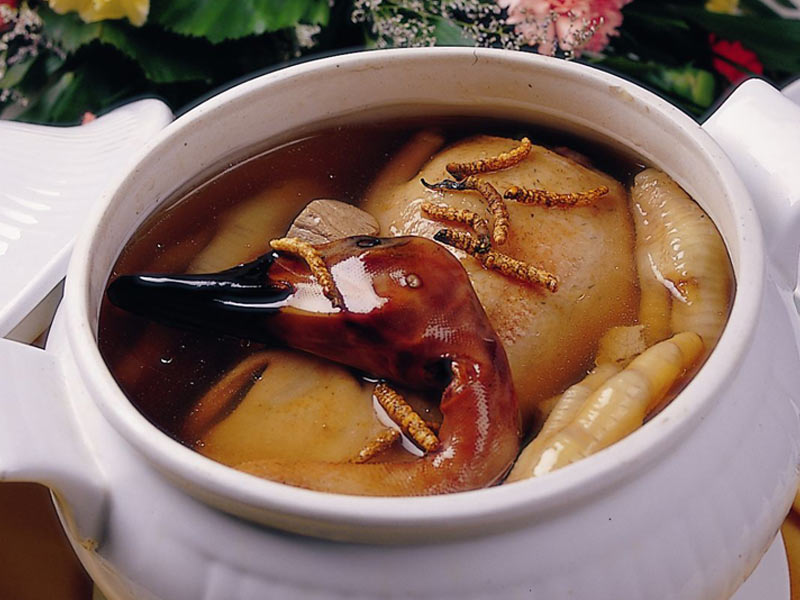
Cordyceps Sinensis is often cooked with soup as part of traditional Tibetan food practices.
Where to See and Buy Cordyceps Sinensis in Tibet
Lhasa is the best place to see and buy Cordyceps Sinensis during your Tibet trip. You’ll find licensed Tibetan medicine shops, certified pharmacies, and traditional markets selling different grades of Cordyceps. If you’re planning to buy some, your local Tibetan guide can also recommend reliable local shops.
One of the most interesting places to visit is the morning market around the Great Mosque of Lhasa, just a short walk from Barkhor Street. During the harvest season from May to June, bags of freshly collected Cordyceps arrive at the market early each morning from Nagqu, Chamdo, and other parts of Tibet. Traders then sort, clean, grade, and prepare them for sale.
Walking through the market, you’ll see buyers comparing different grades, checking the quality, and negotiating prices. One unique tradition is that many local traders don’t say the price aloud. Instead, they hide their hands under a cloth or inside their sleeves and use finger signals to reach an agreement. This traditional way of trading has been passed down for generations and is still common today.
The market is worth a visit even if you don’t plan to buy anything. It’s one of the few places where you can see the Cordyceps trade up close and experience a side of Tibetan life that most visitors never get to see.
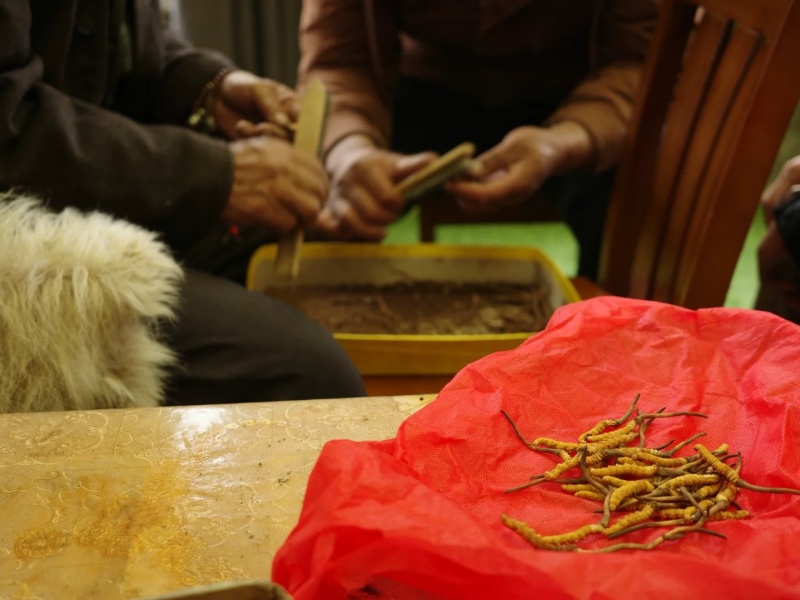
After harvesting, Cordyceps Sinensis is cleaned, sorted, and graded before entering the market.
Conclusion
Cordyceps Sinensis is one of the Tibetan Plateau’s most remarkable natural treasures. Its rare growing environment and centuries of use in Tibetan medicine have made it highly valued for generations. Today, its short harvest season and difficult collection process make wild Cordyceps especially precious.
During your Tibet tour, whether you choose to taste it, buy a small amount, or simply visit a local market, exploring Cordyceps offers another way to experience Tibet beyond its mountains and monasteries.
If you’re planning to visit Tibet in May or June, feel free to contact us, we’d be happy to help you choose an itinerary that gives you the chance to experience the Cordyceps harvest season and explore local markets.

"Tibet’s Magic Herb, Cordyceps Sinensis (冬虫夏草): Can You Try & Buy It on Your Tibet Trip?"