
 Search

 Pioneer of Tibet Tourism for Overseas Travelers since 1984!

The five colors in Tibetan Buddhism are blue, white, red, green, and yellow. Each color has a special meaning: blue represents wisdom, white represents purity, red represents compassion, green represents enlightened action, and yellow represents generosity and prosperity.
These five colors are commonly seen on Tibetan prayer flags, in monasteries, and in Buddhist paintings. Understanding their meanings can help you learn more about Tibetan Buddhist culture during your trip to Tibet.
Blue: The Color of Wisdom
In Tibetan Buddhism, blue represents the vast sky, space, and wisdom. Just as the sky is wide and endless, blue symbolizes a clear and open mind.
Blue is also associated with transforming anger into wisdom. It reminds people to respond to difficult situations with patience and understanding rather than anger.
Akshobhya Buddha, also known as the “Unshakable One,” is often shown with a deep blue body in Tibetan Buddhist art. He represents mirror-like wisdom, which means seeing things as they are without being influenced by negative emotions.
Akshobhya Buddha is often depicted with his right hand touching the ground. This gesture represents firmness and stability, reflecting the wisdom and calmness associated with blue.
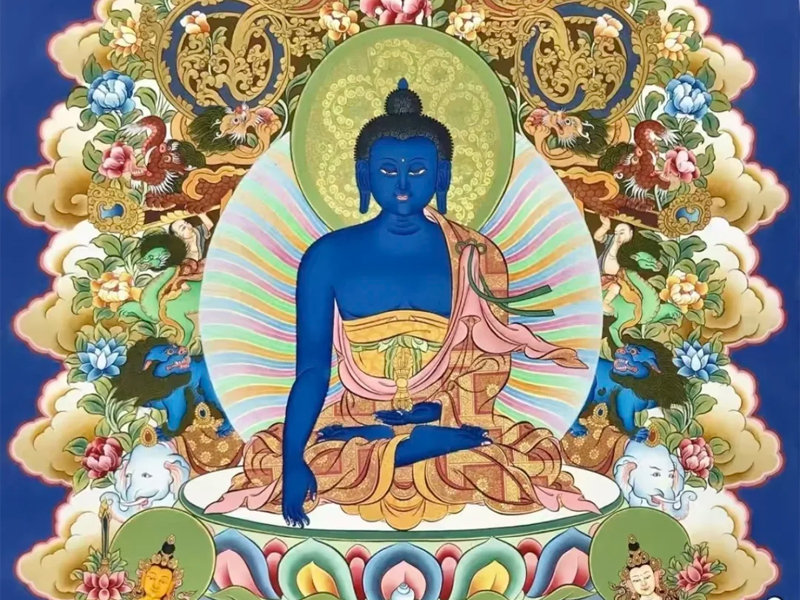
Akshobhya Buddha represents wisdom and stability in Tibetan Buddhism.
White:The Color of Purity and Peace
White represents purity, peace, and a clear mind. It is also associated with overcoming ignorance and developing wisdom, helping people see the world with greater understanding.
One of the best-known figures associated with white is White Tara. In Tibetan Buddhist art, she is often depicted with a white body and seven eyes, including eyes on her forehead, palms, and soles of her feet. These eyes symbolize her ability to see the suffering of all living beings and respond with compassion.
White Tara is also associated with healing, protection, and long life. Many Tibetan Buddhists pray to her for good health and longevity. She is usually shown sitting peacefully on a lotus throne, reflecting the calmness and purity represented by white.
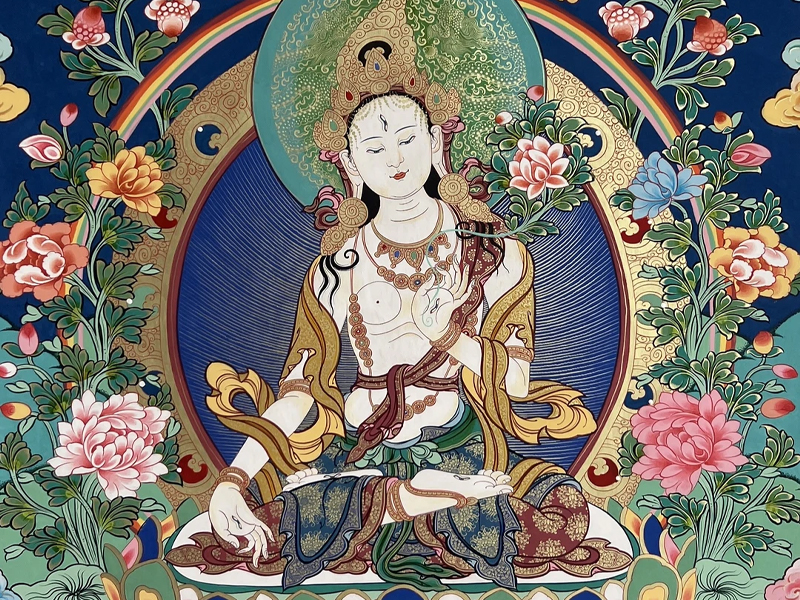
White Tara represents purity, peace, and long life in Tibetan Buddhism.
Red: The Color of Love and Compassion
Red is the color of love, compassion, and spiritual energy. Like fire, it is associated with warmth and strong emotions. In Tibetan Buddhism, red also represents the transformation of desire and attachment into wisdom, encouraging people to replace selfish desires with understanding and care for others.
Amitabha Buddha, also known as the Buddha of Infinite Light, is traditionally depicted with a red body. He is often shown sitting in meditation, with both hands resting in his lap and his palms facing upward. This gesture represents deep meditation and inner peace.
Amitabha Buddha is associated with a form of wisdom that helps people recognize differences without becoming attached to them. His red appearance reflects the transformation of strong emotions into wisdom and compassion.
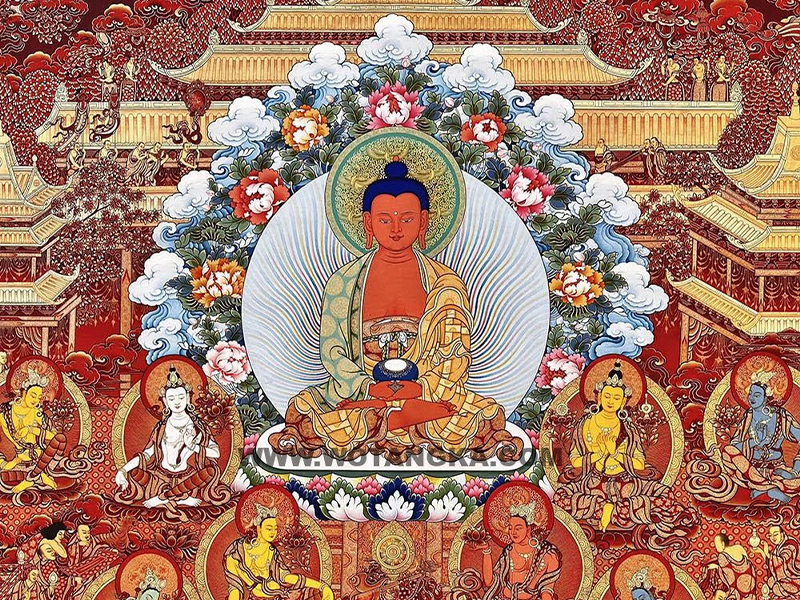
Amitabha Buddha represents love, compassion, and inner peace in Tibetan Buddhism.
Green: The Color of Compassionate Action
Green symbolizes growth, compassionate action, and the willingness to help others. It is associated with transforming jealousy and envy into the wisdom of accomplishment. This means letting go of jealousy and focusing on positive actions that benefit others.
Green Tara is one of the most important figures associated with this color. She is usually shown with a green body, sitting on a lotus throne with her right leg extended forward. Her posture suggests that she is ready to rise and help anyone in need.
Many Tibetan Buddhists pray to Green Tara for protection from danger, fear, and difficulties. Her image reflects an important Buddhist teaching: compassion is not only about caring for others but also about taking action to help them.
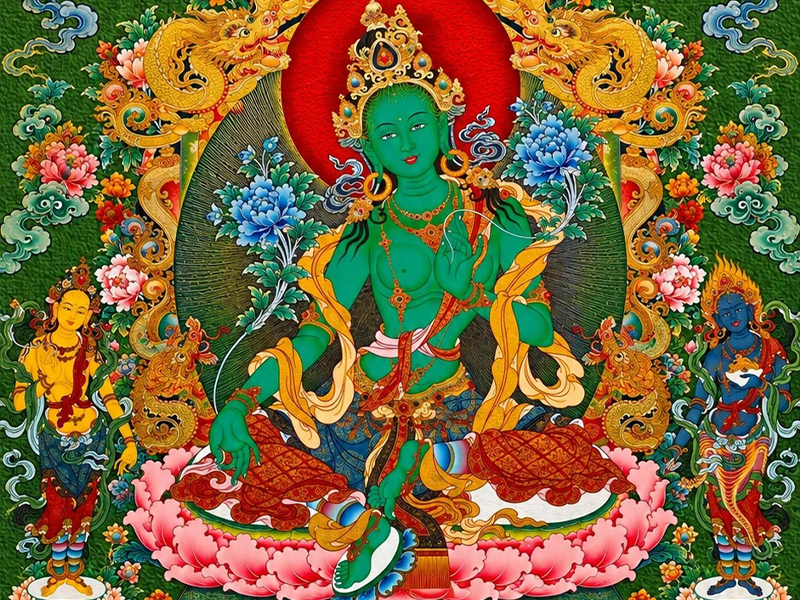
Green Tara represents compassion, protection, and the willingness to help others.
Yellow: The Color of Generosity and Prosperity
Yellow is closely linked to generosity, prosperity, and abundance in Tibetan Buddhism. It is also associated with transforming pride and arrogance into the wisdom of equality. This means recognizing that all living beings deserve equal respect and compassion, regardless of their wealth or social status.
Ratnasambhava Buddha, also known as the Jewel-Born Buddha, is one of the Five Wisdom Buddhas. He is usually depicted with a golden-yellow body and his right hand extended downward, with the palm facing outward. This is known as the gesture of giving, symbolizing generosity and the willingness to share with others.
In Tibetan Buddhist teachings, generosity is not only about giving money or material things. It can also mean sharing knowledge, offering help, and showing kindness to others. His golden-yellow appearance reflects the importance of generosity beyond material wealth.
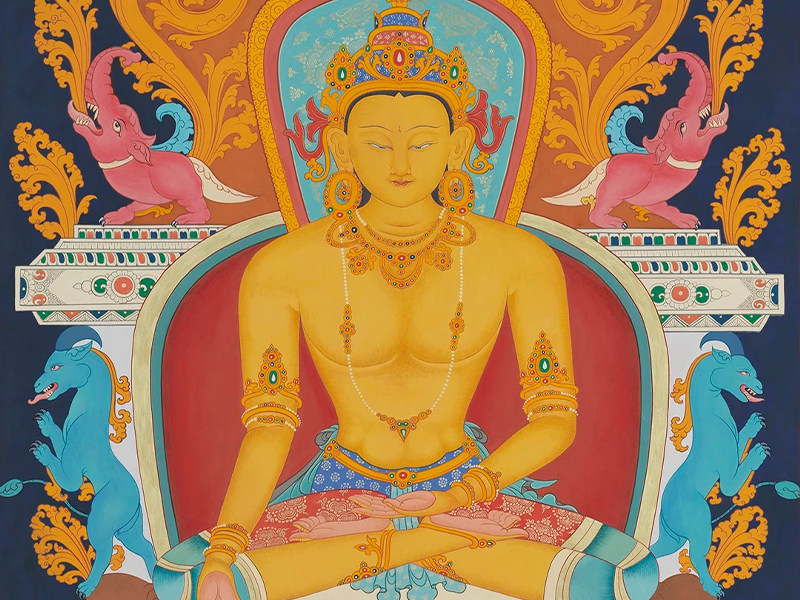
Ratnasambhava Buddha represents generosity, prosperity, and equality in Tibetan Buddhism.
Why Are Tibetan Prayer Flags Made in Five Colors?
Besides their spiritual meanings, the five colors also represent five natural elements on Tibetan prayer flags. Together, they symbolize balance and harmony in nature.
The colors are traditionally arranged in a repeating order:
- Blue: Sky or space
- White: Air or wind
- Red: Fire
- Green: Water
- Yellow: Earth
Tibetan prayer flags are usually printed with Buddhist prayers, mantras, and sacred symbols. According to Tibetan Buddhist tradition, when the wind blows through the flags, it carries prayers and blessings to all living beings, spreading peace, good health, and happiness.
You can often see these colorful flags flying at mountain passes, around monasteries, and near sacred lakes throughout Tibet.
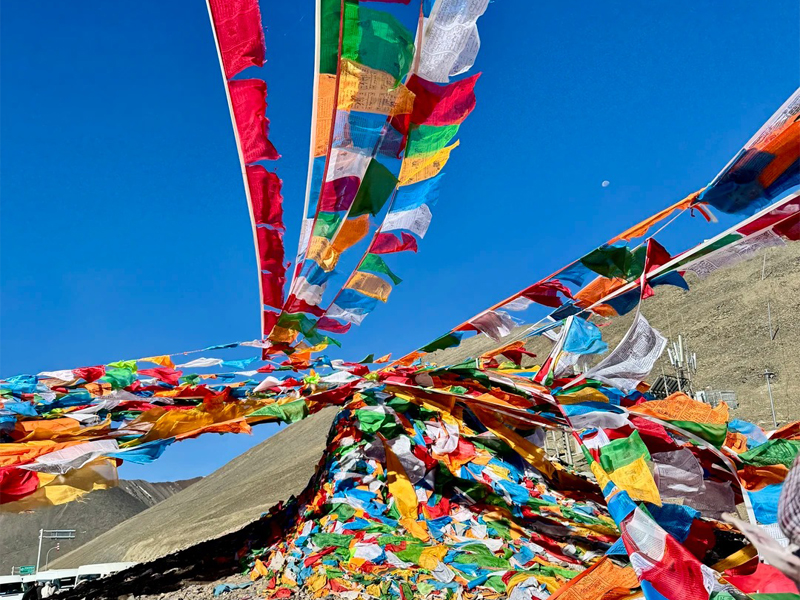
The five colors of Tibetan prayer flags represent the sky, wind, fire, water, and earth.
Where Can You See These Five Colors in Tibet?
You can see the five colors of Tibetan Buddhism throughout Tibet, especially in monasteries, Buddhist paintings, and prayer flags.
- Monasteries and Temples: At famous sites like Potala Palace and Jokhang Temple in Lhasa, you can see these colors on painted pillars, wall murals, door curtains, and decorations around Buddhist shrines.
- Thangka Paintings and Buddhist Statues: Traditional thangka paintings and Buddhist statues use different colors to show the spiritual qualities of Buddhist figures. You may recognize Green Tara, White Tara, and the red Amitabha Buddha.
- Mountain Passes and Sacred Lakes: Colorful prayer flags are often seen at mountain passes like Gawula, near sacred lakes such as Yamdrok Lake and Namtso, and along the journey to Everest Base Camp.

Our travelers enjoy the views of Namtso Lake and colorful prayer flags.
Conclusion
The five colors of Tibetan Buddhism are more than just decorations. Each has a special meaning, reflecting Buddhist teachings about wisdom, purity, compassion, and generosity. On prayer flags, they also represent the five natural elements.
During your Tibet trip, you can see these colors in monastery paintings, Buddhist statues, and prayer flags. Understanding their meanings can help you learn more about Tibetan Buddhist culture.


"Five Colors in Tibetan Buddhism: What Does Each Color Mean?"