 Search


 Pioneer of Tibet Tourism for Overseas Travelers since 1984!

Tibetan Adult Ceremony for Girls
Traditionally, a Tibetan girl is considered as an adult when she is seventeen years old. A special Tibetan adult ceremony for girls, “Dai Tou”, is held for her on a good day.
"Dai Tou" is a common expression for getting married. However, during this ceremony, it is not a real man that is married to the girl. It is said that the girl is supposed to hold the wedding ceremony with the blue sky above people's head. Because the girl is married to the blue sky, this ceremony is also called "Dai Tian Tou" ("wearing the head of the sky"). In fact, the ceremony of marrying the sky is the ceremony showing that young Tibetan women have entered adulthood.
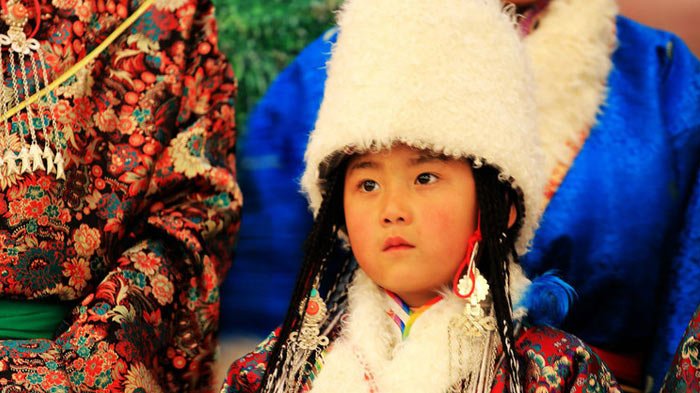 Tibetan girl will enter a new stage in her life after the adulthood ceremony.
In pasture areas of Tibet, a Tibetan girl only has two braids in their childhood, three braids at thirteen to fourteen years old and five or six braids at fifteen or sixteen years old. When she become an adult, she will have dozens of braids.
On the adult ceremony, her parents will invite a lucky girl with the same age to wear her hair in dozens of braids, which means that she is old enough to get married. Then the girl will wear the decoration of Patsu and the colorful skirt of Bangdian. Later, the girl's parents, relatives and guests will present her Hadas on congratulation. When the ceremony is over, the girl followed by three or four relatives, goes to the temple to worship the Buddha statue. After they come back, the family will provide a rich dinner for the guests.
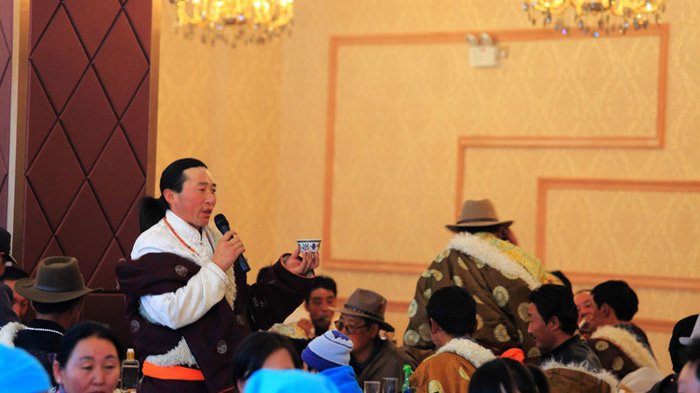 Relatives are attending the feast for the girl's adulthood.
After this ceremony, girls can identify themselves as adults and can have social contacts with people. They could have love relationship and take their beloved boyfriends home as they will. To have a child is acceptable for adult women in the community. Women after the ceremony can either get married or stay at her parents' home forever. Women can ask their lovers to become sexual partners. Unmarried women can live with their sons and daughters and form a matriarchal family.
See more about Tibetan Customs

 Email me about your travel idea