
.jpg "Tibetan Local Travel Agency")




Which Way to Choose? Lhasa to Kathmandu by Overland, Flight or Bike?
Traveling from Lhasa to Kathmandu has been an all-time favorite route for Tibet and Nepal tour. Currently, you may have three main options to enjoy this epic trans-Himalayan journey:
One is to take the non-stop flight from Lhasa Gonggar Airport to Tribhuvan International Airport; the second is to travel overland from Lhasa to Kathmandu via Gyirong Port. And the third is to cycle from Lhasa to Kathmandu. Each means entails varied travel highlights and tour combinations.
So, please follow our Tibet travel guru’s guidance and find out which means of transplantation may work best for you.
 The Most Popular Way from Lhasa to Kathmandu - by Overland
The Most Convenient Way from Lhasa to Kathmandu - by Flight
The Most Flexible Way from Lhasa to Kathmandu - by Bike
Can I Take a Bus from Lhasa to Kathmandu?
Is Train Available from Lhasa to Kathmandu?
The Most Popular Way from Lhasa to Kathmandu - by Overland
To the majority of tourists, traveling from Lhasa to Kathmandu by tour vehicle is the most popular and best energy-saving way to reach Nepal. The 7-day Lhasa to Kathmandu tour via EBC is the most celebrated way to negative your way from Lhasa to Kathmandu.
Taking the trip, you can visit the prestigious Buddhist monasteries; stroll along turquoise Yamdrok Lake; gaze at Mt. Everest at EBC; meet locals and explore local Tibetan customs.
Route for Lhasa to Kathmandu Overland Tour
It is around 1300km (one-way) for the overland tour from Lhasa to Kathmandu. The road trip falls into 4 parts:
1. Lhasa (3658m) - Yamdrok Lake (4441m) - Nagarzê (4452m) - Gyantse County (3977m) - Shigatse (4000m) (around 360km, 7h)
For the initial part of the travel, normally you will spend 3 days acclimatizing to the high altitude of Tibetan Plateau in Lhasa and its surroundings.
You will visit the magnificent Potala Palace, and worship Buddhas in Jokhang Temple. Then, take a stroll and taste local dishes in vibrant Barkhor Bazaar. Later, you will tour two of “Great three Gelugpa Monasteries in Lhasa”, i.e. Drepung Monastery and Sera Monastery.
Next, we are ready to hit the road to Shigatse via Gyantse. Along the way you may enjoy the incredible vista of Yamdrok Lake at Gampa La Pass (4790m) and closely explore the Karola Glacier.
After arriving in Gyantse, you will visit Palcho Monastery and climb Tibetan and Nepali style Gyantse Kumbum stupa. Finally, following Sino-Nepal Friendship Highway to Shigatse.
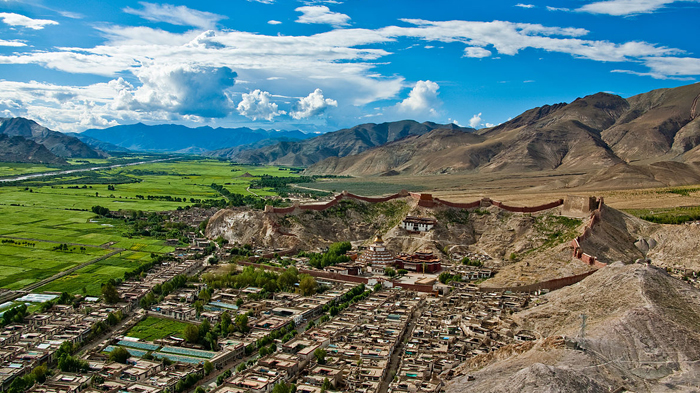 Gyantse is a must-see city along the road trip from Lhasa to Kathmandu.
2. Shigatse (4000m) - Lhatse (4012m) - Tingri (Shelkar, 4300m) - Gawu La Pass (5198m) - Rongbuk Monastery (5154m) - EBC (5200m) (around 353km, 8h50m)
After a brief visit to prestigious Tashilhunpo Monastery in Shigatse, you will follow the G318 National Highway to EBC. As you enter Mt. Everest National Reserve in Tingri, you will keenly aware of the altitude ascent and the snow-capped rolling mountains dominate the entire scenery.
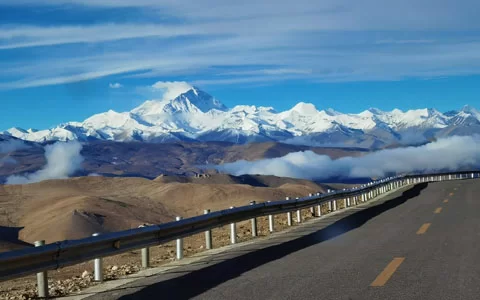
One of the highlights comes when you pass well-renowned Gawu La Pass (5198m) where you will marvel at the top 4 peaks of Himalayas. Then, we will head directly to the tented area of Everest Base Camp (5200m). You can closely enjoy the spectacular sunset of M. Everest. And spend one night at the foot of the world’s highest peak.
3. EBC (5200m) - Rongbuk Monastery (5154m) - Old Tingri (Gangga, 4800m) - Gyirong Town (2700m) (around 418km, 12h)
Wake up to photograph the mesmerizing sunrise over the summit of Mt. Everest. Then you can explore the Rongbuk Monastery (5154m), the world’s highest Buddhist site.
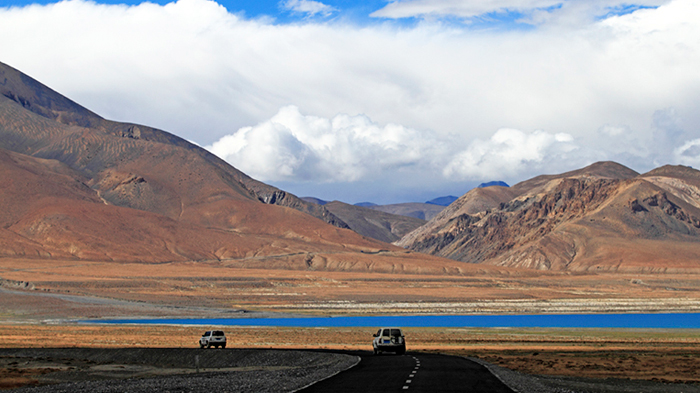
Then you will bid your farewell to the Mt. Everest and keep driving to Old Tingri (4800m). After passing enchanting Pekutso Lake (4,591m), you will experience quick descent to Gyirong Town (2700m).
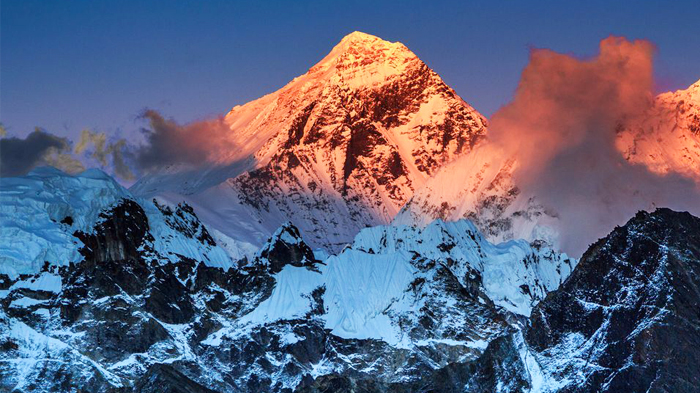 It's lucky to see sunrise shining on Mount Everest.
4. Gyirong Town (2700m) - Gyirong Border (1800m) - Kathmandu (1400m) (207km, 9h)
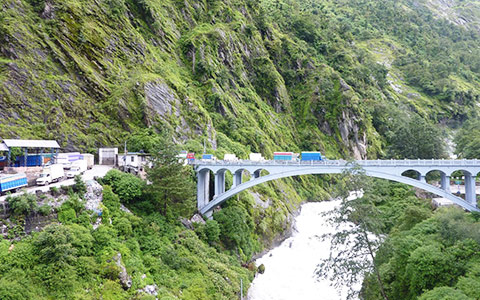
In the morning, our Tibetan guide will transfer you to Gyirong border. You can apply for Nepali Visa On Arrival (25 USD/person) at the Gyirong Port and go through the customs to Nepal’s side. After crossing Resuo bridge, you can take bus or use our transfer service 30-60 USD/person to Kathmandu.
The road from Gyirong to Kathmandu stretches 130km and the initial part of 10km’s road can be extremely bumpy. Don’t eat too full in the morning to avoid motion sickness. The lush valley and peaceful Nepal villages will become the major scene before the winding roads that lead you to open view of vibrant Kathmandu Valley.
Cost for Lhasa to Kathmandu Overland Tour
On average, for the overland tour from Lhasa to Kathmandu, you need to have at least 1500 USD. The cost is spent to cover the tour vehicle, hotel, and dining, guide, and other tour service, and relevant travel documents' application and other personal expenditure.
You need to prepare some cash while in Lhasa since not many ATMs or big banks can be found in places beyond Lhasa. Our Tibetan guide will help you exchange the money.
If you want to travel on a budget, it's highly recommended to join the small group tour. In this case, you can share the tour cost with other group members while meeting like-minded travelers globally. And off-season of Tibet tour from Nov to early Feb next year will save you more cost for hotel, flight and attraction's entrance fee, etc.
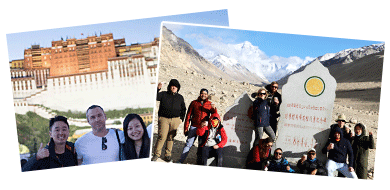
 One can join in small group tour for budget travel from Lhasa to Kathmandu.
Dinging and Hotels for Lhasa to Kathmandu Overland Tour
In Lhasa, you can enjoy awful lots of choices for dining and hotels. Traditional Tibetan noodles, Tsampa, sweet tea, Tibetan momo, dried yak meat, etc are readily available in local Tibetan restaurants; while typical western dishes, Nepali and India food can also be easily found around Barkhor Street. The cost for a meal will set you back around 25CNY to 65CNY (or 4-9 USD/per meal) on average.
On the other hand, from the cheap youth hotels to 4-star clean and cozy Tibetan hotels and up to instantly recognizable luxury resorts, like St. Regis or Intercontinental Lhasa Paradise, you can find the right choice that suits your pocket.
As you leave Lhasa and travel from Shigatse to Everest region, the dining and accommodation will become very basic due to inhospitable environment at extreme altitude. Instant noodles, stirred rice with eggs and Tibetan momos, dried yak meat or lamb meat are pretty common. And there is no hot tap water to be used and you may encounter the notoriously filthy public toilet. So do down play your expectation for the comfort since traveling from Lhasa to Kathmandu is an adventure tour.
> Join in our most classic 7 days Lhasa to Kathmandu overland tour.
The Most Convenient Way from Lhasa to Kathmandu - by Flight
If you have just completed your Tibet tour or have a tight schedule, travelling from Lhasa to Kathmandu by air is the most efficient way to reach Nepal. The flight distance is around 609km ( around 1h30m), and you can have a bird’s eye view of mighty Himalayas, esp. the summit of Mt. Everest.
Schedule of Lhasa to Kathmandu Flight
You can easily take non-stop flight from Lhasa (3658m) to Kathmandu (1400m), which only takes around 1h 30min. Currently, Sichuan Airline and Air China run non-stop flights from Lhasa to Kathmandu and are the best choice for the flight. There is only one non-stop flight in each day, totally 7 non-stop flights per week, run by these two major airlines respectively.
Sichuan Airlines: Lhasa and Kathmandu Flight Schedule
| Flight Route | Flight Code | Dep. | Arr. | Dur. | Type | Schedule |
| Lhasa to Kathmandu | 3U8719 | 11:10 | 10:30 | 1h35m | 319 | 1,3,5,7 |
| Kathmandu to Lhasa | 3U8720 | 11:30 | 15:10 | 1h25m | 319 | 1,3,5,7 |
Air China: Lhasa and Kathmandu Flight Schedule
| Flight Route | Flight Code | Dep. | Arr. | Dur. | Type | Schedule |
| Lhasa to Kathmandu | CA407 | 11:50 | 11:10 | 1h35m | 319 | 2,4,6 |
| Kathmandu to Lhasa | CA408 | 12:10 | 16:00 | 1h35m | 319 | 2,4,6 |
(Please note: the above schedule is just for your reference based on the peak season. Please contact us for the detailed airfare and schedule.)
How to Book a Cheap Flight from Lhasa to Kathmandu?
As to the flight tickets, we suggest you closely follow the major flight tickets online. You may use major flight ticket search engine like Expedia, Skyscanner, Cheapoair, Tripadvisor.com or official websites of Sichuan Airline or Air China to compare the flight tickets.
It's advisable to book your flight ticket around 30 to 60 days in advance, so long as the cheaper flight is available. Or you may count on our flight booking service, if you have language barrier or find it hard to deal with the payment, etc. Please feel free to contract our travel consultants.
Similarly to the seasonal change of Tibet travel, the flight ticket price tends to fluctuate in different seasons. And the cheap flight often comes during the low season of Tibet travel (end of Oct. to Feb) and when there is an annual sales promotion in the airline company.
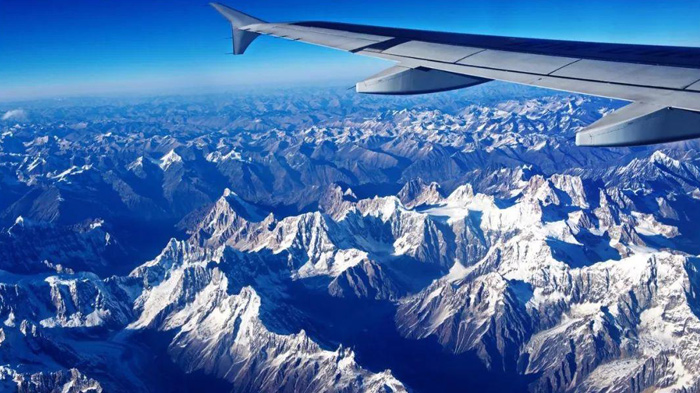 Flight from Lhasa to Kathmandu flies over the Himalyan range.
Insider Tips:
1) If you take Lhasa to Kathmandu flight, do choose a window seat on the right side of the plane right behind or in front of the wing of the plane. As the plane approaches Kathmandu, you will be rewarded with incredible vista of majestic Himalayan Range, esp. the bird’s eye view of the pyramid-shaped summit of Mt. Everest.
2) If you fly from Lhasa to Kathmandu, after your land, you can apply for Visa On Arrival inside Tribhuvan International Airport. We offer hassle-free service for your travel documents and flight booking.
> Book your Lhasa and Kathmandu flight with us.
The Most Flexible Way from Lhasa to Kathmandu - by Bike
As opposed to enjoying the window view from the tour vehicle, cycling from Lhasa to Kathmandu brings super flexibility and real sense of freedom. And unlike cycling elsewhere in the world, the thin air, physically-demanding up-and-down ride and eye-blinding sunshine, and incredible alpine lakes and sublime Himalayan peaks will add up to your sweet and bitter memories.
Route for Lhasa to Kathmandu Cycling Trip
You need to plan at least 16-19 for the Lhasa to Kathmandu travel by bike. Likewise, normally the newly-arrived travelers need to spend 3 days in Lhasa, touring the landmark Buddhist sites like Potala Palace and Jokhang Temple, etc and more importantly get acclimatized to the high altitude.
Then you can have a test ride around the surroundings of Lhasa city. So, both you and your guide know your stamina for cycling on the Tibetan Plateau and he can help you to design the day-to-day cycling distance, which fits best for you or your team. Afterwards, you and whole cycling team can venture out towards Shigatse after getting enough supply and preparation.
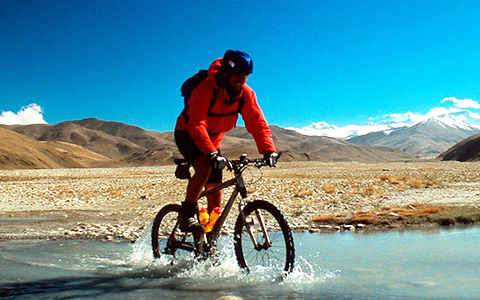
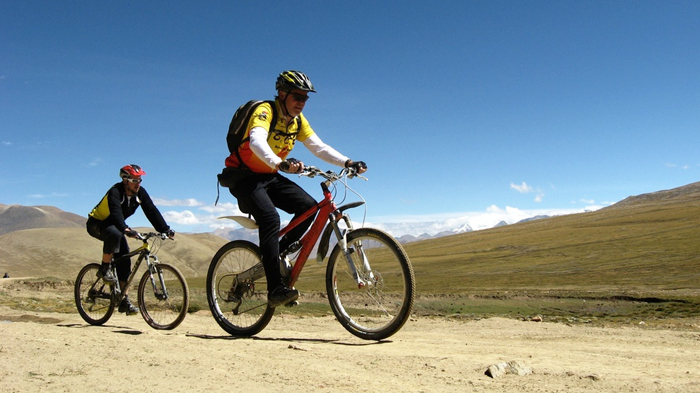 Cycling on the Tibetan plateau is a test of mind and strength.
For the cycling route, it normally goes as follows:
a.Lhasa (3658m) - Qushui (3700m) - Nagarzê (4452m) - Gyantse (3977m) - Shigatse (4000m) - Jiding (3836m) (322km, 7days)
b.Jiding (3836m) - Lhatse (4012m) - Tingri (Shelkar,4300m) - Zhaxizong (4100m) - EBC (5200m) (283km, 4days)
c.EBC (5200m) - Old Tingri (Gangga, 4800m) - Peokutso Lake (4,591m) - Gyirong Town (2700m) (360km, 3days)
d.Gyirong Town (2700m) - Gyirong Border (1800m) - Syburbesi (2380m) - Kathmandu (1400m) (207km, 2 days)
> Check for the most classic 22-day Lhasa to Kathmandu Bicycle Tour Itinerary.
Cost for Lhasa to Kathmandu Cycling Trip
It may sound surprising to you that in fact the cost for cycling from Lhasa to Kathmandu is much higher than normal travel in a tour group by a tour vehicle. However, it is true, given the longer days of travel (usually 16-20 days) than normal tour group and more staff and resources (such as supportive van, logistic supply, guide, chef, medical help, camping and cooking facilities, etc.) are involved, and all cycling tours are private tour, and so on.
Therefore, you do need to prepare a decent budget for the cycling. However, the thrilling experience you get along the way and sense of accomplishment and freedom of travel you feel are definitely stronger than tourists sitting in a tour vehicle. For the exact quotation based on your needs, please feel free to contact our travel consultants for free consultancy.
Dining and Hotels for Lhasa to Kathmandu Cycling Trip
Well, you will enjoy much comfort concerning the dining and hotels in Lhasa as mentioned above. However, as you travel beyond Lhasa with your bike, the dining and accommodation condition will be quite different.
Before you reach the next village or county, camping in the wilderness would become fairly common. You and the whole team will work together to pitch camps and set campfire, or enjoy the picnic beside the glittering lakes, etc.
In most cases, our Tibetan guide or a private chef if you prefer will make nutritious and tasty home-made food for you. It would be a great chance to build up teamwork spirit and experience authentic Tibetan travel just like what local pilgrims do.
Once you reach a city or town, we can help you book the guesthouse or hotel for lodging. In Everest Region at EBC, you can either choose to sleep at tented camp area (5200m) or stay in the guesthouse of Rongbuk Monastery (5154m).
The facilities of both places are very humble and have no showering facilities. However, you will wake up to see the mind-blowing sunrise over the world’s highest peak, so up-close. It’s definitely worth the ordeal since it’s an adventure journey.
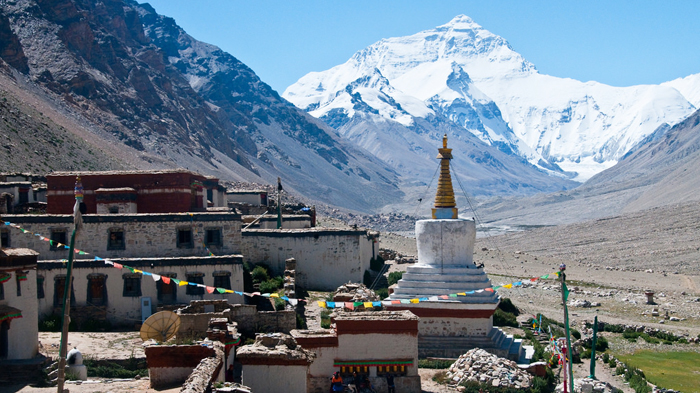
You can eat and sleep at Rongbuk Monastery guesthouse.
Insider Tips:
1) Nowadays, there is no need for you to pedal the entire over 1000 km from Lhasa to Kathmandu. We offer the popular "4+2 cycling mode" for mountain biking in Tibet. A supportive van loaded with your guide, logistic supply, bike parts for repair, first-aid kit and even a private cook, etc. can travel behind you to guarantee your safety.
2) If you come in Lhasa without a bike, we also offer bike rental service for you. Of course, you may also opt to travel from Lhasa to Kathmandu by motorbike. We offer rental service for the motorcycle and professional guide and back-up truck and logistical supply and staff, etc.
3) We offer a whole set of camping facilities for rent, such as, camp, sleeping bags, portable charger, bed sheet, etc. If you prefer, you may also bring your own personal sleeping bag, which can be used for -5℃ or higher.
Can I Take a Bus from Lhasa to Kathmandu?
Currently, travelling from Lhasa to Kathmandu by bus is only available for Chinese citizens and Nepali nationals living close to Sino-Nepal border.
You can take Lhasa to Kathmandu bus at around consulate general of the Kingdom of Nepal in Lhasa at Norbulingka Road 13. The long-distance buses depart from Monday to Friday at around 4PM, and leave at around 1PM on the weekend. It takes 17 hours or so to reach Gyirong. The cost for the bus in high season (April to Oct) is about 480 CNY (69USD)/person, whereas it’s only 280 CNY (40USD)/person in the off season (Nov to Feb).
The Lhasa to Kathmandu bus actually stops at Gyirong border. After you get off the bus, you need to hire a private car 30-60USD/person or take 15USD/person to reach Kathmandu. Since the bus route skips all the highlighted attractions from Lhasa to Kathmandu, so it’s not recommended.
Insider Tips:
The distance between Gyirong town and Gyirong border is 77km or 1h55m’s drive. And the customs of Gyriong border works from 10:00 to 18:00 Beijing time. Normally, travelers will spend one night at Gyirong town and cross the Gyirong border to Kathmandu the next morning.
Is Train Available from Lhasa to Kathmandu?
Taking Lhasa to Kathmandu train to reach Nepal has been a common aspiration shared by Chinese and Nepali citizens for years. Nevertheless, so far there is no railway connecting Lhasa and Kathmandu at present. But a railway between Lhasa and Kathmandu is being designed by both Chinese and Nepalese governments.
The current situation is that on Tibet’s side, only Lhasa-Shigatse railway was completed and was put into use since 2014. The rest of the section from Lhasa to Gyirong is expected to be finished in the near future. Whereas on Nepal’s side, no official news gives an exact date when the project can be completed.
At present, if you really want to enjoy the train journey to Gyirong, there is only one way out, i.e. firstly take Lhasa-Shigatse train (253km, 2h47m) to Shigatse; then take bus or tour vehicle to reach Gyirong town (558km, 11h27m); finally cross Gyirong border and take bus or hire a private car to Kathmandu (207km, 10h).
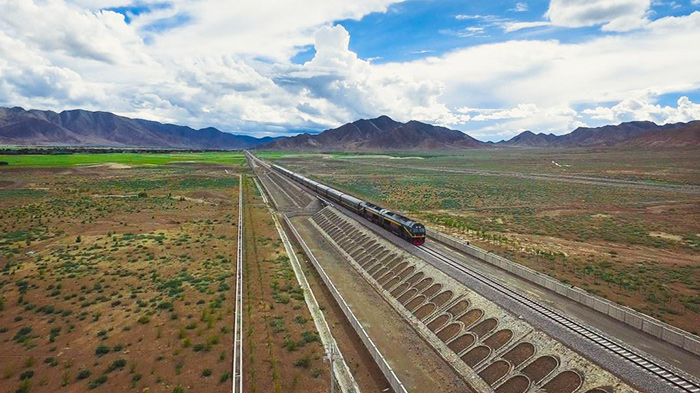 The train from Lhasa to Shigatse runs towards Shigatse city.
Hopefully, one thing for sure, in the future, it is possible to take a train from cities like Beijing, Chengdu, Xining, Shanghai, Xi’an, etc to Lhasa and then further travel to Kathmandu by train.
> Check the Lhasa to Shigatse train schedule and ticket price.
More FAQs about Travelling from Lhasa to Kathmandu
1) Do I have to worry about altitude sickness for the journey?
All the newly-arrived travelers will respond physically to the altitude change. So, there is no need to panic. Having a great rest for the first day on the arrival is very important. Never exert yourself by running or jumping. Then drinking lots of water and spending a couple of days in Lhasa will be helpful to adapt to the high altitude.
Always avoiding quick ascent is key to prevent acute altitude sickness. Our Tibetan guide will closely follow your health throughout your stay in Tibet. You may also buy some altitude sickness medicines in local drugstore with the consult of your doctor and local pharmacists.
2) What travel permits to obtain for Lhasa to Kathmandu tour?
Tibet Permit is needed to enter Tibet. Alien’s Travel Permit and Nepali Visa On Arrival are also needed for Lhasa to Kathmandu overland tour.
We will help you take care of all the travel documents. The only thing to remember is to book your Lhasa to Kathmandu tour at least 25 days in advance. So we have enough time to help you apply for the Tibet Permit to enter Tibet.
3) What to pack for the Lhasa to Kathmandu tour?
The drastic temperature change between day and night and strong solar radiation and head-numbing chilly wind are what you need to take care. It’s advisable to wear multiple clothes than an extremely thick clothes. During daytime, the temperature remains around 13-20 Celsius with warm and cozy sunshine.
For a normal Lhasa to Kathmandu overland tour, a beanie can help to prevent your head from strong gale. Sunscreen, lip balm and sun glass can shield you from sunburn. Then, scarf, thermal clothes and trousers, sweater, T-shirt, Jeans and down jacket, wool mitten and thin/thick socks and a comfortable sport shoes will do in most cases.
Remember even in summer, you need the down jacket when you travel to high passes or Everest region. In addition, toiletry and personal medicine, like for the cold and diarrhea, etc is also needed. There is no need to carry sleeping bags. We offer tourists-friendly rental service.
4) Can I travel independently from Lhasa to Kathmandu?
Backpacking or independent travel is not available for international tourists. According to the Tibet travel policy, all the international tourists need to visit Tibet via a pre-booked tour with a licensed Tibet travel agency.
You have to rely on this travel agency to apply for the Tibet Permit and other travel documents. During your stay in Tibet, an assigned Tibet guide will travel with you throughout the tour.
5) When is the best season for Lhasa and Kathmandu tour?
The best season for Lhasa to Kathmandu overland tour is April, May, early June, Sept, Oct, Nov, Dec. And mid April to May, early June, Sept and Oct are believed to be the best months for traveling from Lhasa to Kathmandu by bicycle.
These periods avoid the monsoon season in Tibet and Nepal. So, you won't be afraid of the landslide and muddy road on Sino-Border border and intermittent downpour.
6) Which is better? Lhasa to Kathmandu by overland or flight?
The overland distance between Lhasa to Kathmandu is around 1300 km or a minimal of 7 days for travel; while flight distance is around 609km (around 1h 30m). You need to prepare at least 1500 USD for the overland journey; and 267-514 USD/person for the flight.
It’s up to you to choose the suitable way for yourself. Generally, 7-day Lhasa to Kathmandu tour by tour vehicle is the most popular way to reach Nepal. And taking flights run either by Sichuan Airline or Air China is the most convenient way to travel from Lhasa to Kathmandu.
7) How to travel from Lhasa to Kathmandu by train?
At present, Lhasa to Kathmandu by train is no available. Instead, you can take Lhasa to Shigatse train to Shigatse and then take bus or hire a private vehicle to reach Gyirong border and cross it to Kathmandu the next day.
8) How many days are required for cycling from Lhasa to Kathmandu?
You need to have more budget and plan at least 16-19 for the Lhasa to Kathmandu travel by bike; 4+2 travel mode is more popular to cyclists.
Conclusion
It depends on yourself to decide which way to choose for travelling from Lhasa to Kathmandu. And we can always help you to enjoy a smooth Lhasa to Kathmandu tour. We offer 100% Tibet Permit guarantee for free to our clients and other tourist-friendly service, such as hotel, flight and Tibet train booking to Tibet. Please feel free to contact us for free consultancy.

With exceptional passion and outstanding leadership, Mrs. Catherine has dedicated herself to Tibet inbound tourism and China tour for 15 years. As one of the handful females who see great potential of Chinese inbound tourism, Catherine has made great contribution to promoting Tibet tourism and enhancing the employment of Tibetans and prosperity of local Tibetan community.
Over the years, she travelled overseas with Tibet Tourism Bureau many times to promote Tibet tourism. Currently, Catherine works as the marketing director of Tibet Vista, an opinion leader behind the whole team of Tibet Vista.
 Email me about your travel idea
Related Articles & Posts
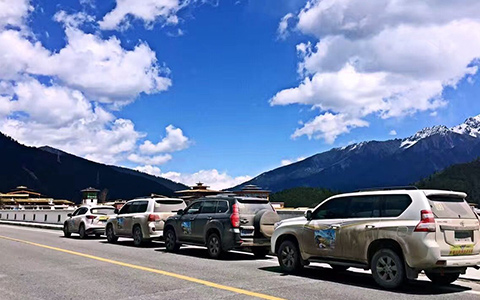
Most Popular Tibet Tour Packages
-
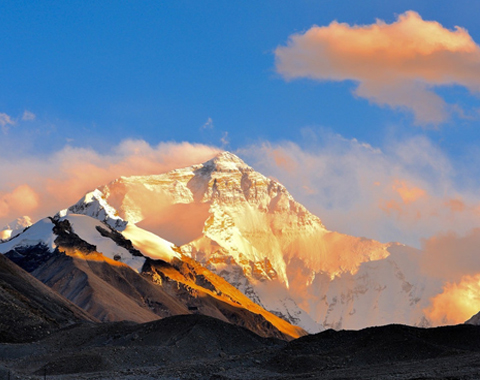
Lhasa - Gyantse - Shigatse - Everest Base Camp - Shigatse - Lhasa
USD939
View Details -
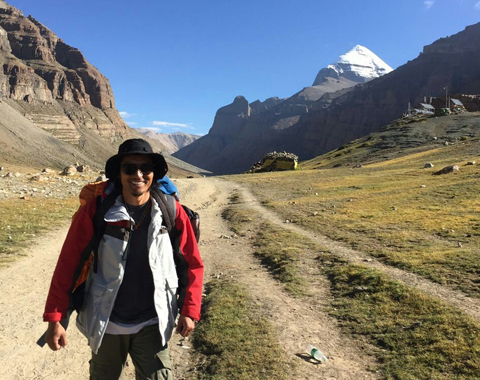
Lhasa - Gyantse - Shigatse - E.B.C - Saga - Kailash Trek - Darchen - Lake Manasarovar - Saga - Gyirong - Tingri - Lhasa
USD2059
View Details -
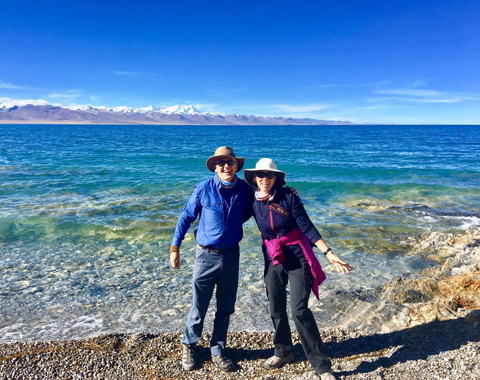
10 Days Lhasa to Everest Base Camp and Namtso Lake Small Group Tour
Lhasa - Gyantse - Shigatse - EBC - Shigatse - Lhasa - Namtso Lake - Damxung - Lhasa
USD1289
View Details -
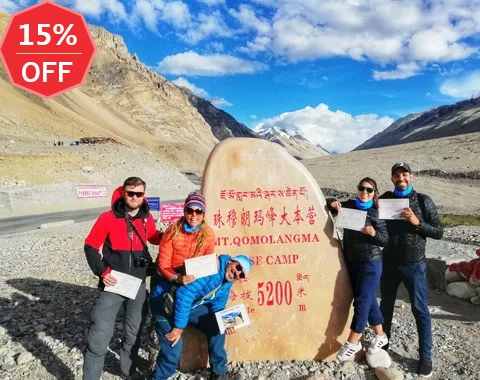
8 Days Driving Across Himalaya Overland Adventure from Kathmandu to Lhasa
Kathmandu - Gyirong - Everest Base Camp - Tingri - Shigatse - Gyantse - Lhasa
USD1069
View Details -
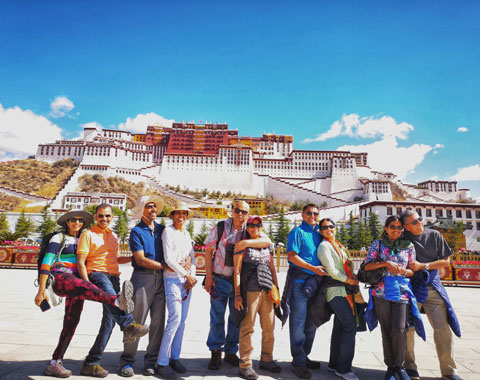
4 Days Lhasa Impression Small Group Tour: Explore the Heart of Tibet and Mingle with the Locals
Lhasa
USD509
View Details -
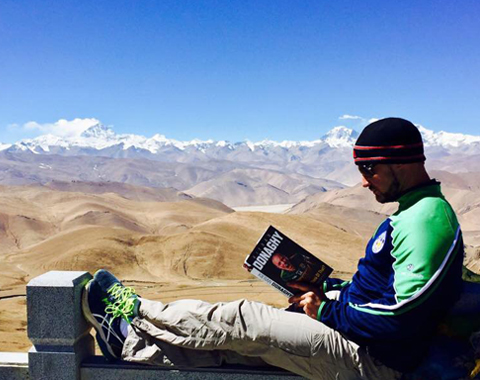
Lhasa - Gyantse - Shigatse - Everest Base Camp - Gyirong - Kathmandu
USD979
View Details -
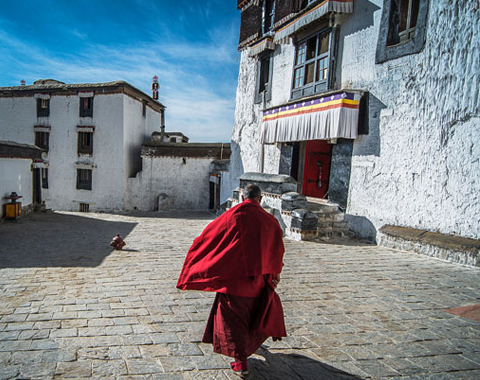
Lhasa - Gyantse - Shigatse- Lhasa
USD799
View Details -
13 Day Lhasa, Mt. Everest, Mt. Kailash, Lake Manasarovar and Kathmandu Adventure Tour
Lhasa - Gyantse - Shigatse - EBC - Saga - Darchen - Kailash Trek - Darchen - Saga - Gyirong - Kathmandu
USD2059
View Details