 Search
 Pioneer of Tibet Tourism for Overseas Travelers since 1984!

Tibet Healing Spa: Experience Traditional Tibetan Wellness, Massage & Healing Practices


A Tibet healing spa is a holistic healing experience that combines practices such as Tibetan massage (Ku Nye), medicinal baths, herbal therapies, and natural hot springs, offering travelers a unique way to experience traditional Tibetan wellness rooted in the unique environment.
Unlike a regular spa that mainly focuses on relaxation and beauty treatments, Tibetan healing experiences are deeply connected with Sowa Rigpa (Traditional Tibetan Medicine), traditional healing methods, natural ingredients, and a holistic approach to wellness.
In this guide, you will learn what a Tibet healing spa is, the traditions behind Tibetan wellness, the best healing experiences to try, where to enjoy them in Tibet, and how to add a relaxing Tibetan spa experience to your Tibet tour at the best time.
Quick Facts about Tibet Healing Spa
| Quick Fact | Details |
|---|---|
| Traditional System | Sowa Rigpa (Traditional Tibetan Medicine) |
| Popular Experiences | Ku Nye massage, medicinal bathing, and natural hot springs |
| Best Place to Try | Lhasa, Shannan, Yangbajain, Dezhong, and near Lake Manasarovar |
| Typical Cost | About CNY 100 - 800+ depending on experiences and provider |
| Recommended Timing | After you have acclimatized to Tibet’s high altitude |
| Tibetan Medicinal Bathing | Was added to UNESCO’s Intangible Cultural Heritage list in 2018 |
Traditional Tibetan Healing Wisdom: Sowa Rigpa, Medicinal Bathing & Herbal Therapies
What Is Tibetan Massage (Ku Nye) and What Can Travelers Expect?
Best Tibetan Healing Experiences and Where to Try Them in Tibet
When Is the Best Time to Enjoy a Tibet Healing Spa Experience?
How Much Does a Tibet Healing Spa Experience Cost?
Is Tibet Healing Spa Suitable for International Travelers?
How Can You Add a Tibetan Healing Experience to Your Tibet Tour?
What Is a Tibet Healing Spa?
A Tibet healing spa is a wellness experience that combines traditional Tibetan healing practices with relaxation treatments, allowing travelers to discover a unique side of Tibetan culture.
Instead of focusing only on beauty or physical relaxation like many modern spas, Tibetan healing spas are inspired by Traditional Tibetan Medicine principles and emphasize balance between the body, mind, and natural environment.
During a Tibet healing spa experience, travelers may enjoy experiences such as Tibetan Ku Nye massage, herbal therapies, medicinal bathing, and hot spring relaxation. Many of these practices use natural ingredients from the Tibetan Plateau, including traditional herbs and oils.
A Tibet healing spa experience is also a cultural journey. The treatments are closely connected with Tibetan traditions, offering visitors a chance to slow down, relax after sightseeing, and experience a peaceful aspect of Tibetan life beyond monasteries and landscapes.
Tibet Healing Spa vs. Regular Spa: What Is the Difference?
| Tibet Healing Spa | Regular Spa |
|---|---|
| Rooted in Tibetan wellness traditions and Sowa Rigpa | Usually based on modern beauty and relaxation treatments |
| Uses traditional methods such as Ku Nye massage and medicinal bathing | Commonly uses massage, skincare, and beauty treatments |
| Often incorporates herbal ingredients and natural elements | Usually uses commercial spa products |
| Offers a cultural experience connected with Tibet | Mainly focuses on relaxation and personal care |
 The staff is preparing for a Tibetan Spa and Massage.


Join our 8 days Lhasa to Everest base camp tour and enjoy Tibet healing spa along the way.
Traditional Tibetan Healing Wisdom: Sowa Rigpa, Medicinal Bathing & Herbal Therapies
Tibetan healing traditions have developed over centuries in response to the high-plateau environment. At the heart of these traditions is Sowa Rigpa, also known as Traditional Tibetan Medicine, which combines herbal ingredients, and traditional healing methods.
Sowa Rigpa: The Foundation of Traditional Tibetan Wellness
Sowa Rigpa, meaning the “Science of Healing,” is an ancient Tibetan medical system that focuses on maintaining balance between the body and mind. It follows a holistic approach to prevent illness, improve health, and cultivate overall well-being.
Sowa Rigpa uses methods such as pulse diagnosis, urinalysis, dietary adjustments, lifestyle guidance, herbal and mineral medicines, external therapies like Ku Nye massage, and spiritual practices. Today, this traditional healing system is practiced across Himalayan regions.
Tibetan Medicinal Bathing: A Unique Healing Tradition
Tibetan medicinal bathing, also known as Lum bathing of Sowa Rigpa, is a centuries-old Tibetan healing practice that uses natural hot springs, herbal baths, and steam therapy to support balance between the body and mind.
Traditional bathing methods include mineral hot springs, herbal water, and steam treatments using local herbs. As an important part of Tibetan medicine and recognized as a UNESCO Intangible Cultural Heritage, Lum bathing is traditionally used for wellness and relaxation.
Tibetan Herbal Therapies: Connecting Nature and Wellness
Tibetan herbal therapies are based on the principles of the Four Tantras and the balance of the three humors (rlung, mkhris-pa, and bad-kan), it emphasizes the connection between physical health, lifestyle, and mental well-being.
Tibetan herbal remedies often use high-altitude plants in Tibet, aromatic herbs, and rare natural ingredients such as snow lotus and cordyceps. These ingredients are carefully combined into traditional formulas, including pills, powders, and decoctions.
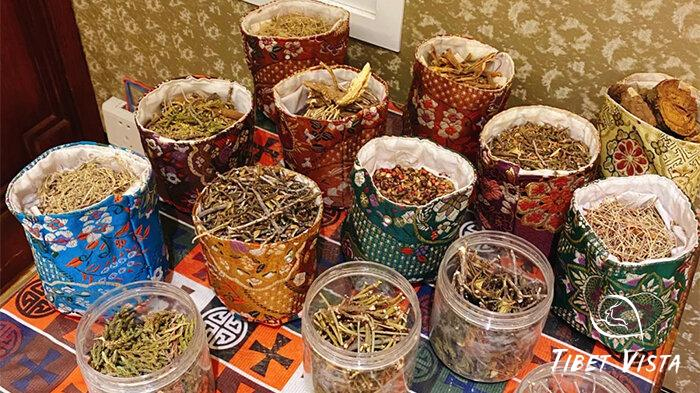 Tibetan Herbs used in Tibetan Spa and Massage.
What Is Tibetan Massage (Ku Nye) and What Can Travelers Expect?
Tibetan massage, traditionally known as Kunye or Ku Nye, is an ancient holistic healing practice rooted in Traditional Tibetan Medicine that uses warm herbal oils and manipulative bodywork to balance the body's subtle energies. And it contains two core principles:
- The Wind Element (Lung): Tibetan medicine views the body as a combination of five elements (earth, water, fire, wind, and space). Kunye primarily targets the wind element (Lung), which governs the nervous system, movement, and mental activity.
- Energy Channels: The practice works with specific pressure points and energy channels to release physical blocks and emotional stress.
What Happens During a Tibetan Ku Nye Massage?
A typical Ku Nye massage begins with warm herbal oils, followed by hand massage and traditional tools. The experience is usually slow and relaxing and includes three main stages:
- Ku (Application): The therapist applies warm herbal oils or sacred substances to the skin based on your unique body constitution.
- Nye (Massage): The actual treatment involves gentle rubbing, deep circular kneading, pressing, tapping, and acupressure. Supplementary tools like hot stones, compresses, or cupping may also be used.
- Chi (Removal): The session concludes with scraping or wiping away excess oil from the body
Tibetan Ku Nye Massage vs. Regular Massage
| Feature | Tibetan Ku Nye Massage | Regular Massage (e.g., Swedish/Deep Tissue) |
|---|---|---|
| Primary Goal | Balances subtle energies (Lung, Tripa, Beken) and heals mind-body imbalances. | Relieves muscle tension & physical stress, and promotes relaxation. |
| Philosophical Root | Traditional Tibetan Medicine (Sowa Rigpa). | Western anatomy, physiology, and kinesiology. |
| Key Stages | Ku (oil application), Nye (kneading), and Chi (powder cleansing). | Continuous oil/lotion application and direct muscle manipulation. |
| Mediums Used | Customized herbal oils, medicated butter, and herbal powders | Standard neutral massage oils, creams, or lotions. |
| Techniques | Joint mobilization, energy point stimulation, and optional hot stones. | Standardized strokes like effleurage, petrissage, friction, and tapping. |
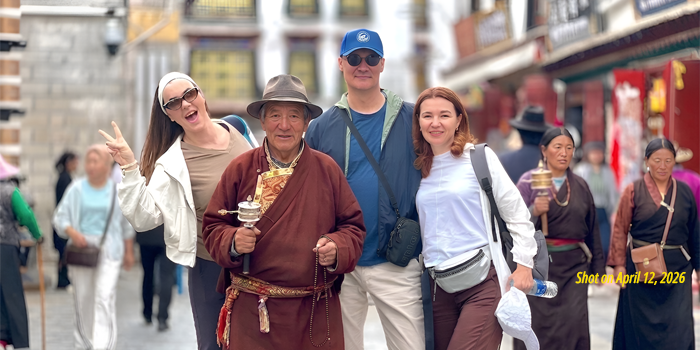
Join our 4 days Lhasa tour to discover essence of Lhasa and enjoy Tibetan Ku Nye.
Best Tibetan Healing Experiences and Where to Try Them in Tibet
The best Tibetan healing experiences you can enjoy during a Tibet tour include Tibetan Ku Nye massage, herbal therapies, medicinal baths, and hot spring relaxation. The best places to experience these practices are Lhasa, Shannan, Yangbajain, and near Lake Manasarovar.
Tibetan Ku Nye Massage in Lhasa
Experience Tibetan massage during Lhasa tour is the easiest options for international travelers. You can find Ku Nye and Tibetan-inspired treatments at local wellness centers and some upscale hotels, making them easy to arrange around your sightseeing schedule.
For a more comfortable experience, Songtsam Linka Retreat, one of the best luxury hotels in Lhasa, offers Ku Nye massage and other Tibetan-inspired wellness treatments. It can be a convenient option if you want to relax without making a special trip outside Lhasa.
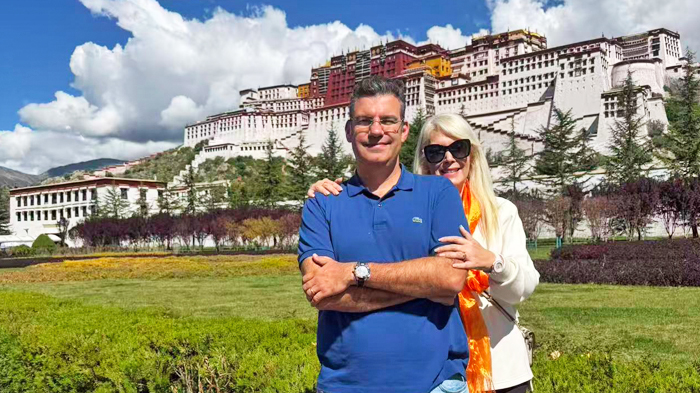 After visiting attractions such as the Potala Palace in Lhasa, you can choose Tibetan Ku Nye massage to relax your body.
Tibetan Medicinal Bathing in Lhasa and Shannan
If you want to experience something more closely connected with Sowa Rigpa, try a Tibetan medicinal bath. In Lhasa, options include Xingkong Tibetan Medicinal Bath (Kamariqu) and Ganluqumi Tibetan Medicinal Bath, where travelers can experience herbal bathing.
For a deeper cultural experience, consider Shannan (Lhoka). Tibetan medicinal bathing has a long tradition in this region, and the practice is recognized as part of China's national intangible cultural heritage. The Naidong District Tibetan Medicine Hospital also provides medicinal bathing under the guidance of Tibetan medicine practitioners.
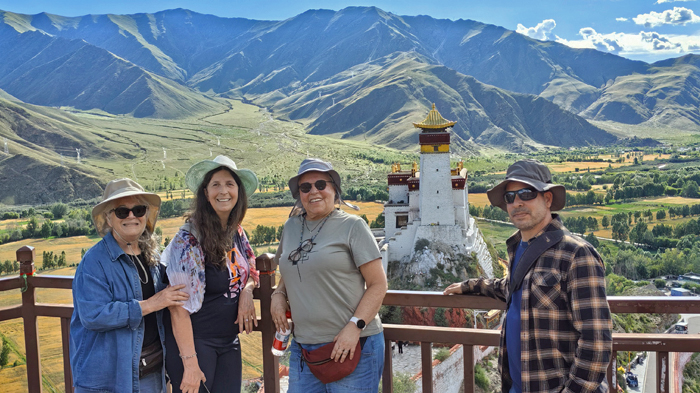 Our travelers visit Yunbulakang Palace in Shannan.
Natural Hot Springs at Yangbajain and Dezhong, and Near Lake Manasarovar
Tibet's geothermal landscape provides another option: natural hot springs. Yangbajain, northwest of Lhasa, is one of Tibet's best-known geothermal areas. Here, hot springs and steaming geothermal landscapes create an experience very different from an indoor spa.
Dezhong Hot Spring, northeast of Lhasa, was praised as the “world’s first hot spring”, offers a quieter and more remote setting surrounded by mountains and valleys. Additionally, enjoy a hot spring near lake Manasarovar during a Mount Kailash tour is definitely a rewarding experience.
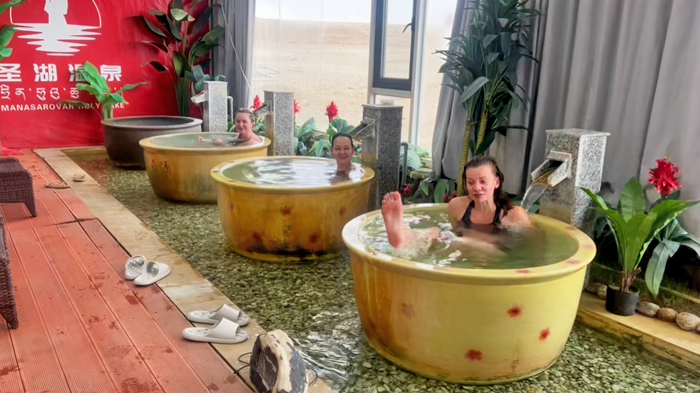 Our travelers enjoy natural hot springs near lake Manasarovar during their Mount Kailash tour.
When Is the Best Time to Enjoy a Tibet Healing Spa Experience?
You can enjoy a Tibet healing spa year-round, but the best time depends on the experience you want. Spring and autumn are best for combining wellness with sightseeing, while winter is particularly enjoyable for medicinal baths and hot springs.
The afternoon is a great time to enjoy a healing spa, especially after activities such as climbing the steps of the Potala Palace or completing the Mount Kailash Kora. It is a relaxing way to ease physical fatigue, celebrate your journey, and bring your Tibet tour to a perfect close.
- Spring (April–May): Comfortable weather makes it easy to combine a Ku Nye massage or medicinal bath with sightseeing in Lhasa and other parts of Tibet.
- Summer (June–August): The warmer months are suitable for longer Tibet journeys like trekking in Tibet, with a massage or herbal bath offering a relaxing break between sightseeing days.
- Autumn (September–October): Pleasant weather and generally good travel conditions make autumn another excellent time to combine Tibetan wellness experiences with a classic Tibet tour.
- Winter (November–March): Colder temperatures make warm medicinal baths and natural hot springs especially appealing.
To make your winter journey even more rewarding, we include this healing experience free of charge in all our Tibet winter tours. You can also enjoy free hotel room upgrades and a visit to our Tibet Cultural Center, where you can experience traditional Tibetan handicrafts.
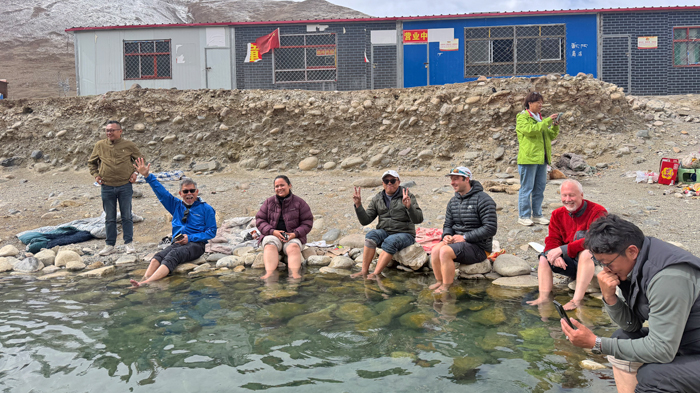 Our travelers enjoy hot springs foot bath after completing the Mount Kailash Kora.
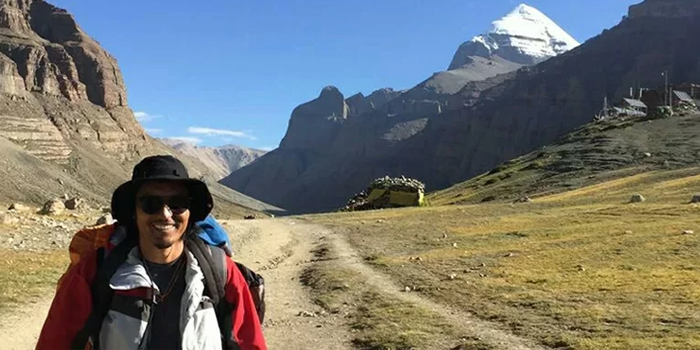
Join our 15 Lhasa to Mount Kailash tour to enjoy a natural hot spring near Lhasa Manasarovar.
How Much Does a Tibet Healing Spa Experience Cost?
The cost of a Tibet healing spa experience starts from around CNY 100, while specialized Tibetan massage, medicinal baths, and upscale spa packages can cost several hundred yuan or more. It depends on the treatment, duration, location, and level of service.
| Tibetan Healing Experience | Approximate Price | Best For |
|---|---|---|
| Basic Tibetan massage | CNY 100 - 160+ | Simple relaxation |
| Specialized massage or spa treatment | CNY 300 - 800+ | A more complete experience |
| Tibetan medicinal bath/package | Around USD 30 - 200 | Traditional Tibetan bathing |
| Luxury Tibetan wellness treatment | Price varies | Premium spa experience |
Prices vary considerably depending on the treatment and provider. For example, Xingkong Tibetan Medicinal Bath in Lhasa offers different packages ranging from about US$30 to US$200, while luxury hotels may offer more elaborate Ku Nye and herbal bath at higher prices.
For most travelers, there is no need to choose the most expensive package. If your main goal is to experience Tibetan wellness culture during your trip, a standard Ku Nye massage or medicinal bath can already provide a memorable introduction.
Is Tibet Healing Spa Suitable for International Travelers?
Yes, absolutely. International travelers can experience Tibetan massage, medicinal bathing, and other wellness activities in Tibet, especially in Lhasa, where these experiences are relatively easy to arrange. For a safe and comfortable experience, keep these practical tips in mind:
- Acclimatize first: Lhasa’s altitude is about 3,650 meters. Avoid hot baths or intensive massage immediately after arriving, especially if you are still experiencing altitude discomfort.
- Choose a reputable provider: Use established Tibetan medicine centers, wellness centers, or hotel spas with professional staff and clear treatment information.
- Explain your preferences: Tell the therapist if you prefer lighter pressure or feel uncomfortable during the treatment. Language support can vary between establishments.
- Mention relevant health concerns: If you have a medical condition or are unsure whether a particular treatment is appropriate for you, seek professional medical advice before trying it.
- Treat it as a wellness and cultural experience: Tibetan spa treatments can be relaxing and culturally interesting, but they should not replace professional medical care when you are unwell.
Note: For most travelers, the best time to enjoy a Tibet healing spa is after the first few days of acclimatization, when you already feel comfortable with Tibet's altitude. This allows you to relax and enjoy the experience without adding unnecessary stress soon after arrival.
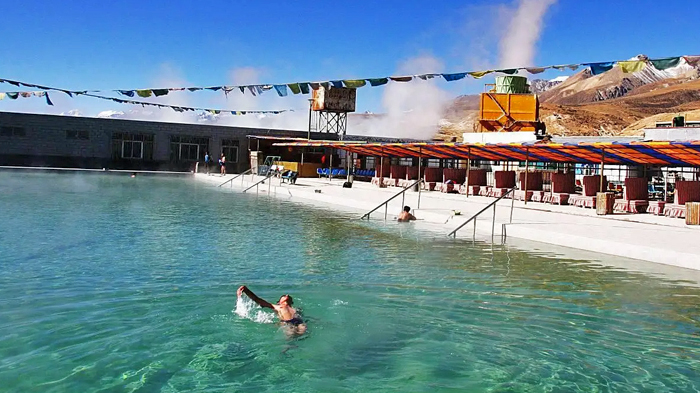 Our travelers enjoy natural hot springs in Yangbajain nearby Lhasa after touring Namtso lake.

Join our 8 days Lhasa to Tsurphu monastery trekking tour and experience the hot spring near Yangpachen.
How Can You Add a Tibetan Healing Experience to Your Tibet Tour?
A Tibetan healing experience is easy to add to your Tibet tour. It is best enjoyed after you have acclimatized to the altitude and on a day when your sightseeing schedule is relatively relaxed.
For example, you can enjoy a Ku Nye massage or Tibetan medicinal bath in Lhasa or Shannan after visiting the Potala Palace, Jokhang Temple, Barkhor Street, Yumbulakang, or major monasteries such as Sera, Drepung, and Samye Monastery.
Travelers with more time can also include a natural hot spring experience in their Tibet trekking tour, such as during the Lhasa to Yangbajain trek or after kora around Lake Manasarovar. At Tibet Vista, we can help you include a Tibetan wellness experience in your itinerary according to your interests, available time, and travel route.
For a more customized experience, simply let our travel consultant know that you are interested in Tibetan massage, medicinal bathing, or hot springs. We can then work with you to create a Tibet journey that combines classic sightseeing with a more relaxing and culturally immersive side of the plateau.
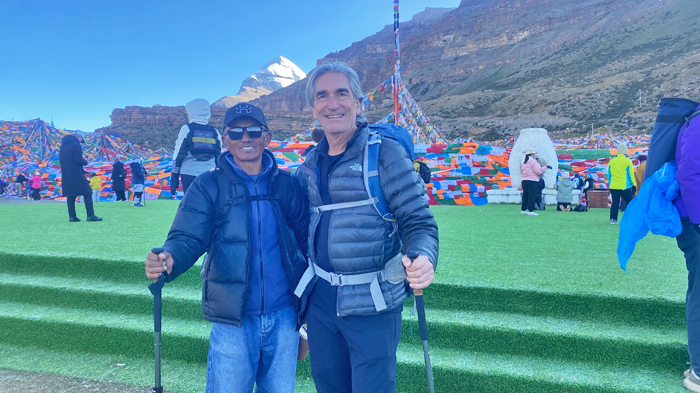 We can help you include a Tibetan wellness experience in your Mount Kailash tour.
FAQs About Tibet Healing Spa
How long does a Tibetan massage or medicinal bath usually take?
The duration depends on the provider and treatment you choose. A massage or bathing experience may take around one hour or longer, while more complete spa packages can last several hours. Always check the duration and inclusions when booking.
Can I enjoy a Tibetan healing spa on my first day in Lhasa?
It is better not to schedule a hot medicinal bath, hot spring, or intensive massage immediately after arriving in Lhasa. At around 3,650 meters, your body needs time to adjust to the altitude. Enjoy the experience later in your trip once you have acclimatized and feel comfortable.
-Click here to see more information about altitude sickness in Tibet
What should I wear or bring for a Tibetan spa experience?
For a massage or medicinal bath, the spa will normally provide the basic items you need. Wear comfortable clothing that is easy to change. For an outdoor hot spring, bring a swimsuit, towel if it is not provided, drinking water, and warm clothes for before and after bathing.
Is Tibetan medicinal bathing recognized as a traditional cultural practice?
Yes. Lum medicinal bathing of Sowa Rigpa was inscribed by UNESCO on the Representative List of the Intangible Cultural Heritage of Humanity in 2018. The tradition includes bathing in natural hot springs, herbal water, or steam as part of Tibetan knowledge and practices concerning health.
Who Should Avoid or Be Cautious About Tibetan Spa and Massage?
Tibetan spa and massage may not be suitable for people with heart conditions or high blood pressure, especially treatments involving hot baths or intensive massage.
Those with skin infections, open wounds, allergies, or sensitive skin should also be cautious, as herbal products and spa treatments may cause irritation. Pregnant women should consult a healthcare professional before trying spa treatments or massage.
Conclusion
A Tibet healing spa offers more than a relaxing break during your journey. From traditional Ku Nye massage and medicinal bathing to natural hot springs, these experiences give you another way to discover Tibet’s centuries-old wellness traditions and culture.
If you are interested in Tibetan wellness, consider adding a spa or healing experience after you have acclimatized to the altitude. With the right timing and experience, it can be a relaxing and memorable addition to your Tibet tour.
At Tibet Vista, we can help you include Tibetan massage, medicinal bathing, hot springs, or other local experiences in your Tibet itinerary, allowing you to discover a different and more relaxing side of Tibet. Contact us today to arrange your Tibet tour with a Tibetan healing spa experience!
 Email me about your travel idea