 Search
 Pioneer of Tibet Tourism for Overseas Travelers since 1984!

Tibetan Temple Roof Symbols: Iconic Features of Tibetan Buddhist Architecture


When you visit a Tibetan monastery, you may notice the shining golden symbols on the rooftops. These sacred decorations are distinctive features of Tibetan Buddhist architecture and often mark important religious buildings.
The most recognizable Tibetan temple roof symbol is the Dharma Wheel with Two Deer, often found on the roofs of important monastery halls. Other sacred symbols, such as the Victory Banner, Treasure Vase, and Garuda, may also appear on monastery rooftops. These symbols represent Buddhist teachings, protection, blessings, and hopes for peace and prosperity.
In this guide, we’ll introduce the most common Tibetan temple roof symbols and explain their meanings. You’ll also learn why they are placed on temple roofs, how this tradition developed, and where you can see these symbols during your Tibet trip.
What Are the Symbols on Tibetan Temple Roofs?
Dharma Wheel with Two Deer: A Symbol of Buddhist Teachings
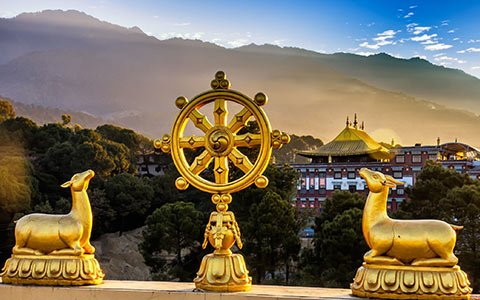
When visiting Tibetan temples and monasteries, you will often notice a golden wheel with two deer on the roof. This symbol is known as the Dharma Wheel with Two Deer. It is usually made of copper or bronze with a gilded surface.
This symbol is often placed on the roof of the main hall or an important teaching hall, where monks study and gather for group chanting. Its position high on the roof makes it easy for visitors to notice. The symbol also marks the building as an important place for Buddhist learning and practice.
In Tibetan Buddhism, the Dharma Wheel represents the Buddha’s teachings and the spread of Buddhist wisdom. Its eight spokes symbolize the Noble Eightfold Path, a set of principles that guide Buddhist practitioners toward wisdom and liberation from suffering.
The two deer beside the wheel are linked to the Buddha’s first sermon at Deer Park in Sarnath, India. The deer symbolize all beings who can hear and receive the Dharma. Together, the wheel and deer express the wish for Buddhist wisdom to spread widely.
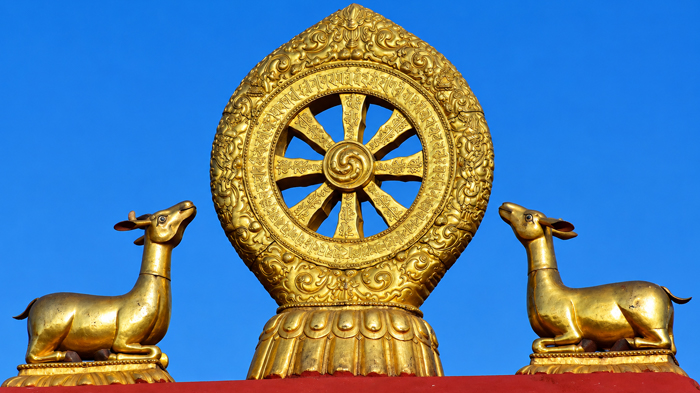 The Dharma Wheel with Two Deer is one of the most recognizable symbols on Tibetan temple roofs.
Victory Banner: A Symbol of Triumph Over Obstacles
The Victory Banner is one of the Eight Auspicious Symbols in Tibetan Buddhism and is commonly seen on Tibetan temple roofs. On important golden roofs, Victory Banners are usually placed at the four corners. These ornaments are commonly made of copper with a gilded surface. Some may have small bells that ring gently in the wind.
This symbol represents the victory of wisdom over ignorance and spiritual obstacles. These obstacles can include inner struggles such as anger, attachment, and confusion. The Victory Banner can help to overcome these obstacles. It is also associated with protection and blessings, symbolizing the safeguarding of sacred spaces.
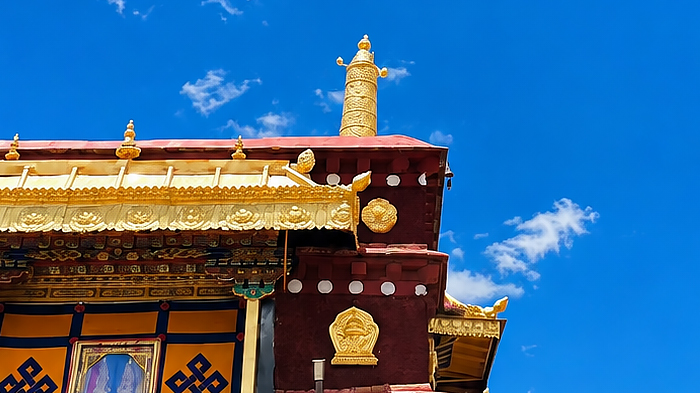 The Victory Banner decorates the corners of a Tibetan Buddhist temple roof.
Treasure Vase: A Symbol of Blessings and Prosperity
The Treasure Vase has a rounded body, a narrow neck, a lotus base, and a jewel-like ornament on top. It is usually made of copper with a gilded surface. On traditional golden roofs, Treasure Vases may appear beside the Dharma Wheel or at other prominent positions along the roof ridge.
It symbolizes blessings, prosperity, and spiritual abundance. The treasures inside the vase represent more than material wealth. They also stand for wisdom, virtue, and the fulfillment of positive wishes.
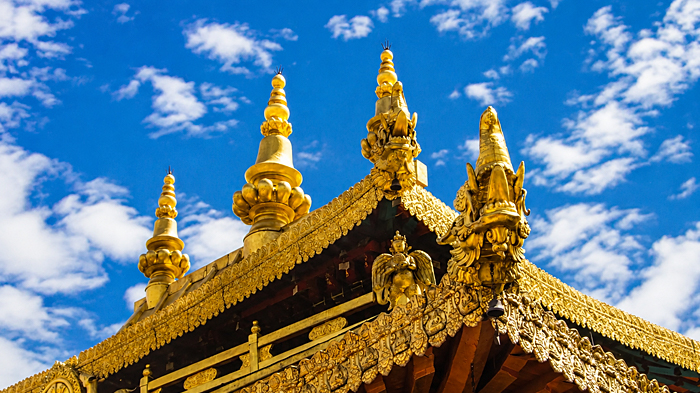 Golden Treasure Vases along the roof ridge of a Tibetan temple.
Garuda: A Symbol of Protection and Vigilance
The Garuda is a powerful mythical bird, combining elements of an indigenous Tibetan sacred bird with the Garuda from Indian Buddhist tradition. Garuda symbols often appear in pairs alongside other gilded roof ornaments. It often has a fierce human-like face, a sharp beak, horns, and wide-spreading wings. These features give it a powerful appearance.
In Tibetan Buddhism, the Garuda symbolizes protection, wisdom, and vigilance. It is believed to overcome harmful forces and remove obstacles, often seen as a protector of temples and sacred spaces.
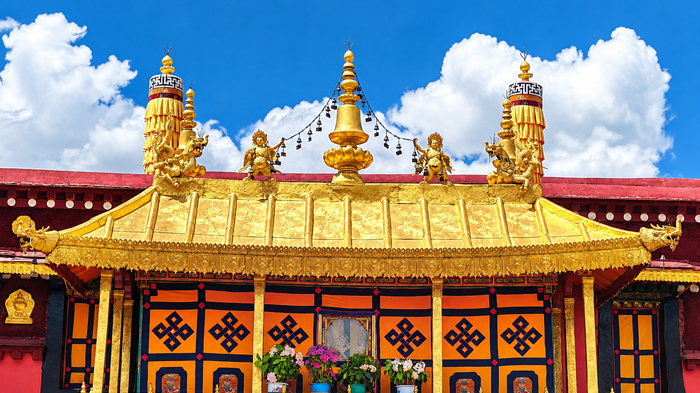 A pair of Garuda figures on both sides of the Treasure Vase.


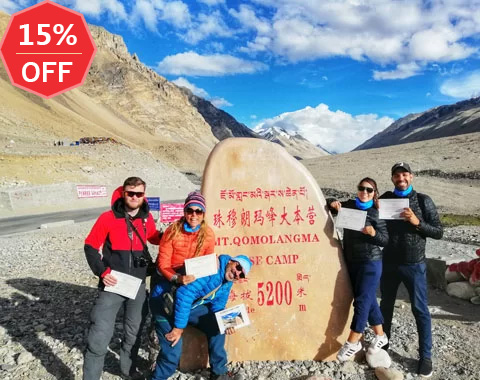
Embark on an adventure from Lhasa to Everest Base Camp and discover sacred Tibetan temple roof symbols along the way.
Why Are These Symbols Placed on Tibetan Temple Roofs?
These symbols represent important Buddhist teachings and values. Their high position makes these religious meanings visible to everyone. In this way, the temple roof becomes an important expression of Buddhist faith and the Dharma.
These rooftop symbols also express people’s hopes for protection, harmony, and blessings. Each symbol has its own meaning, from overcoming obstacles to bringing prosperity and good fortune. Together, they express wishes for a peaceful and blessed space.
In addition, these golden ornaments serve as distinctive signs of important Buddhist buildings. Because they can be seen from a distance, they help people identify important halls within a monastery.
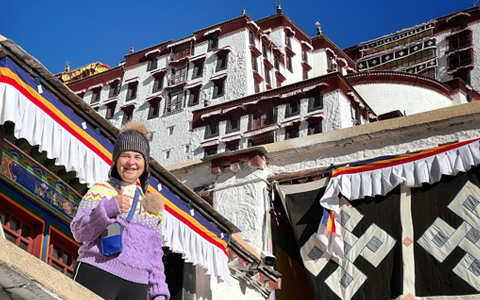
 Our guest visits Jokhang Temple and takes a photo with its golden roof symbols.

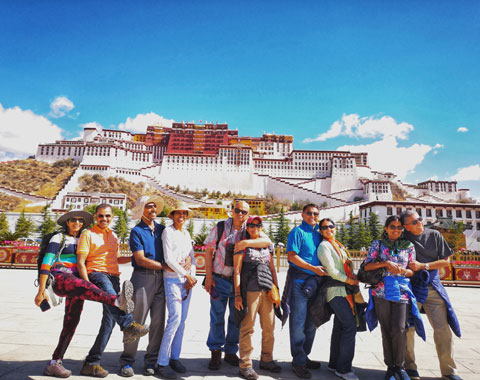
Travel from Lhasa to Namtso Lake and discover sacred roof symbols in Tibetan monasteries along the way.
The Origin and History of Tibetan Temple Roof Symbols
These symbols have roots in ancient Indian Buddhist traditions. Many reached Tibet as Buddhism spread there from around the 7th century. In the early period, these symbols appeared mainly in religious art and sacred objects rather than as complete sets of rooftop ornaments.
From the 11th to the 14th century, as Tibetan Buddhism developed further, these symbols gradually became part of temple architecture. However, the style and use of large gilded roof ornaments varied by region and monastery.
By the 17th century, gilded roof ornaments had become more established on important Tibetan temples and monasteries. This tradition became especially prominent in the Gelug school, one of the four major schools of Tibetan Buddhism. Important halls often featured a central Dharma Wheel with Two Deer. Other gilded symbols were arranged around it. These developments helped shape the golden roof styles that you can still see in Tibetan monasteries today.
Today, these golden roof symbols remain important features of Tibetan Buddhist architecture. Many have been repaired or restored over time, but they still show how Buddhist beliefs have shaped Tibetan temple architecture for centuries.
 You can visit Tibetan monasteries and see sacred roof symbols on the roofs.
Where Can You See These Symbols on Tibetan Temple Roofs?
During your Tibet trip, you can find these traditional symbols on the rooftops of many important Tibetan monasteries and temples. They are most commonly seen on important halls, especially in major monasteries in Lhasa and Shigatse.
Jokhang Temple, Lhasa
Built in the 7th century, Jokhang Temple is one of the oldest and most sacred Buddhist temples in Tibet. As the spiritual center of Tibetan Buddhism, it has attracted pilgrims from across Tibet for centuries.
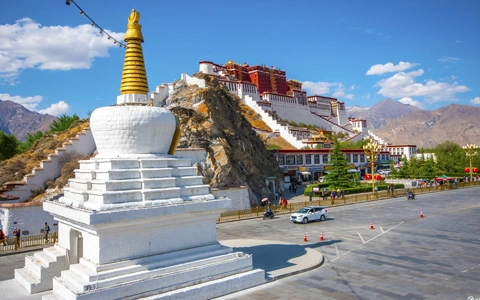
Because of its important religious status, great care was given to the design and decoration of its main buildings, making this temple an excellent place to see traditional Tibetan Buddhist architecture and sacred roof symbols. From the temple square, you can see the golden roof of the main hall decorated with symbols such as the Dharma Wheel with Two Deer.
Besides these rooftop symbols, its centuries-old architecture and pilgrimage atmosphere also make Jokhang Temple a must-visit cultural site in Lhasa.
Sera Monastery, Lhasa
Sera Monastery is one of Lhasa’s three great Gelug monasteries, along with Drepung Monastery and Ganden Monastery. Founded in the 15th century, it is an important center of the Gelug tradition and is still home to active monastic life today. Its traditional halls and courtyards preserve the architectural style of a Tibetan Buddhist monastery, making it a great place to observe sacred roof decorations.
As you walk through the monastery’s courtyards, you can look up at the roofs of the important halls to see these traditional symbols. Sera Monastery is also famous for its lively monk debates, which you can watch in the afternoon.
Drepung Monastery, Lhasa
Drepung Monastery was once the largest monastery in Tibet. Its vast complex includes halls built at different levels, offering visitors different views of traditional golden roof decorations. As you explore the monastery, you can observe these symbols from various courtyards and pathways.
Tashilhunpo Monastery, Shigatse
Tashilhunpo Monastery, the largest monastery in Shigatse, is another excellent place to see traditional roof decorations. Its grand halls and golden roofs showcase the beauty of traditional Tibetan Buddhist architecture. As you explore the monastery, you can admire the detailed roof ornaments and discover how Buddhist symbols are integrated into its impressive buildings.
 Tashilhunpo Monastery is an excellent place to discover sacred Tibetan temple roof symbols.
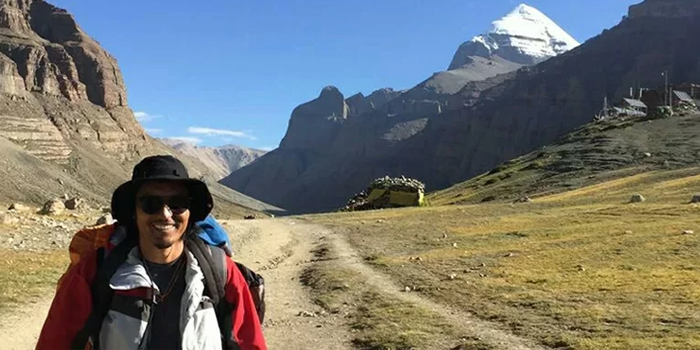
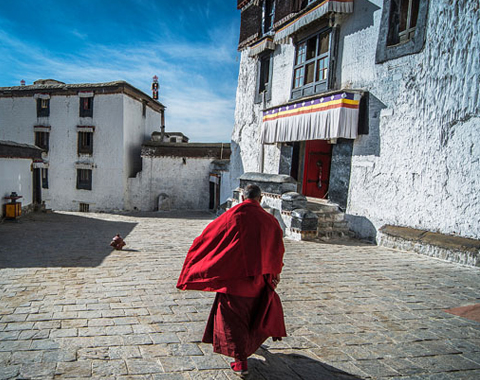
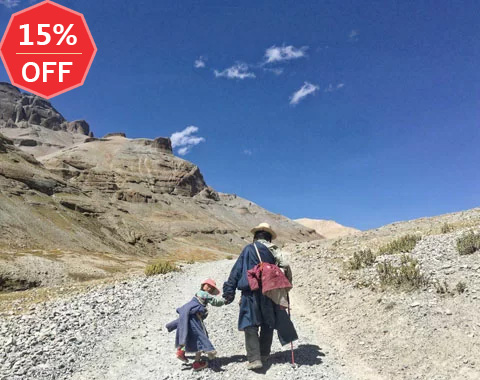
Enjoy a spiritual journey from Lhasa to Mount Kailash and explore sacred Tibetan monasteries along the way.
FAQs about the Symbols on the Roof of Tibetan Temples
Q1: Why do Tibetan temples have symbols on their roofs?
Tibetan temples have these roof symbols because they represent Buddhist teachings and show the religious importance of the buildings. They mark important halls as places for Buddhist practice, learning, and ceremonies. These symbols also express wishes for protection, blessings, and the continuation of Buddhist traditions.
Q2: What is the most representative symbol on the roof of Tibetan temples?
The most representative roof symbol is the Dharma Wheel with Two Deer, usually found on important monastery halls. It has a golden wheel in the center and two deer facing inward on both sides. Its unique design and central position on the roof make it easy for visitors to recognize.
Q3: Why are there two deer beside the Dharma Wheel?
The two deer recall the Buddha’s first sermon at Deer Park in Sarnath, India. According to Buddhist tradition, even the deer gathered peacefully to listen to his teachings. This is why two deer are shown beside the Dharma Wheel. Together, they symbolize that the Dharma is open to all beings and can guide them toward wisdom and enlightenment.
Q4: Is the symbol on Tibetan temple roofs unique to Tibetan Buddhism?
No. These symbols are not unique to Tibetan Buddhism. They have roots in broader Buddhist traditions. However, arranging them as complete sets of three-dimensional gilded copper ornaments on temple roofs is a distinctive feature of Tibetan Buddhist architecture. These complete arrangements are especially characteristic of major Gelug monasteries.
A traditional golden roof may feature the Dharma Wheel with Two Deer at the center, with Treasure Vases, Garudas, and Victory Banners arranged around the roof. The exact arrangement can vary from one monastery or building to another.
Q5: Can I see these symbols in every Tibetan monastery?
You can see some of these symbols in most Tibetan temples and monasteries, but not every monastery has a complete set of golden roof decorations.
Complete sets of gilded rooftop ornaments are usually reserved for the main halls and other important buildings of larger monasteries. The style and number of these roof symbols can also vary depending on the monastery’s tradition, scale, and history. Visiting major monasteries in Lhasa and Shigatse is one of the best ways to see these symbols up close.
 Our guests visit Jokhang Temple and experience its spiritual culture.
Conclusion
Together, the symbols on Tibetan temple roofs reflect Buddhist beliefs, wisdom, protection, and blessings. From the Dharma Wheel with Two Deer to the Victory Banner, Treasure Vase, and Garuda, these symbols can help you understand the beliefs behind Tibetan Buddhist architecture. When you see a golden symbol shining against the Tibetan sky, you will know that you are witnessing a tradition that has been carried forward for centuries.
If you want to discover these sacred symbols in person, feel free to contact us. We can help you plan a Tibet tour that includes some of the region’s most important monasteries.

 Email me about your travel idea