 Search
 Pioneer of Tibet Tourism for Overseas Travelers since 1984!

What to Wear in Tibet: What to Wear for Visiting Tibet Monthly


If you plan to visit Tibet, knowing what to wear is an important part of preparing for your journey. Tibet has a unique environment, with high altitude, strong sunlight, and a dry climate. Temperatures can change greatly between day and night. Weather conditions also vary by destination and altitude. All these factors affect what you should wear for your Tibet trip.
For travelers, the most practical way is to dress in layers that can be easily adjusted throughout the day. This allows you to stay comfortable whether you are exploring monasteries in Lhasa, visiting high-altitude lakes, or traveling to mountain areas. In this guide, we’ll introduce what to wear in Tibet month by month, with clothing recommendations for different destinations.
What to Wear in Tibet in January: Dress for Cold Winter Weather
What to Wear in Tibet in February: Prepare for Dry and Cold Conditions
What to Wear in Tibet in March: Adjust to Changing Temperatures
What to Wear in Tibet in April: Choose Comfortable Spring Layers
What to Wear in Tibet in May: Balance Warm Days and Cool Nights
What to Wear in Tibet in June: Switch to Lightweight Clothing
What to Wear in Tibet in July: Protect Against Strong Sun and Rain
What to Wear in Tibet in August: Prepare for Changeable Weather
What to Wear in Tibet in September: Add Layers for Cooler Weather
What to Wear in Tibet in October: Dress for Dropping Temperatures
What to Wear in Tibet in November: Prepare for Early Winter
What to Wear in Tibet in December: Dress Warmly for Winter Weather
The Most Practical Clothing Strategy for Tibet: Dress in Layers
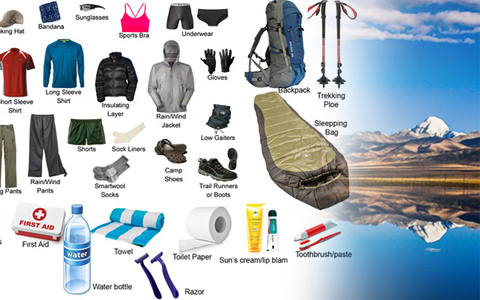
Essential Accessories to Bring for Your Tibet Trip
What to Wear in Tibet in January: Dress for Cold Winter Weather
The weather in Tibet in January is generally cold and dry. It is one of the coldest months of the year, with temperatures often dropping below freezing at night. The weather is usually sunny, although snowfall is possible in some high-altitude and remote areas.
It’s important to bring thick winter clothing to keep warm in January. If you plan to visit Everest Base Camp or other high-altitude destinations, prepare for colder temperatures and strong winds.
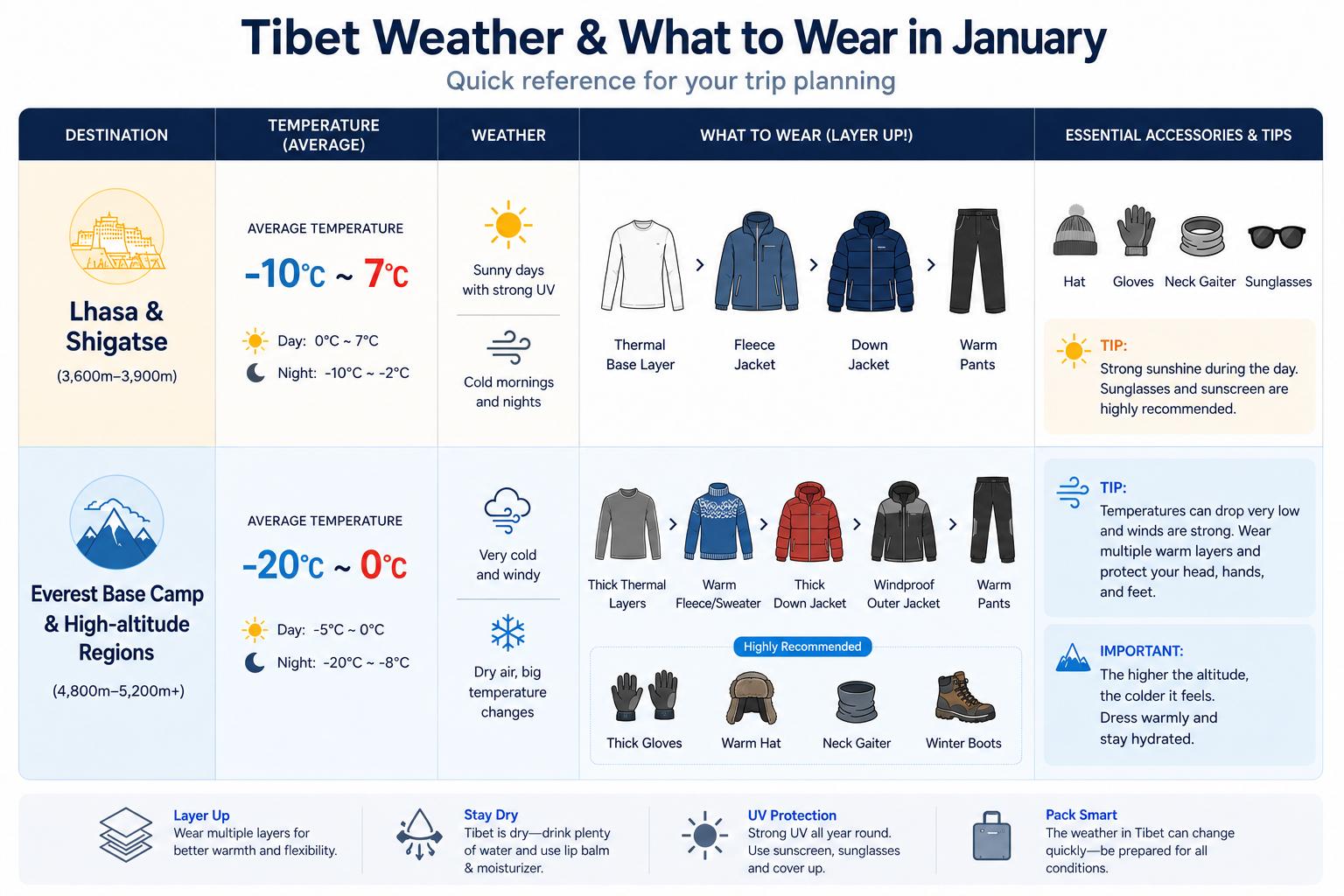 (Simple click to enlarge the table)
Tibet Weather & What to Wear in Tibet in January
What to Wear in Tibet in February: Prepare for Dry and Cold Conditions
The weather in Tibet in February remains cold and dry, with particularly cold mornings and evenings. During the daytime, there is usually plenty of sunshine.
For a February trip, you should still pack proper winter clothing to stay warm. Strong sunshine can make you feel warmer during the day, so you may want to remove an outer layer for a while. However, you will need it again when temperatures drop, especially in the morning and evening, in shaded areas, or in cooler indoor spaces. In addition, wind protection is especially important in exposed mountain areas.
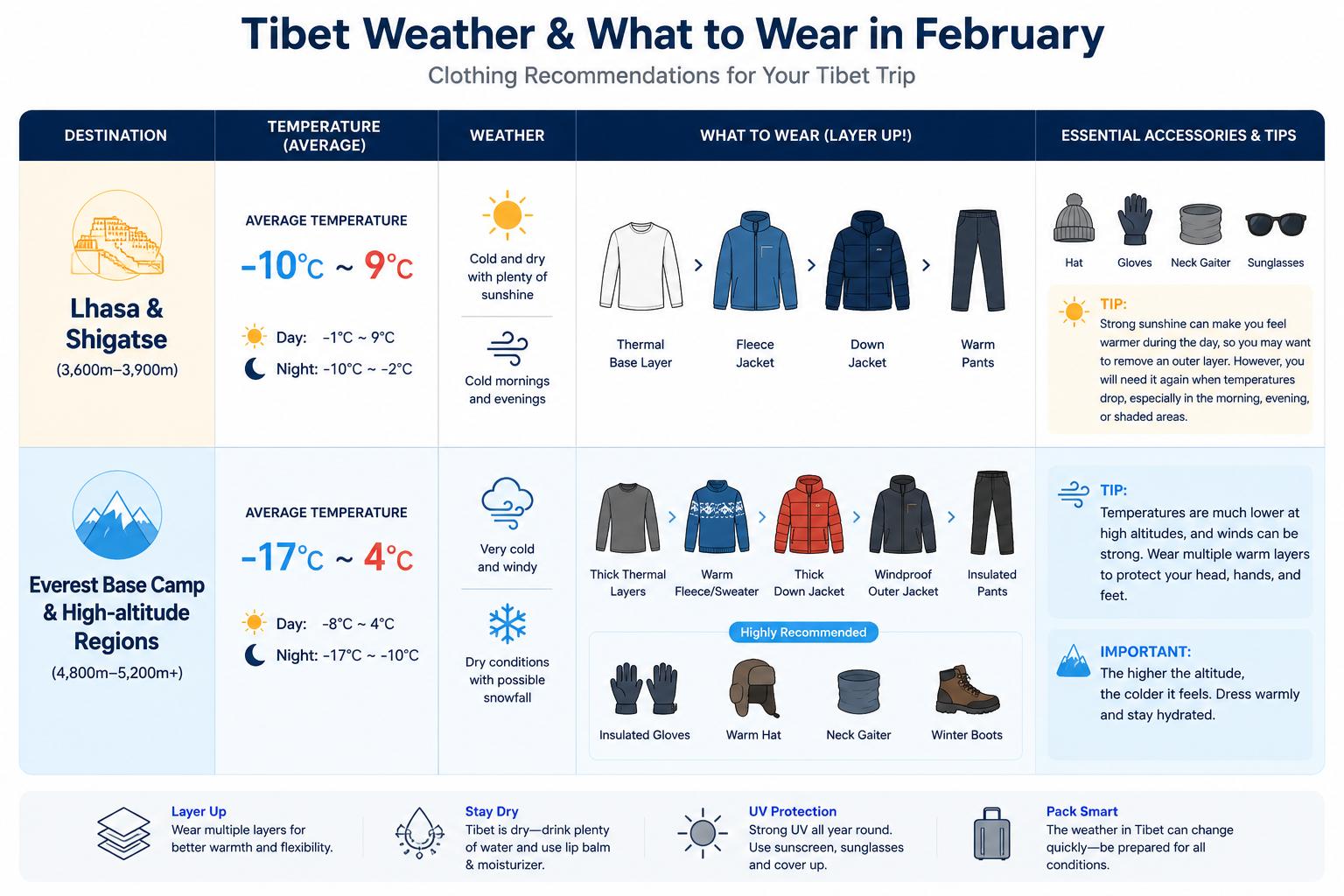 (Simple click to enlarge the table)
Tibet Weather & What to Wear in Tibet in February
What to Wear in Tibet in March: Adjust to Changing Temperatures
The weather in March begins to get warmer as winter gradually gives way to spring. Daytime temperatures begin to rise. Sunny afternoons can feel noticeably more comfortable than in January and February. Nyingchi peach blossoms usually begin to bloom in late March, making it a popular destination for spring sightseeing.
However, the seasonal change is gradual. Mornings and evenings are cold. High-altitude areas can still experience winter conditions.
The main challenge in March is dressing for changing temperatures throughout the day. Conditions vary greatly by destination. You may need warmer clothing when setting out in the morning. Under the midday sun, wearing lighter layers can make you feel more comfortable.
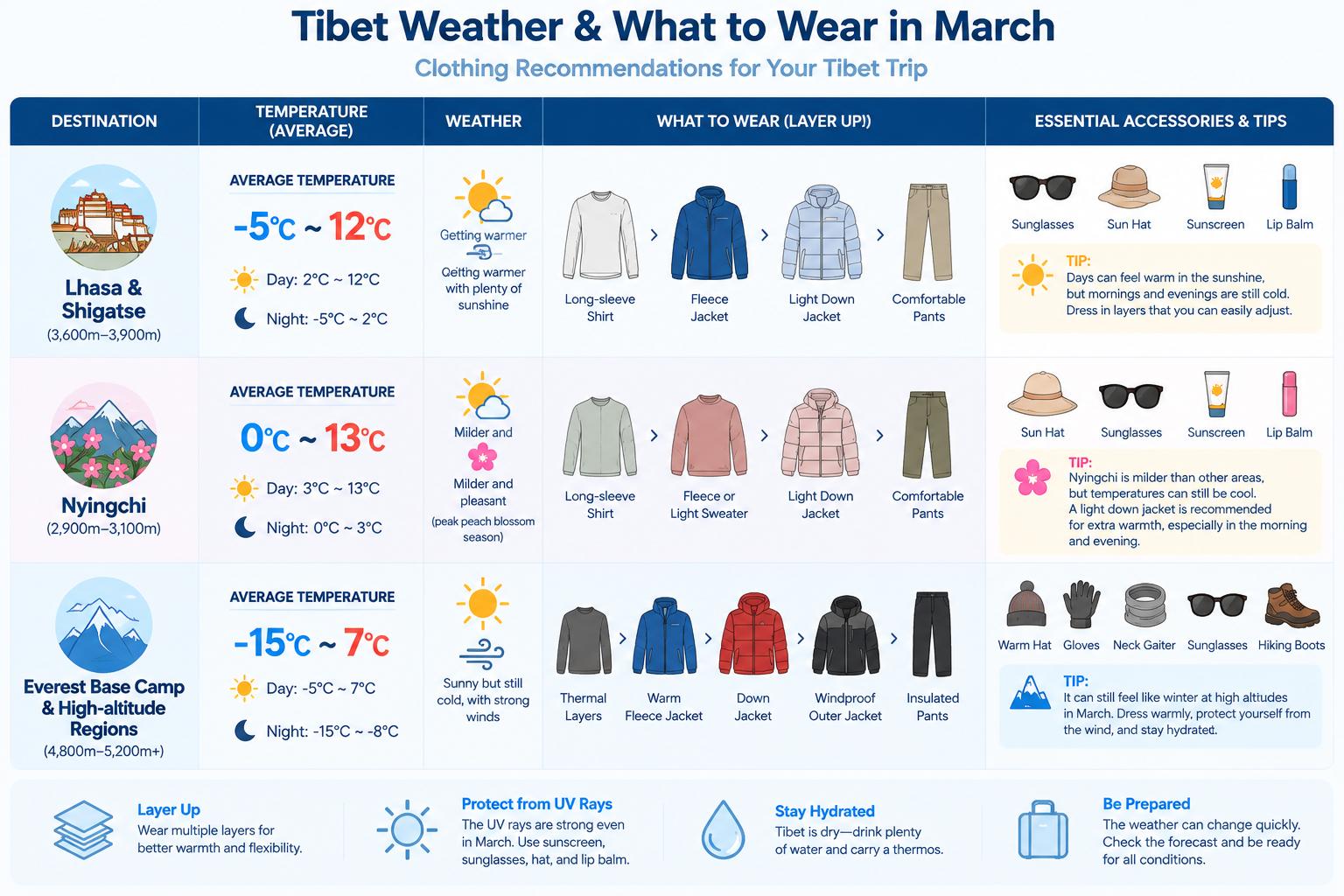 (Simple click to enlarge the table)
Tibet Weather & What to Wear in Tibet in March
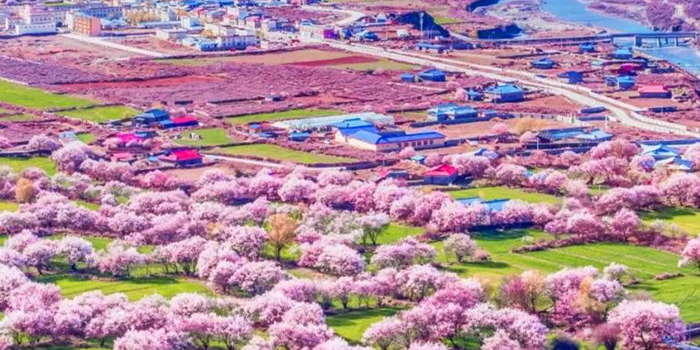

Explore the iconic landmarks of Lhasa and enjoy the beautiful peach blossoms in Nyingchi.
What to Wear in Tibet in April: Choose Comfortable Spring Layers
The weather in April becomes milder as spring settles across the region. It is a relatively comfortable month for sightseeing and outdoor activities. Sunshine is abundant, and daytime temperatures are noticeably warmer than in March. In early April, peach blossoms are still in bloom in Nyingchi. The milder climate makes eastern Tibet a particularly enjoyable destination at this time of year.
By April, you can wear lighter spring layers for most sightseeing in major cities. The key is to dress flexibly, as conditions can feel different between sunny city streets, shaded monasteries, and higher-altitude destinations. Consider both the altitude and your planned activities when packing. Comfortable footwear is also important if you plan to spend more time walking or exploring outdoors.
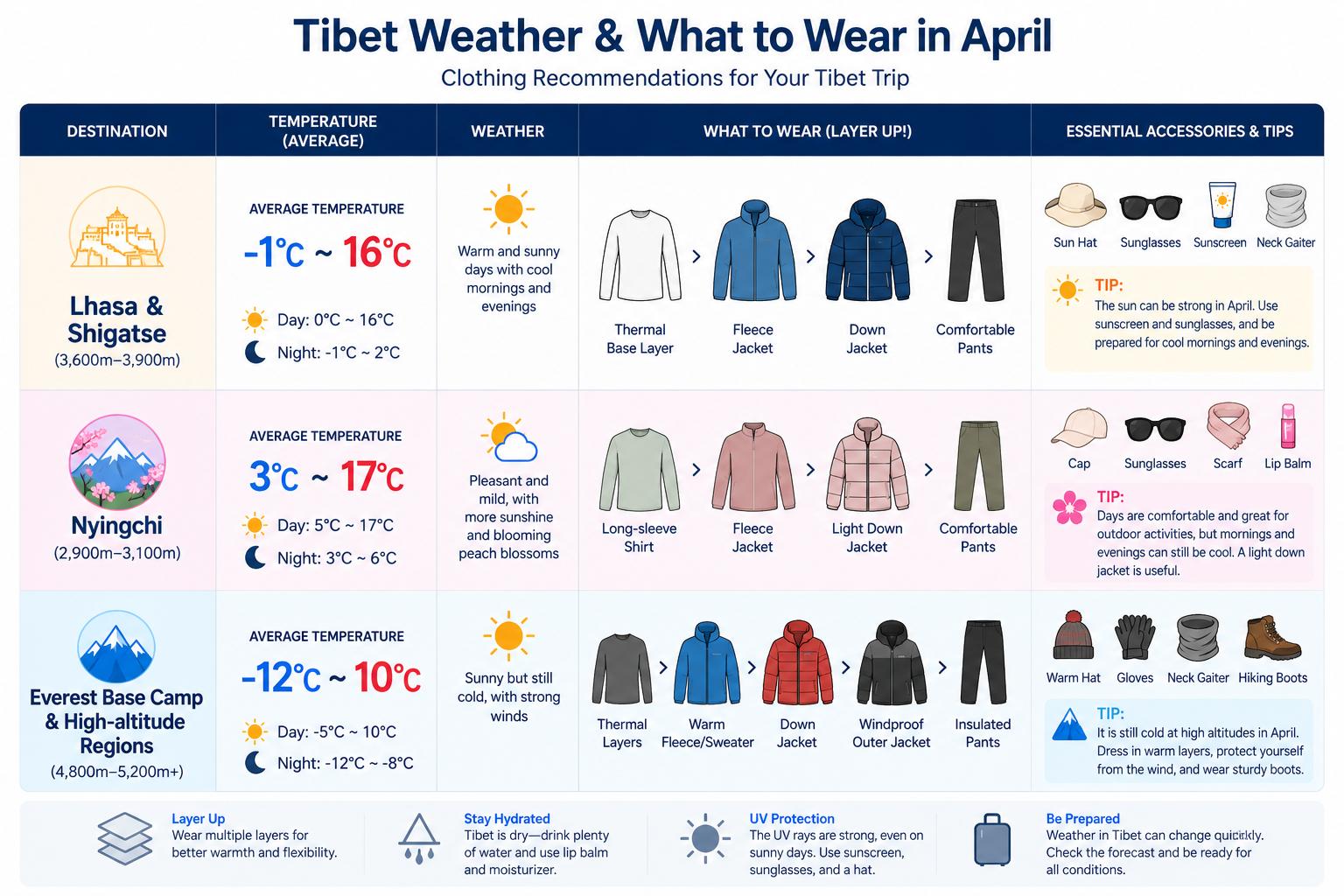 (Simple click to enlarge the table)
Tibet Weather & What to Wear in Tibet in April
What to Wear in Tibet in May: Balance Warm Days and Cool Nights
Tibet’s weather in May is warmer and generally pleasant. It is a comfortable month for outdoor travel. With plenty of sunshine, you can often feel comfortable during the day. May often offers good visibility for seeing Mount Everest and other Himalayan peaks. It is also a popular month for trekking before the wetter summer season begins.
You can wear lighter clothes for most daytime sightseeing in major cities. Keep some warm clothing with you if your itinerary takes you to higher elevations. UV rays are strong in Tibet, so sun protection is still important.
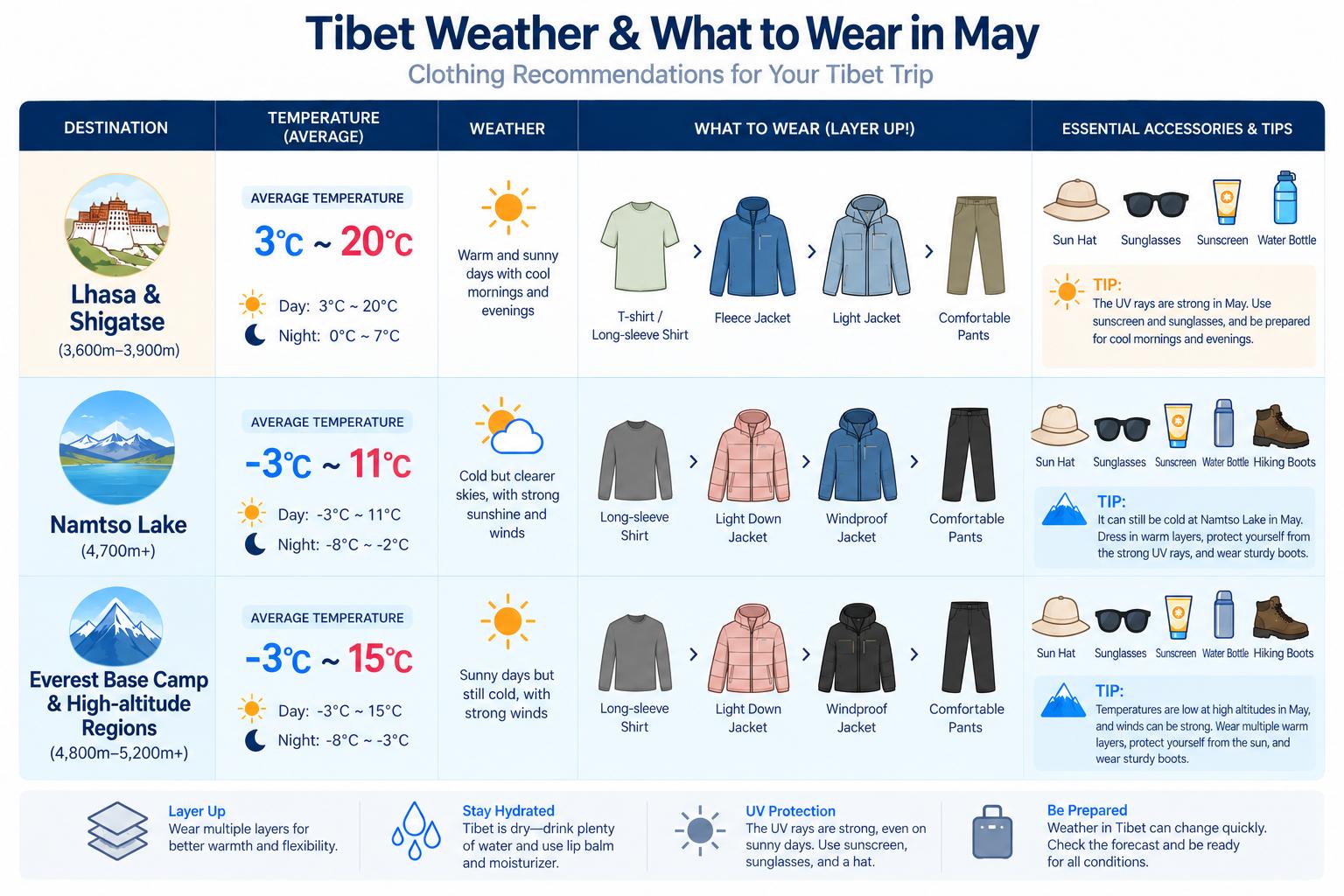 (Simple click to enlarge the table)
Tibet Weather & What to Wear in Tibet in May
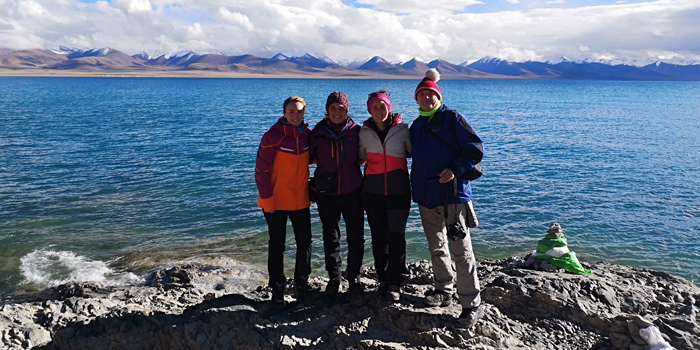
Embark on a journey from Lhasa to Everest Base Camp and Namtso Lake to discover Tibet’s iconic landscapes.
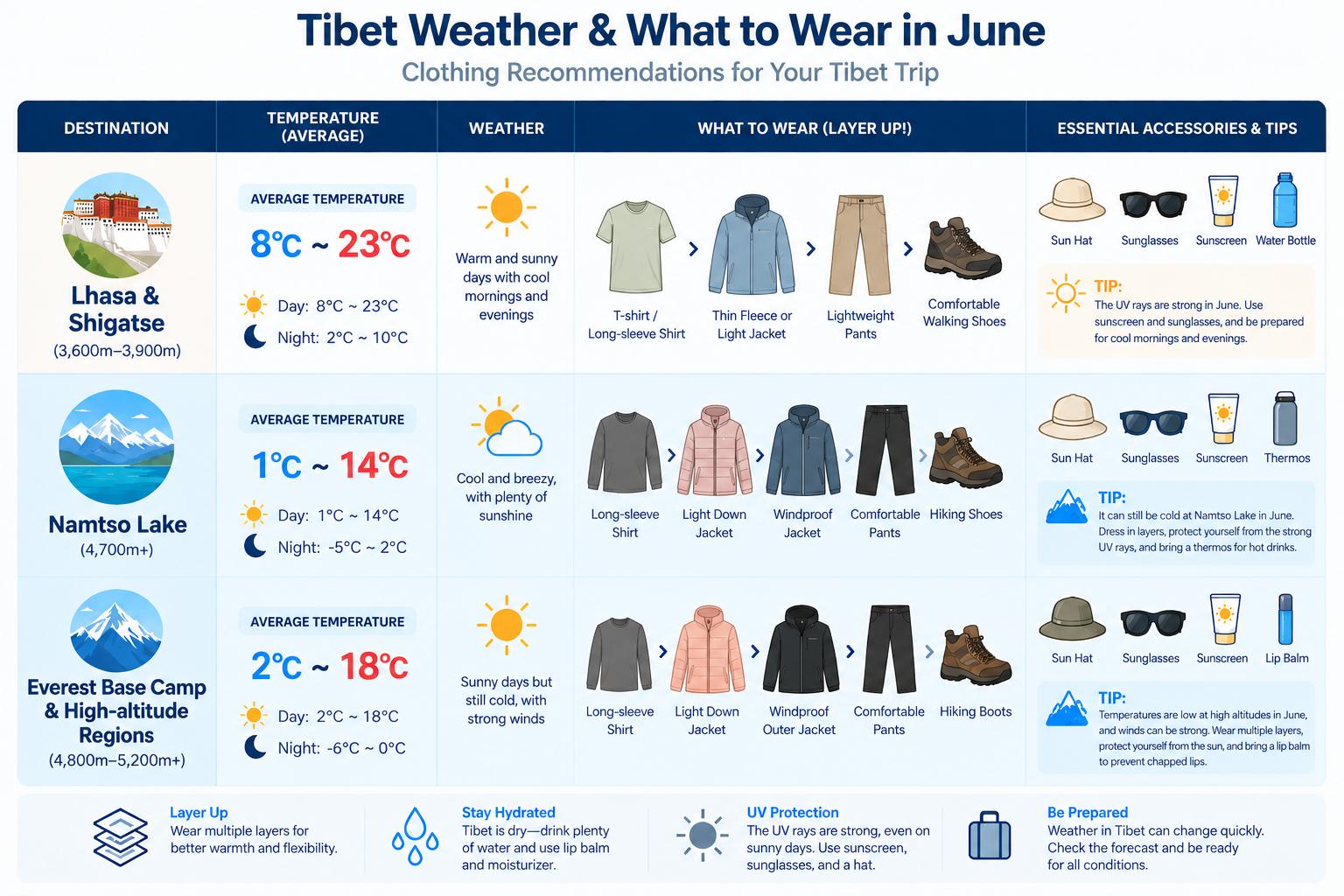
What to Wear in Tibet in June: Switch to Lightweight Clothing
The weather in June becomes warmer as summer begins. Outdoor sightseeing becomes more comfortable. Although rainfall starts to increase as the summer rainy season begins, you can still expect plenty of sunny periods for sightseeing.
You can wear lightweight and comfortable clothing for most daytime activities. Keep an extra layer with you for cooler conditions. It is also a good idea to keep some rain protection handy for outdoor trips.
 (Simple click to enlarge the table)
Tibet Weather & What to Wear in Tibet in June
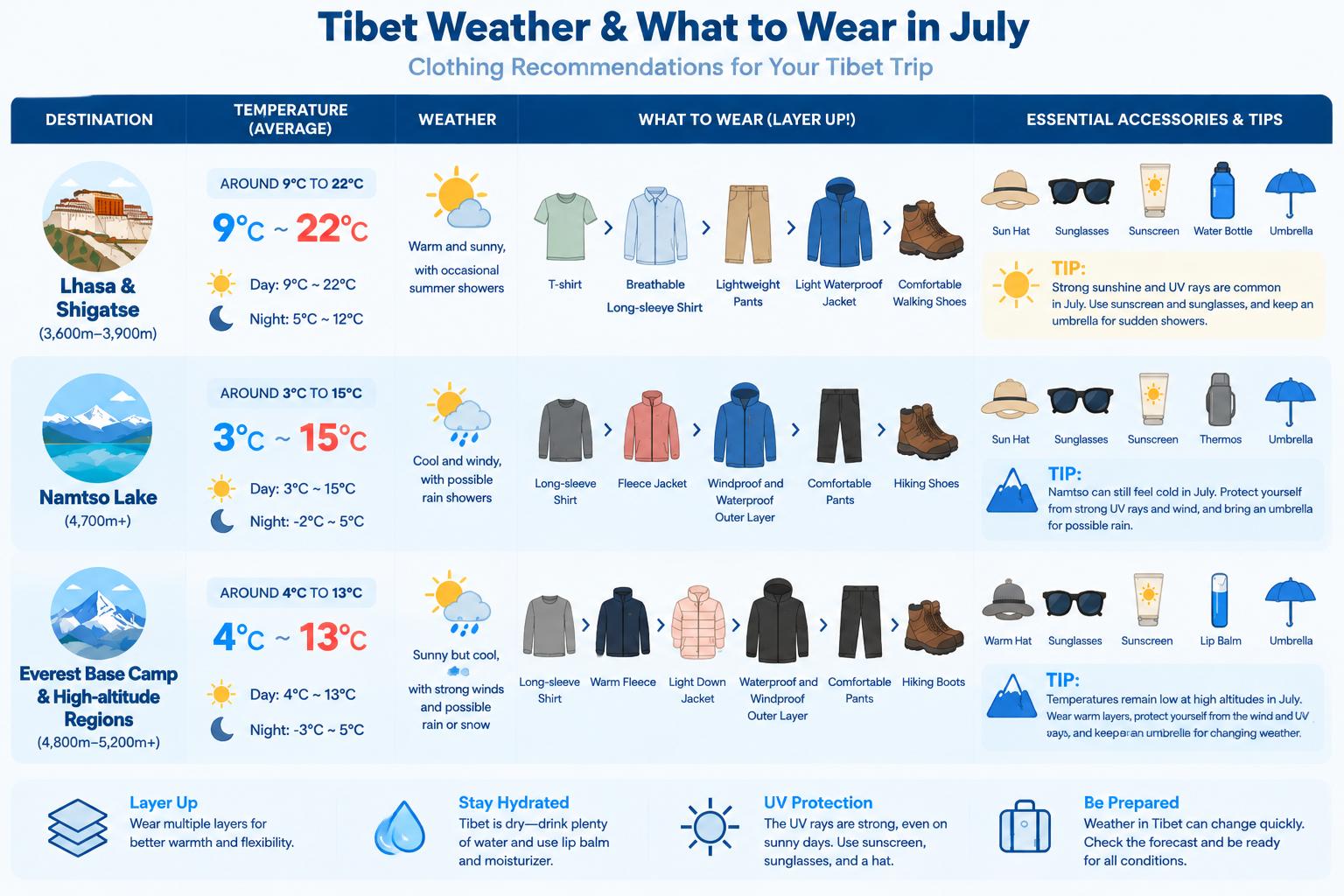
What to Wear in Tibet in July: Protect Against Strong Sun and Rain
The weather in Tibet in July is generally warm and wet. It is one of the warmest and wettest months of the year. Daytime temperatures are comfortable in many popular destinations. It can sometimes feel hot under the strong summer sun. July is also part of the rainy season. Showers are more common, but they do not necessarily last all day.
In July, lightweight and breathable clothing is the best choice for most daytime sightseeing in Tibet. Long sleeves are useful for extra protection from strong UV rays. You can also bring a light raincoat for sudden showers.
 (Simple click to enlarge the table)
Tibet Weather & What to Wear in Tibet in July
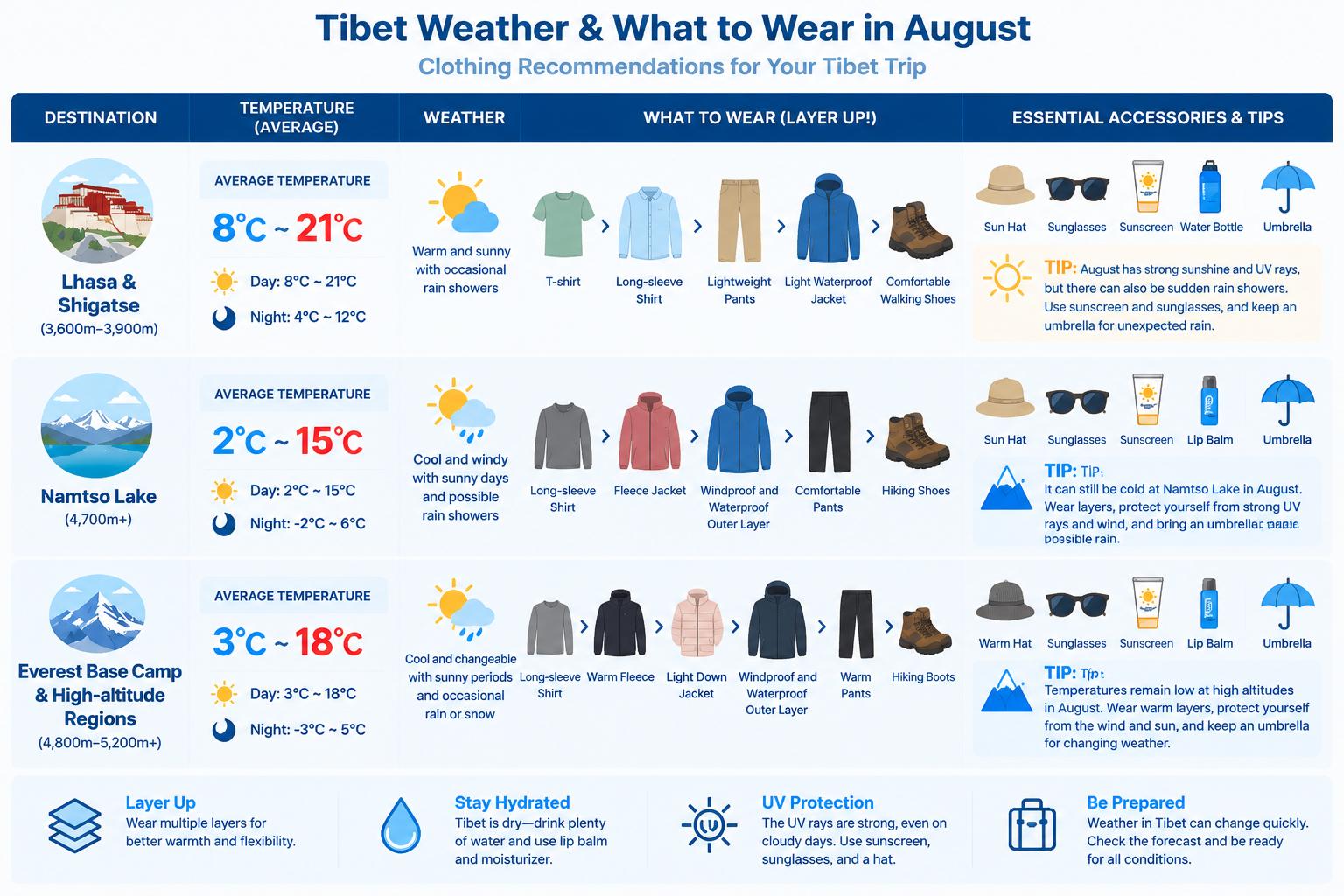
What to Wear in Tibet in August: Prepare for Changeable Weather
The weather in August is warm but changeable as the summer rainy season continues. You may experience sunshine, clouds, and rain within the same day. Rain can be more frequent in southern and eastern Tibet. Many showers occur in the evening or at night, but you should still be prepared for rain during daytime trips.
In August, light and versatile clothing is the most practical choice for visiting Tibet. Choose clothes that are easy to adapt to different weather conditions. You can keep a light raincoat in your daypack for sudden showers.
 (Simple click to enlarge the table)
Tibet Weather & What to Wear in Tibet in August
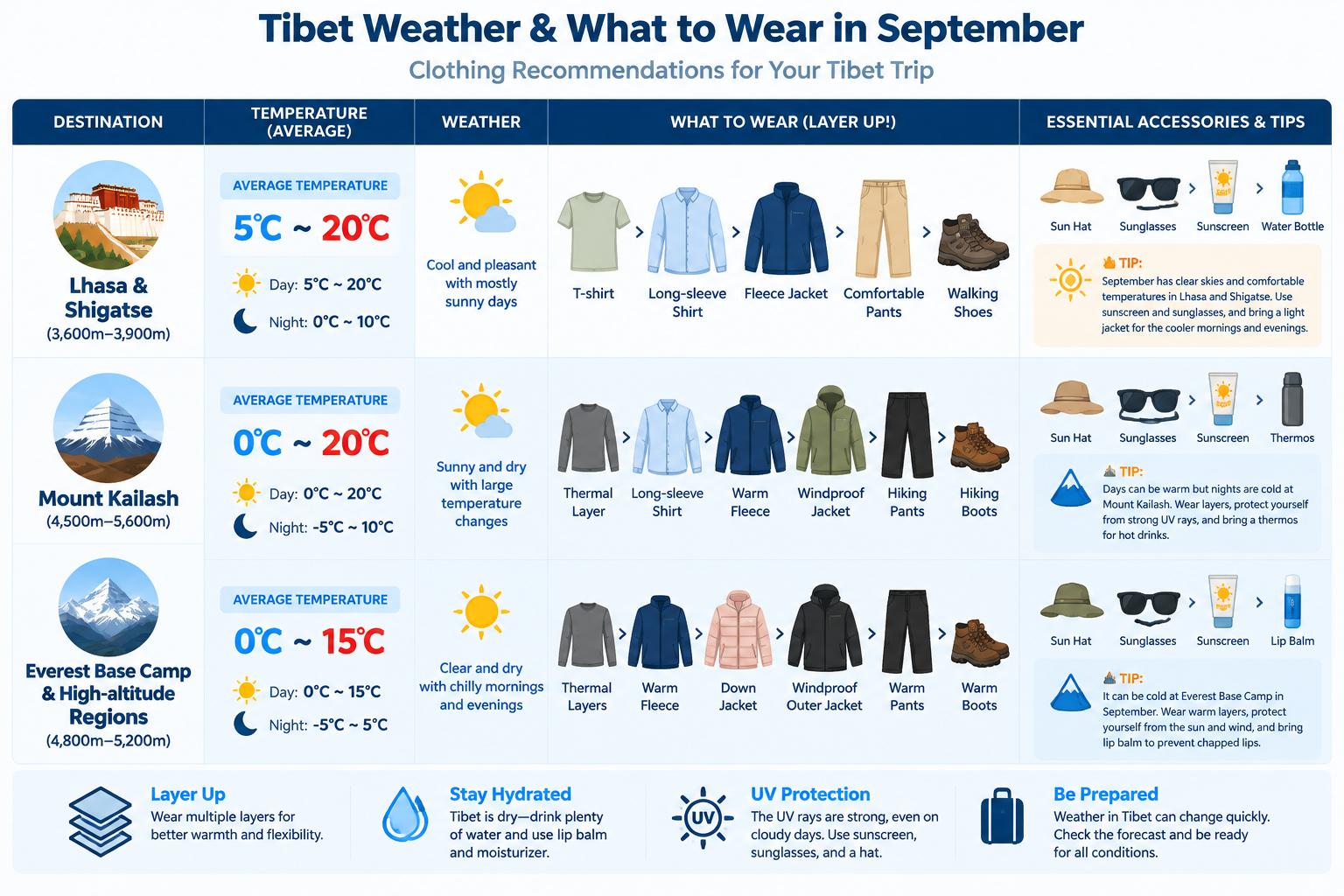
What to Wear in Tibet in September: Add Layers for Cooler Weather
The weather in September begins to turn cooler and drier as autumn arrives in Tibet. Rainfall begins to decrease, and clear days become more common. The improved visibility makes this a great month for mountain views, photography, and trekking.
As autumn arrives, you can start adding warmer layers. Daytime sightseeing in Lhasa and Shigatse is still comfortable, but mountain trips and treks require warmer clothing. Prepare carefully if your itinerary includes higher mountain routes, such as a Mount Kailash trek.
 (Simple click to enlarge the table)
Tibet Weather & What to Wear in Tibet in September
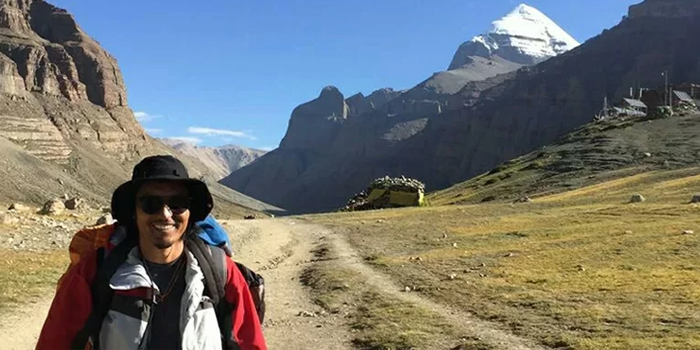
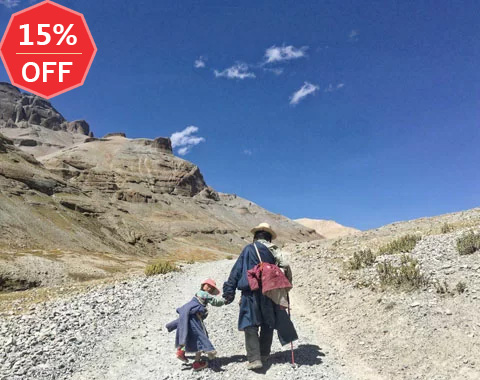
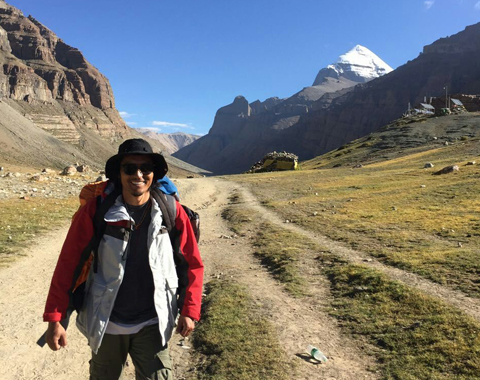
Enjoy a spiritual journey from Lhasa to Mount Kailash and experience an unforgettable trekking adventure.
What to Wear in Tibet in October: Dress for Dropping Temperatures
Tibet’s weather in October is cool and dry, with plenty of sunshine. Rainfall is low, and clear skies often provide excellent visibility. It is a great month for Himalayan views, photography, and outdoor sightseeing.
For most October trips, warm autumn clothing is the practical choice. Daytime sightseeing in major cities can still feel pleasant in the sunshine. But high-altitude destinations require more warmth, especially in the mornings and evenings.
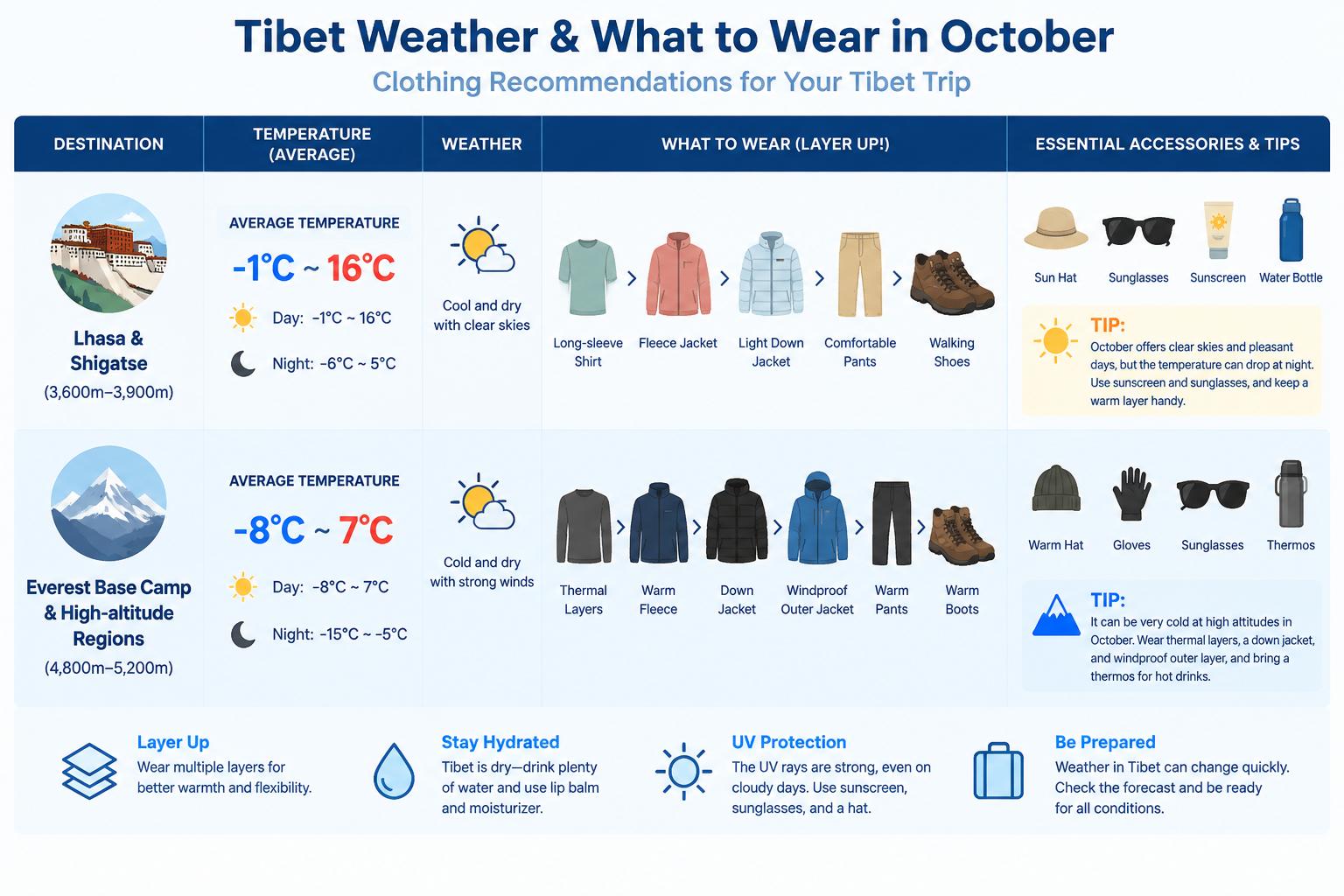 (Simple click to enlarge the table)
Tibet Weather & What to Wear in Tibet in October
What to Wear in Tibet in November: Prepare for Early Winter
The weather in November becomes colder and much drier as winter approaches in Tibet. However, clear and sunny days are still common. With little rainfall and good visibility, November is a good time to enjoy mountain scenery and explore Tibet with fewer tourists.
By November, staying warm should be your main priority when packing for Tibet. Proper winter clothing is important for most trips. Tibet still receives plenty of sunshine in November, so sun protection is important for daytime sightseeing, even in winter.
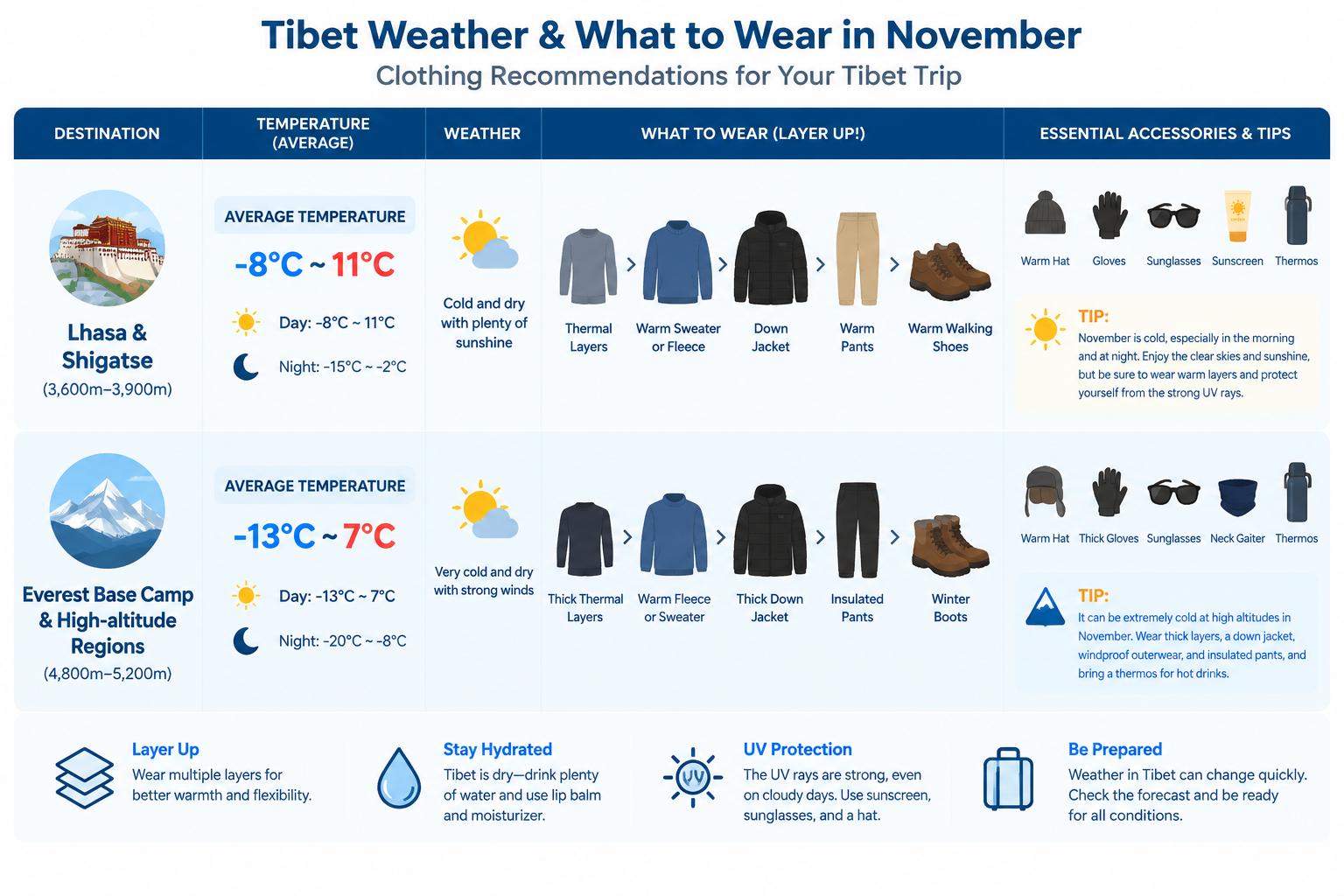 (Simple click to enlarge the table)
Tibet Weather & What to Wear in Tibet in November
What to Wear in Tibet in December: Dress Warmly for Winter Weather
The weather in Tibet in December is cold and dry. It is one of the coldest months of the year. Clear, sunny weather is common, but temperatures remain low throughout the day. Snowfall is possible, especially in mountain areas. Snow can also add to the beautiful winter scenery of the Tibetan Plateau.
For a December trip, warm winter clothing is essential throughout your journey. Pay particular attention to staying warm during early morning sightseeing and longer periods outdoors. Wind can make exposed areas feel even colder, so wind protection is also important.
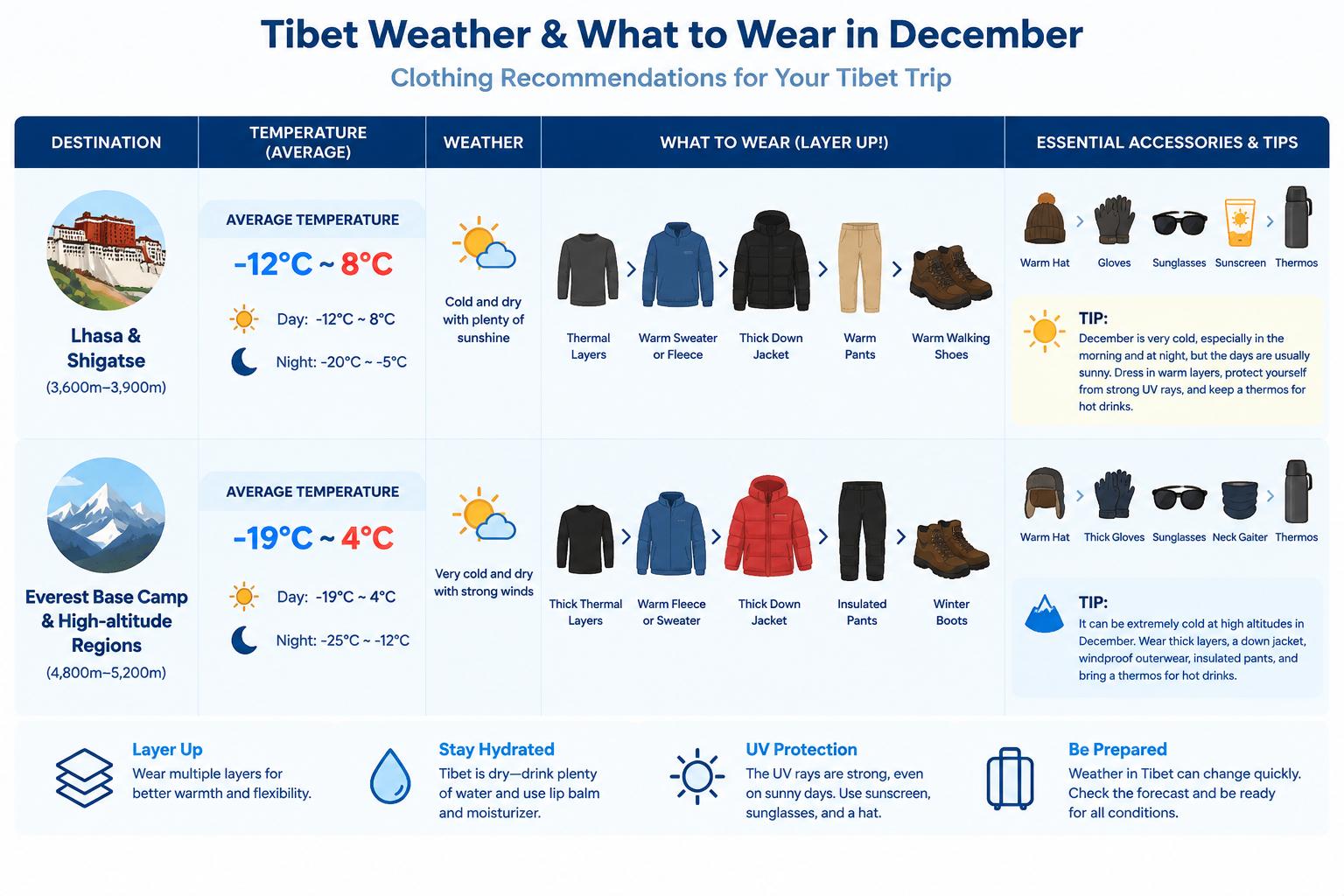 (Simple click to enlarge the table)
Tibet Weather & What to Wear in Tibet in December
The Most Practical Clothing Strategy for Tibet: Dress in Layers
The weather in Tibet can change throughout the day, so dressing in layers is the most practical choice. You can add or remove layers as conditions change. A simple three-layer system works well for most Tibet trips.
Base layer: Start with something comfortable and breathable next to your skin. A moisture-wicking T-shirt or quick-dry long-sleeve shirt works well in warmer weather. For winter trips or high-altitude destinations, thermal underwear helps keep you warm.
Mid layer: Add a fleece jacket, wool sweater, or lightweight down jacket for warmth. You can easily add this layer when it gets colder or remove it when you feel warmer.
Outer layer: Choose the right outerwear based on the weather. A windproof jacket helps in exposed and windy areas, while a waterproof shell is useful during the summer rainy season. For winter trips or very cold destinations, a thick down jacket provides extra warmth.
The main benefit of layering is flexibility. You do not need to wear every layer all day. This makes it easier to stay comfortable in different weather conditions and at different altitudes during your Tibet tour.
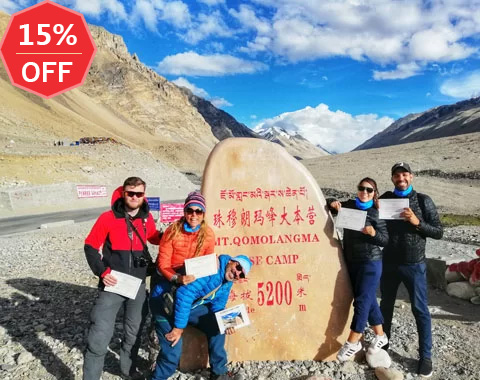
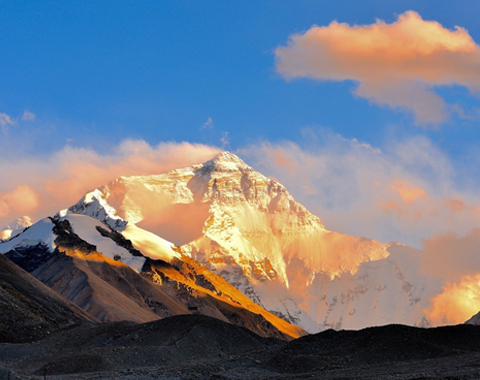
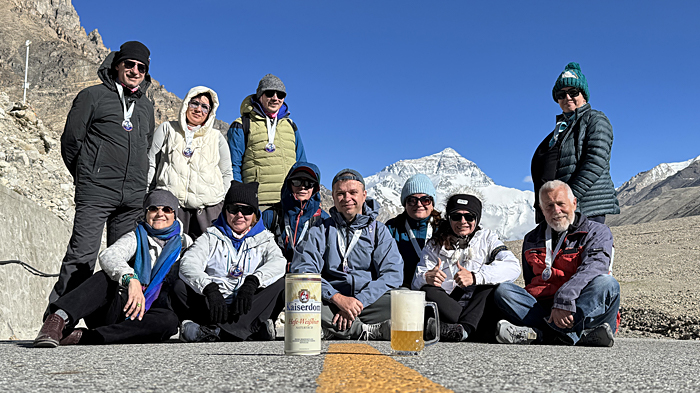 You should wear warm clothing when visiting Everest Base Camp.
Essential Accessories to Bring for Your Tibet Trip
Besides choosing the right clothes, a few useful accessories can make your Tibet trip more comfortable. They can help you prepare for strong sunshine, dry air, wind, rain, and cold weather.
Sun protection is essential because UV rays are strong at high altitude. Bring sunglasses, sunscreen, and a sun hat. Lip balm and moisturizer are also helpful in Tibet’s dry climate.
Exposed areas can be cold and windy, especially around high-altitude lakes and mountains. A scarf or neck gaiter, gloves, and warm socks can help keep you comfortable.
Rain is more common during the summer months. A compact umbrella or light raincoat can help with sudden showers. A quick-dry towel can also be useful on wet days.
For daily sightseeing, a small backpack makes it easy to carry your essentials. A reusable water bottle is also worth bringing so you can stay hydrated throughout the day.

Travel from Lhasa to Everest Base Camp and experience the adventure of a lifetime.
Frequently Asked Questions About What to Wear in Tibet
Q1: What clothes should I pack for my first Tibet trip?
For your first Tibet trip, pack clothes that are easy to layer. You can bring T-shirts or long-sleeve shirts, a fleece or sweater, a windproof jacket, comfortable pants, and suitable walking shoes. You should also add warmer clothing if you travel in winter or visit high-altitude areas.
Q2: Do I need warm clothes for Tibet in summer?
Yes. Even in summer, it is a good idea to bring at least one warm layer. Lhasa and Shigatse can be pleasantly warm during the day, but higher-altitude destinations such as Namtso Lake and Everest Base Camp can still feel cold, especially when it is windy or cloudy.
Q3: What should I wear for high-altitude places like Everest Base Camp?
Wear warmer clothes than you would in Lhasa or Shigatse. Thermal layers, a fleece, a warm down jacket, windproof outerwear, warm pants, gloves, and a hat are useful in cold conditions. Warm and sturdy shoes are also important.
Q4: What shoes should I wear in Tibet?
Comfortable walking shoes or sneakers are suitable for most sightseeing in Lhasa, Shigatse, and other cities. Choose hiking shoes or boots with good grip if your trip includes trekking or visits to Mount Kailash, Everest Base Camp, or other mountain areas. Waterproof footwear is helpful during the rainy season and in snowy conditions.
Q5: Can I wear shorts in Tibet?
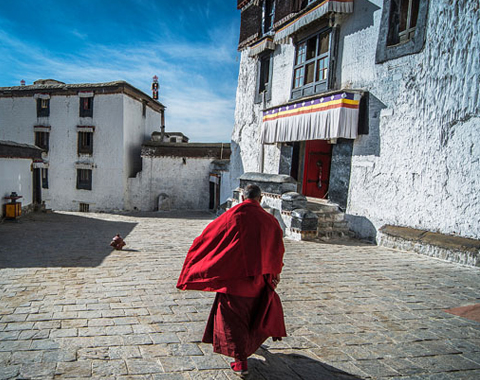
You can wear shorts in some casual settings during warmer months, but long pants are generally more practical. They provide better protection from strong sunlight, wind, dust, and changing temperatures. When visiting monasteries and religious sites, choosing modest clothing that covers your shoulders and knees is more respectful.
Conclusion
Knowing what to wear in Tibet can make your journey much more comfortable. Because the weather varies by season, altitude, and destination, the best approach is to pack versatile clothes that you can layer throughout the day. Remember to bring extra warm clothing for high-altitude areas and prepare for strong sunshine, wind, and rain.
Traveling with us makes planning and preparing for your Tibet trip easier. Our local travel experts can help you plan your ideal itinerary and provide practical advice based on your travel season and destinations. Contact us to start planning your Tibet journey with our local team.
 Email me about your travel idea