 Search
 Pioneer of Tibet Tourism for Overseas Travelers since 1984!

Mount Everest Routes: How to Choose the Best Route from Tibet and Nepal in 2026/2027?


Mount Everest can be explored through several routes from both Tibet and Nepal. For most travelers, the main Mount Everest routes include the North Route from Lhasa, Tibet, the Kathmandu to Everest Base Camp Tibet route, and the South Route from Nepal via Lukla.
For those planning a cross-border Himalayan journey, you can travel from Kathmandu to Everest Base Camp in Tibet via the Zhangmu border, then continue to Shigatse and Lhasa.
If you are interested in climbing Mount Everest, there are also two famous summit routes: the Northeast Ridge Route from Tibet and the Southeast Ridge Route from Nepal. These professional mountaineering routes require advanced skills, technical preparation, and expedition support.
In this guide, we compare the main Mount Everest routes, explain their highlights, difficulty levels, and travel styles, and help you choose the best route based on your time and interests.
Mount Everest Routes at a Glance: Compare the Main Routes from Tibet and Nepal
Mount Everest can be reached and explored through different routes from Tibet and Nepal, each offering a unique travel experience. The best choice depends on your preferred travel style, available time, physical ability, and what you want to experience.
The three main routes for regular travelers are:
- Mount Everest North Route from Lhasa: The most accessible way to visit Everest Base Camp from Lhasa, combining Tibetan culture, high-altitude landscapes, and stunning views of the north face of Everest without trekking.
- Kathmandu to Everest Base Camp Tibet then to Lhasa: A cross-border journey that starts in Nepal and enters Tibet before reaching Everest Base Camp, then continues to Shigatse and Lhasa.
- Mount Everest South Route from Nepal: The classic trekking route in Nepal through Sherpa villages, mountain valleys, and the famous Everest base camp trail.
For professional climbers, Mount Everest has two famous summit routes:
- Northeast Ridge Route from Tibet: Starting from the Tibetan side, this is the main climbing route on the north face.
- Southeast Ridge Route from Nepal: The world-famous route used by most Everest summit expeditions.
Quick Comparison of Mount Everest Routes
| Route | Starting Point | Travel Style | Difficulty | Best For |
|---|---|---|---|---|
| North Route (Tibet) | Lhasa | Overland | Easy | First-time visitors |
| Kathmandu to EBC Tibet | Kathmandu | Cross-border overland trip | Moderate | Travelers combining Nepal and Tibet |
| South Route (Nepal) | Kathmandu | Trekking adventure | Moderate to Challenging | Hikers and adventure seekers |
| Northeast Ridge Route | Tibet | Summit expedition | Extreme | Professional climbers |
| Southeast Ridge Route | Nepal | Summit expedition | Extreme | Professional climbers |
Note: The Tibet routes focus more on dramatic landscapes, cultural exploration, and easier access to EBC, while the Nepal route is famous for trekking and experiencing Sherpa culture.
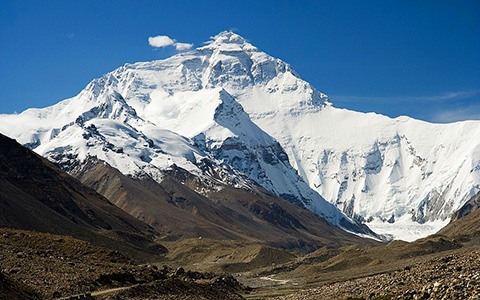
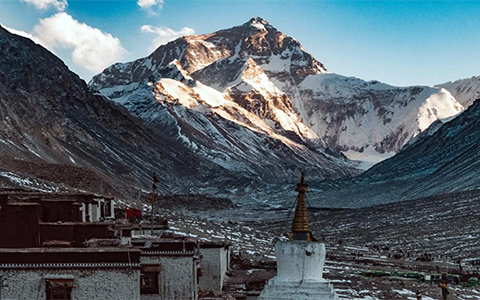
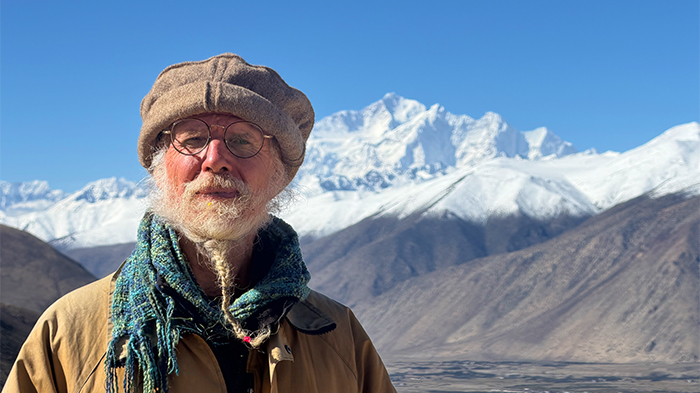 Close-up view of Mount Everest during the north route from Lhasa to Everest Base Camp.


Join our 8 days Lhasa to Everest base camp tour to uncover the essence of Tibet.
Mount Everest North Route from Lhasa, Tibet: The Classic Overland Journey
The Mount Everest North Route from Lhasa, Tibet is one of the most accessible and scenic ways to experience the world's highest peak. The classic Tibet Everest route usually follows: Lhasa → Yamdrok Lake → Gyantse → Shigatse → Tingri → Rongbuk Monastery → Everest Base Camp.
Why Choose the Mount Everest North Route from Lhasa?
The biggest advantage of the Everest base camp tour in Tibet from Lhasa is its combination of easy access, incredible scenery, and close-up Everest views. This route allows you to travel close to Everest by vehicle. and enjoy a direct view of the magnificent north face of Mount Everest.
This route is especially popular because it offers:
- A direct road journey to Everest Base Camp: No long trekking experience is required, making it suitable for many travelers.
- Spectacular north face views: The Tibetan side provides one of the clearest and most dramatic views of Everest.
- Rich Tibetan culture: The journey combines Everest with iconic Tibetan attractions, including Potala Palace, Jokhang Temple, Tashilhunpo Monastery.
- High-altitude Himalayan scenery: You will cross mountain passes like Gawula pass, visit glaciers like Karola Glacier, beautiful lakes like Yamdrok and travel across the vast Qinghai-Tibet Plateau.
Who Should Choose the Mount Everest North Route?
The Tibet North Route is ideal for:
- First-time Everest visitors who want a comfortable way to see the world's highest mountain.
- Travelers without trekking experience who still want to reach Everest Base Camp.
- Photographers looking for clear views of Everest and the surrounding Himalayan peaks.
- Culture lovers who want to combine Everest with Tibet’s monasteries, landscapes, and local traditions.
- Travelers with limited time who want to include Everest in a broader Tibet tours.
Things to Consider Before Choosing This Route
Although the Tibet North Route is more accessible than trekking routes in Nepal, there are still several things to prepare for:
- Gradual Acclimatization: Everest Base Camp sits at around 5,200 meters, so proper acclimatization in Lhasa and Shigatse is important to avoid altitude sickness in Tibet.
- Tibet travel requirements: Foreign travelers need a Tibet Travel Permit and must join an organized tour with a licensed guide.
- Long-distance driving: The journey involves several hours on the road each day, but the scenery makes the travel experience rewarding.
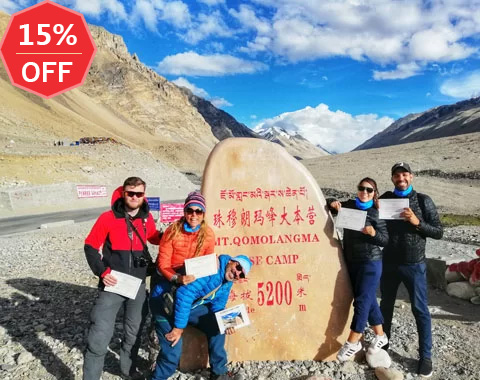
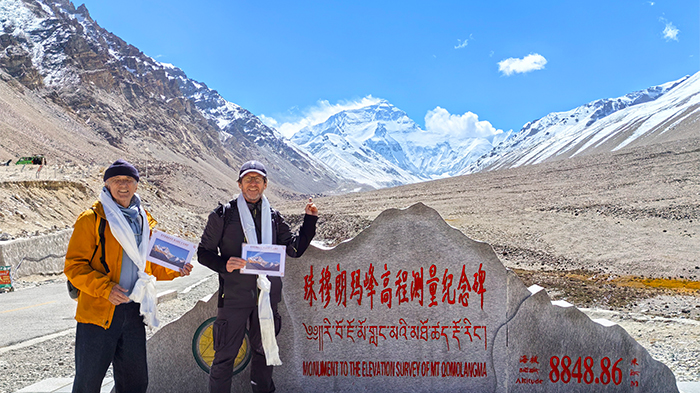 Enjoy a close-up view of Mount Everest at Everest Base Camp in Tibet.
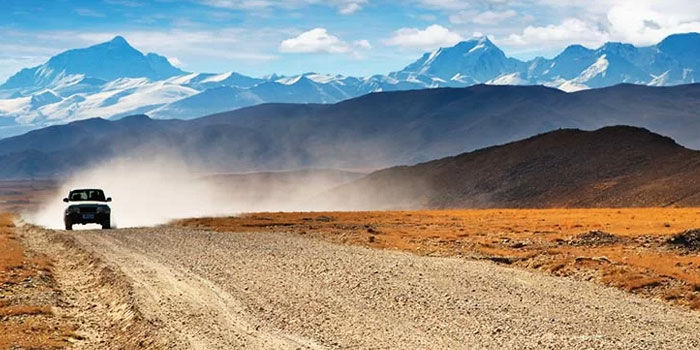
Join our 7 days Lhasa to Kathmandu tour and visit the Everest base camp along the way.
Kathmandu to Everest Base Camp in Tibet: The Scenic Route Crossing Himalayas
The Kathmandu to Everest Base Camp Tibet route offers a unique cross-border Himalayan journey, allowing travelers to start in Nepal and explore Mount Everest from the Tibetan side.
After crossing the Nepal-Tibet border at Zhangmu Port, the journey continues through the Tibetan Plateau to Everest Base Camp, then onward to Shigatse and Lhasa.
This route is a great choice for travelers who want to combine the highlights of Nepal and Tibet tour in one trip while experiencing the spectacular north face of Mount Everest.
Route Details and Travel Highlights
Route: Kathmandu → Zhangmu Border → Tingri → Rongbuk Monastery → Everest Base Camp → Shigatse → Lhasa. Highlights along the journey include:
- Kathmandu: Explore ancient temples, historic landmarks, and the rich cultural heritage of Nepal before entering Tibet.
- Everest Base Camp Tibet: Visit Rongbuk Monastery and enjoy the stunning view of Everest’s north face.
- Shigatse: Continue to Tibet’s cultural highlights in second largest city in Tibet, including Tashilhunpo Monastery, Shigatse Dzong, and Jokhang Temple.
- Lhasa: The trip end with a Lhasa tour, exploring the iconic landmarks in Tibet like the Potala Palace, Jokhang temple, Drepung monastery and Sera monastery monks debate.
Who Should Choose This Route?
The Kathmandu to Everest Base Camp Tibet route is ideal for:
- Travelers who want to combine Nepal and Tibet in one Himalayan journey.
- Visitors who prefer an overland route rather than a long trekking adventure.
- Travelers who want to experience both Nepalese and Tibetan cultures.
- Those looking for a different way to approach Everest after exploring Kathmandu.
Things to Consider Before Choosing This Route
- Border arrangements: International travelers need the Tibet travel permits and Chinese group visa entering Tibet from Nepal.
- High altitude: After entering Tibet, the journey quickly reaches high elevations, so proper acclimatization is necessary.
- The road condition between Kathmandu and the border: Though the road condition in Tibetan side are well paved, the section between Zhangmu border and Kathmandu are bumpy and winding.
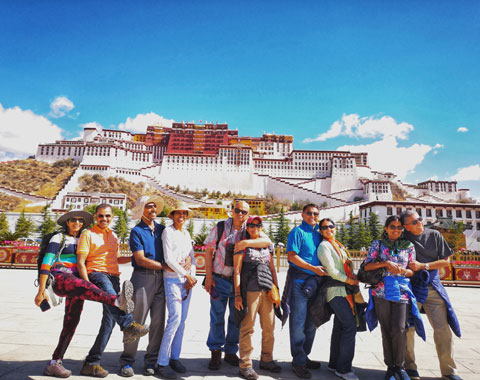
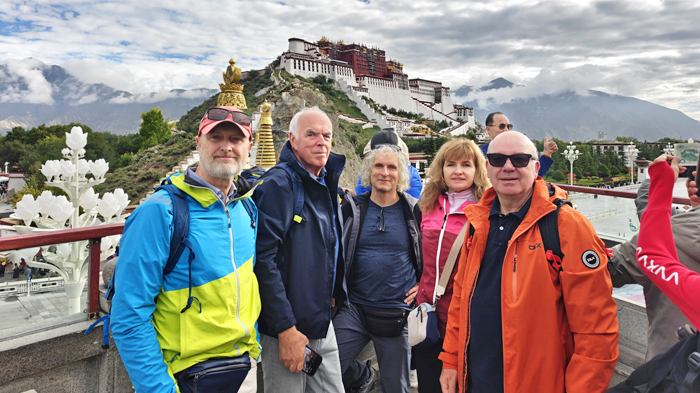 Our guests enjoy scenery of Potala Palace during Kathmandu to Lhasa overland tour.
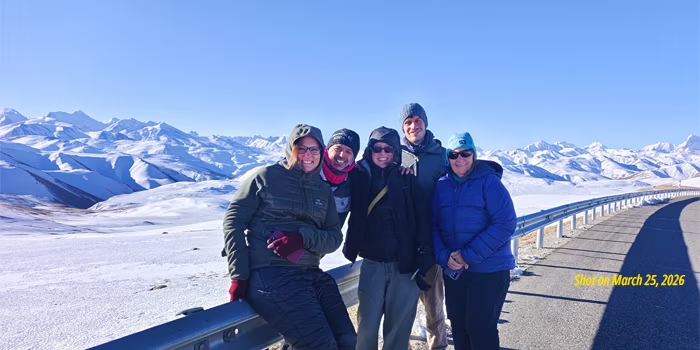
Join our 8 days Kathmandu to Lhasa tour with one night stay and Everest base camp.
Mount Everest South Route from Nepal: The Classic Everest Base Camp Trek
The Mount Everest South Route from Nepal is the world-famous trekking route to Everest Base Camp and the traditional choice for travelers who want a true Himalayan hiking experience.
Unlike the Tibetan side, where you can reach Everest Base Camp by vehicle, the Nepal route takes you deep into the mountains on foot, allowing trekkers to gradually approach Everest while experiencing the unique culture and daily life of the Khumbu region.
Route Details and Trekking Highlights
It follows the Route: Kathmandu → Lukla → Namche Bazaar → Tengboche → Dingboche → Lobuche → Gorak Shep → Everest Base Camp. The highlights along the journey include:
- Lukla: The starting point of the classic Everest trek and home to one of the world’s most famous mountain airstrips.
- Namche Bazaar: A vibrant Sherpa town and an important acclimatization stop surrounded by Himalayan peaks.
- Tengboche Monastery: One of the most important Buddhist monasteries in the Everest region.
- Everest Base Camp and Kala Patthar: Reach the legendary base camp area and enjoy panoramic views of Mount Everest and surrounding peaks.
Who Should Choose This Route?
The Nepal South Route is best for:
- Travelers who want a classic trekking adventure rather than a road journey.
- Hikers who enjoy walking through mountain landscapes and remote villages.
- Adventure seekers looking for a more physically challenging Everest experience.
- Travelers interested in Sherpa culture and Himalayan trekking traditions.
Things to Consider Before Choosing This Route
- Physical challenge: The trek requires many days of walking at high altitude, with long uphill sections and changing weather conditions.
- Longer travel time: Most Everest Base Camp treks from Nepal take around 12 - 16 days, including acclimatization.
- Accommodation: Lodges along the trail are comfortable but more basic compared with hotels in cities.
- Weather conditions: Flights to and from Lukla can be affected by mountain weather, especially outside the main trekking seasons.
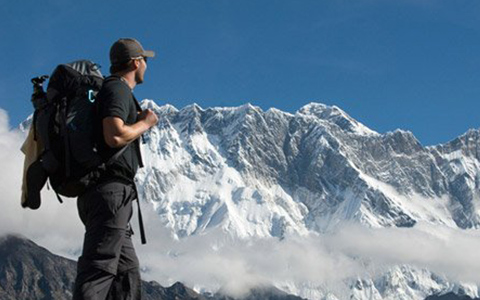
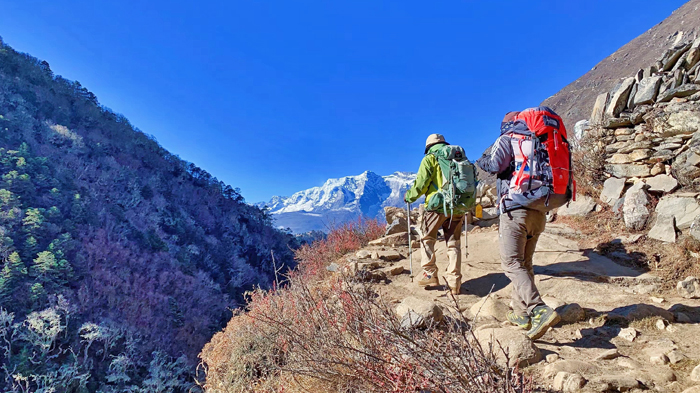 Mount Everest south route from Nepal is the world-famous trekking route.
Mount Everest Climbing Routes: Northeast Ridge vs Southeast Ridge
The Mount Everest climbing routes are professional mountaineering routes that lead to the summit of the world’s highest peak. The two most famous summit routes are the Northeast Ridge Route from Tibet and the Southeast Ridge Route from Nepal.
Mount Everest Northeast Ridge Route from Tibet
The Northeast Ridge Route begins from the Tibetan side of Mount Everest and is one of the two main routes used for summit expeditions.
Climbers approach the mountain through the Tibet North Base Camp, then ascend through advanced camps before reaching the summit via the northeast ridge.
Key features include:
- Starting from the Tibetan side with road access to the base camp area.
- Famous for its dramatic views of Everest’s north face.
- Generally considered more technically challenging in certain sections, including the Second Step, a steep rock section near the summit.
Mount Everest Southeast Ridge Route from Nepal
The Southeast Ridge Route is the most famous climbing route on Mount Everest and the route used by Sir Edmund Hillary and Tenzing Norgay during the first successful summit in 1953.
The route begins from Nepal’s Everest Base Camp, passing through the Khumbu Icefall, Western Cwm, and the South Col before reaching the summit.
-Click here to see more about the difference between 2 Everest base camps
Key features include:
- Starting from the Nepal side after a long trekking approach.
- Famous for the iconic Khumbu Icefall and Hillary Step.
- Offers the classic Everest climbing experience followed by many international expeditions.
Which Everest Climbing Route Is More Difficult?
Both routes are extremely challenging and require serious preparation. The difficulty depends on weather, climbing conditions, altitude, and individual experience.
The Northeast Ridge Route from Tibet is known for technical sections and harsh high-altitude conditions, while the Southeast Ridge Route from Nepal is famous for the difficult Khumbu Icefall and unpredictable mountain environment.
For ordinary travelers visiting Everest Base Camp, these climbing routes are not the routes you will follow. Instead, most visitors choose the Tibet North Route or Nepal South Route to experience Mount Everest safely without attempting the summit.
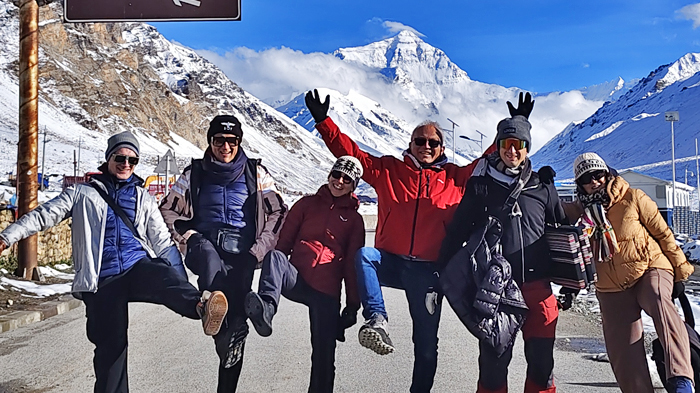 You can go along the road to Tibet Everest Base Camp without hiking or climbing.
How to Choose the Best Mount Everest Route from Tibet and Nepal
There is no single “best” Mount Everest route for everyone. The right choice depends on your travel goals, available time, physical condition, and the type of experience you want. Use the comparison below to find the route that best matches your travel style.
| If You Want To... | Best Route | Why |
|---|---|---|
| Visit Everest Base Camp without long trekking | Mount Everest North Route from Tibet | Reach the base camp area by vehicle and enjoy clear views of Everest’s north face |
| Experience a classic Himalayan trek | Mount Everest South Route from Nepal | Trek through Sherpa villages, mountain valleys, and traditional trails |
| Combine Nepal and Tibet in one trip | Kathmandu to Everest Base Camp Tibet Route | Cross the Himalayas by land and explore both Nepalese and Tibetan cultures |
| Enjoy the best Everest photography | Mount Everest North Route from Tibet | Offers dramatic views of Everest’s north face and easier access for photographers |
| Challenge yourself with a multi-day trek | Mount Everest South Route from Nepal | Requires more walking and provides a deeper trekking experience |
| Travel with limited time | Mount Everest North Route from Tibet | Allows you to visit Everest Base Camp as part of a shorter Tibet itinerary |
Best Mount Everest Route for First-Time Visitors
For most first-time visitors to Mount Everest, the North Route from Tibet is the easiest and most comfortable option. You can combine Everest Base Camp tour with Tibet’s cultural highlights, including Lhasa, Shigatse, and famous monasteries, without needing extensive trekking experience.
Best Mount Everest Route for Trekkers and Adventure Seekers
If walking through the Himalayas is the main purpose of your trip, the South Route from Nepal is the better choice. The journey itself is the highlight, with days spent trekking through mountain landscapes, staying in local lodges, and experiencing Sherpa culture.
Best Mount Everest Route for Photography and Scenic Views
The Tibet North Route is often preferred by photographers because it provides a direct view of Everest’s north face and allows easier access to the base camp area. The journey also includes many scenic locations, such as high mountain passes, glaciers, and the vast Tibetan Plateau, providing a perfect spot for photography tour in Tibet.
Best Mount Everest Route for Combining Nepal and Tibet
For travelers who want to explore both sides of the Himalayas, the Kathmandu to Everest Base Camp Tibet route and then to Lhasa offers a unique cross-border experience. You can begin in Nepal, enter Tibet, visit Everest Base Camp, and continue to Shigatse and Lhasa.
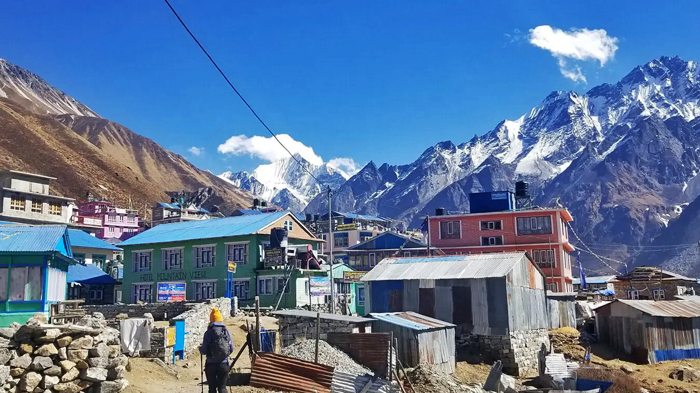 The south route to Everest Base Camp in Nepal pass through Sherpa village.
Join our most popular Tibet small group tour to explore Everest base camp in Tibet.
Best Time to Explore Mount Everest Routes from Tibet and Nepal
The best time to explore Mount Everest routes is generally during spring (April to May) and autumn (September to October/November), when the weather is more stable, skies are clearer, and mountain views are at their best.
However, the ideal season depends on which route you choose. The Tibet North Route is more suitable for scenic overland travel, while the Nepal South Route follows a trekking season with different weather conditions.
-Click here to see more about the best time to explore Mount Everest
Quick Guide: When to Choose Each Everest Route
| Route | Best Time to Visit | Why |
|---|---|---|
| Tibet North Route | April - June, September - October | Clear Everest views, stable weather, and comfortable road conditions |
| Kathmandu to Everest Base Camp Tibet Route | April - June, September - October | Better conditions for border crossing and high-altitude travel |
| Nepal South Route Trek | March - May, September–November | Ideal trekking weather with clear mountain views |
| Everest Summit Routes | April - May | Main climbing season with more favorable summit conditions |
For most travelers, spring and autumn are the best seasons to explore Mount Everest. If you prefer a comfortable journey with close Everest views, the Tibet North Route is an excellent choice. If you want a classic Himalayan trekking experience, the Nepal South Route offers a more challenging adventure.
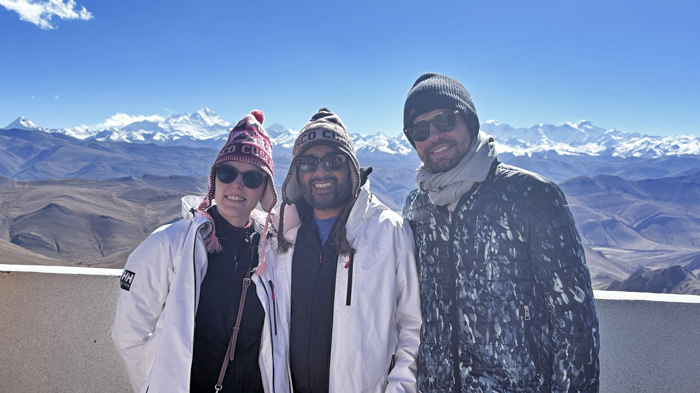 Enjoy the clear view of Himalaya Range and Mount Everest at Gawula Pass in Autumn.
Essential Travel Tips for Choosing Your Mount Everest Route in 2026/2027
Before choosing a Mount Everest route, it is important to consider your travel requirements, physical condition, and preferred travel style. The right preparation will help you enjoy a safer and more comfortable Everest journey.
Check Travel Permits and Entry Requirements
The requirements are different depending on your chosen route:
- Tibet routes: Foreign travelers need a Tibet Travel Permit, frontier pass and must join an organized Tibet tour with a licensed guide.
- Nepal routes: Travelers need the necessary trekking permits and local entry documents, including Sagarmatha National Park Entry Permit and Khumbu Pasang Lhamu Rural Municipality Permit, together with your valid passport, tourism visa.
-
If you plan to travel from Kathmandu to Everest Base Camp in Tibet, additional border and Tibet entry arrangements are required. And also due to the flood in this August, the Gyirong border is closed and now Zhangmu border is open for travelers travel between Tibet and Nepal.
Consider Altitude and Acclimatization
Mount Everest routes all involve high elevations, so altitude preparation is essential.
- The Tibet North Route reaches Everest Base Camp at around 5,200 meters.
- The Nepal South Route requires gradual trekking to adapt to increasing altitude.
Choosing a route that matches your fitness level and allowing enough time for acclimatization can greatly improve your experience.
Choose Between Overland Travel and Trekking
Your preferred travel style is one of the biggest factors when selecting an Everest route:
| Travel Style | Recommended Route | Best For |
|---|---|---|
| Comfortable overland journey | Tibet North Route | Scenic views, culture, and easier access |
| Cross-border Himalayan adventure | Kathmandu to Tibet Everest Route | Combining Nepal and Tibet |
| Multi-day trekking experience | Nepal South Route | Hiking, adventure, and Sherpa culture |
Travel with an Experienced Tour Operator
For Tibet Everest routes, international travelers must join an organized tour. Choosing an experienced local operator like Tibet Vista can help with:
- Tibet Travel Permit arrangements
- Transportation and accommodation
- Well-designed itineraries and altitude management
- Local Tibetan guides and route planning
For a successful Everest journey, the best route is not only about reaching the mountain but also choosing a travel style that matches your expectations and preparation.
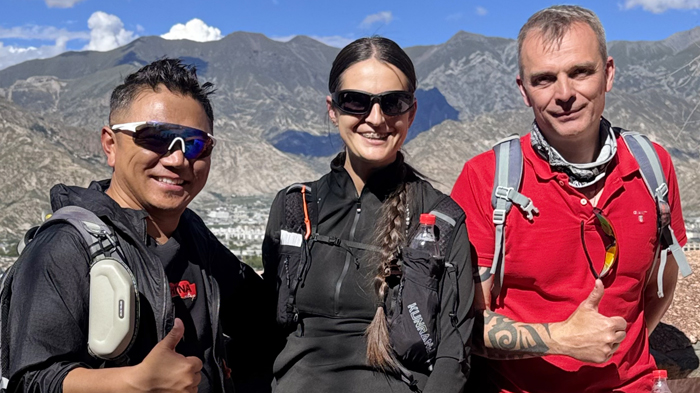 Join our Mount Everest tours in Tibet and Nepal with our local Tibetan tour guide.
FAQs About Mount Everest Routes
Q: What are the main routes to Mount Everest?
The main Mount Everest routes for travelers are the North Route from Tibet, the Kathmandu to Everest Base Camp Tibet route via Zhangmu, and the South Route from Nepal via Lukla. For professional climbers, the two major summit routes are the Northeast Ridge Route from Tibet and the Southeast Ridge Route from Nepal.
Q: Which Mount Everest route is the easiest?
For most travelers, the Mount Everest North Route from Tibet is the easiest way to experience Everest Base Camp. You can reach the base camp area by vehicle instead of completing a long trek, making it more accessible for travelers without hiking experience.
Q: Is the Tibet or Nepal Everest route better?
It depends on your travel goals. The Tibet North Route is better for travelers who want easier access, clear Everest views, and Tibetan cultural experiences. The Nepal South Route is better for those who want a classic Himalayan tour through Sherpa villages and mountain trails.
Q: Which Mount Everest route has the best views?
The Tibet North Route is famous for its spectacular view of Everest’s north face and is especially popular among photographers. The Nepal South Route offers beautiful Himalayan scenery, including valleys, glaciers, and Sherpa villages.
Q: Is the Mount Everest route from Tibet suitable for beginners?
Yes. The Tibet North Route is suitable for many first-time Everest visitors because it does not require long-distance trekking. However, it still reaches high altitudes, so proper acclimatization and preparation are important.
Q: What are the climbing routes on Mount Everest?
The two main climbing routes are the Northeast Ridge Route from Tibet and the Southeast Ridge Route from Nepal. Both are extreme mountaineering routes requiring advanced climbing skills, technical preparation, and professional expedition support.
Conclusion: Choose Your Best Mount Everest Route with Tibet Vista
Mount Everest can be explored through different routes from Tibet and Nepal, and the best choice depends on the type of experience you are looking for. The Tibet North Route offers easier access to Everest Base Camp and stunning views of the north face.
The Nepal South Route provides the classic Himalayan trekking adventure through Sherpa villages and mountain trails. For travelers who want to combine both destinations, the Kathmandu to Everest Base Camp Tibet route via Zhangmu offers a unique cross-border journey.
Whether you prefer a classic Lhasa to Everest adventure, a Nepal-Tibet overland journey, or a private customized experience, we can help you choose the route that best fits your travel goals. Contact us today to plan your Mount Everest journey and discover the world’s highest peak.

 Email me about your travel idea