 Search
 Pioneer of Tibet Tourism for Overseas Travelers since 1984!

Mount Kailash Significance: Its Religious, Cultural, Natural and Tourism Importance


Mount Kailash is Tibet’s most sacred mountain. It draws pilgrims and travelers from around the world because of its deep spiritual and cultural significance.
It is revered by Tibetan Buddhism, Hinduism, Bon, and Jainism. Mount Kailash is also closely connected with centuries of pilgrimage traditions and lies in a region associated with the headwaters of several major Asian river systems.
Understanding these different meanings can help you gain more from your journey to Mount Kailash. In this guide, we’ll explore the religious, cultural, travel, and natural significance of Mount Kailash and what each means for your journey.
The Religious Significance of Mount Kailash: Revered by Four Religions
The Cultural Significance of Mount Kailash: A Living Center of Traditions
The Significance of Mount Kailash for Tibet Travel: A Highlight in Western Tibet
The Natural Significance of Mount Kailash: A Vital Water Source
Frequently Asked Questions about the Significance of Mount Kailash
The Religious Significance of Mount Kailash: Revered by Four Religions
Mount Kailash is revered as a sacred mountain by four religions: Tibetan Buddhism, Hinduism, Bon, and Jainism. Each religion gives Mount Kailash a different spiritual meaning. Together, these beliefs have made it an important place for pilgrimage and spiritual practice.
Mt. Kailash Significance in Tibetan Buddhism: A Sacred Center of the Universe
In Tibetan Buddhism, Mount Kailash is often regarded as an earthly representation of Mount Meru. This mythical mountain is believed to stand at the center of the Buddhist universe. Because of this connection, Mount Kailash holds a central place in Tibetan Buddhist cosmology.
Mount Kailash is also believed to be the sacred dwelling place of Chakrasamvara, an important deity in Tibetan Buddhist traditions. The mountain is also seen as the center of Chakrasamvara’s mandala, a symbolic representation of the deity’s sacred realm. This belief adds another layer to the mountain’s sacred significance in Tibetan Buddhism.
Another important Buddhist story connected with Mount Kailash is the legend of Milarepa, a revered Tibetan Buddhist master. According to the legend, Milarepa competed with the Bon master Naro Bonchung for spiritual authority over Mount Kailash. In the legend, Milarepa eventually reached the summit first through his spiritual powers. For Tibetan Buddhists, this legend strengthens Mount Kailash’s status as a sacred site.
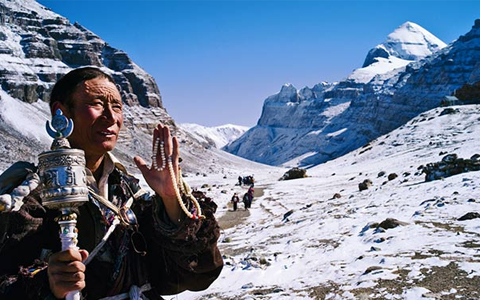
These beliefs draw Tibetan Buddhist pilgrims to Mount Kailash to complete the kora, a pilgrimage that involves walking around a sacred place. Pilgrims circle Mount Kailash clockwise while praying, chanting, or making prostrations. They believe the Kailash kora helps purify negative karma, accumulate merit, and support spiritual transformation.
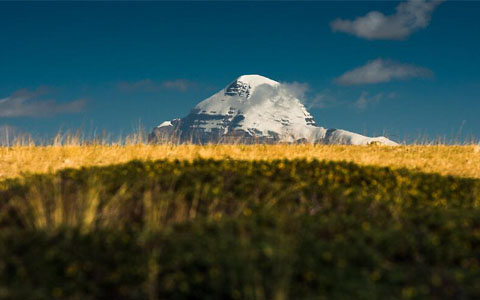
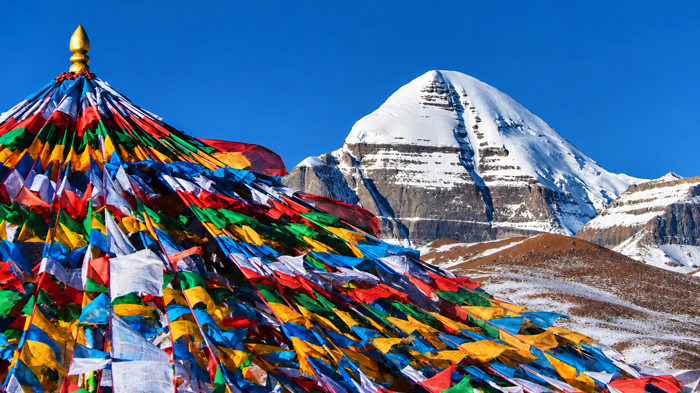 Mount Kailash is revered as a sacred mountain in Tibetan Buddhism.
Mt. Kailash Significance in Hinduism: The Sacred Abode of Lord Shiva
In Hinduism, Mount Kailash is believed to be the sacred home of Lord Shiva, one of Hinduism’s principal deities, and his wife, Goddess Parvati. Hindu tradition describes Shiva as residing on Mount Kailash in deep meditation. This belief gives the mountain deep significance as a symbol of divine presence and spiritual liberation. This is why Mount Kailash is one of the holiest pilgrimage destinations for Hindus.
Mount Kailash is also associated with Mount Meru, the sacred mountain at the center of Hindu cosmology. For Hindu pilgrims, making the journey to Mount Kailash is an act of devotion and a path to spiritual liberation. Many come seeking blessings, spiritual purification, and a deeper connection with their faith.
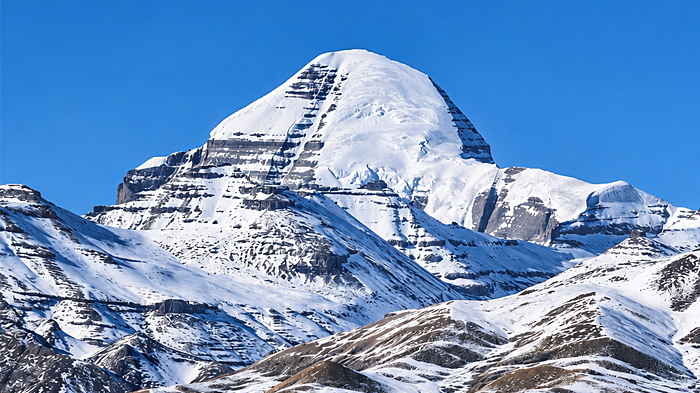 The sacred Mount Kailash.
Mt. Kailash Significance in Bon: A Sacred Center of Bon Tradition
Bon is one of Tibet’s oldest spiritual traditions, and Mount Kailash has been one of its most sacred mountains since ancient times. Before Buddhism became dominant in Tibet, Bon played a major role in Tibetan religious life. According to Bon legends, Mount Kailash is regarded as the birthplace of Bon. Its founder, Tonpa Shenrab, is also believed to have come from the sacred mountain.
The mountain was also closely connected with the ancient Zhang Zhung civilization. During the development of this ancient civilization, Mount Kailash gradually became a central sacred site in the tradition of sacred mountain and lake worship.
In Bon teachings, Mount Kailash is also regarded as a sacred cosmic center. It is believed to connect different realms of the universe. This belief gives Mount Kailash deep spiritual meaning for Bon followers.
Today, the importance of Mount Kailash is still reflected in Bon pilgrimage practices. Bon pilgrims traditionally walk the Kailash kora counterclockwise. This distinctive practice keeps the ancient Bon pilgrimage tradition alive and reflects the mountain’s continuing sacred importance to Bon followers.
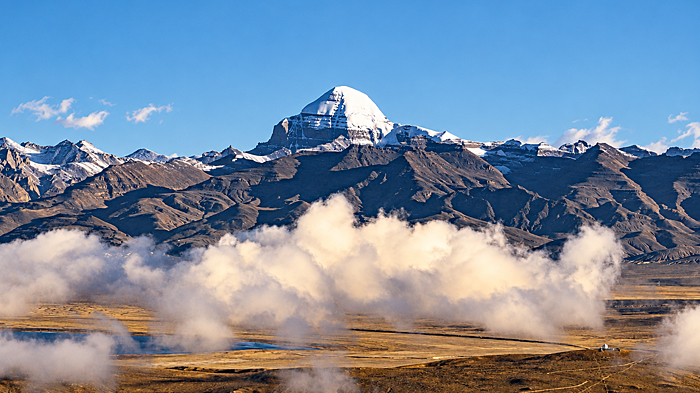 Mount Kailash is an important pilgrimage site for Bon followers.
Mt. Kailash Significance in Jainism: A Sacred Place of Spiritual Liberation
The Mount Kailash region is believed to be Ashtapada, a sacred mountain in some Jain traditions. According to Jain legends, Rishabhadeva, the first great spiritual teacher of Jainism, attained freedom from the cycle of birth and rebirth at Ashtapada. Because of this association, the Kailash region holds special meaning for Jains as a place connected with spiritual liberation, the ultimate goal of the Jain spiritual path.
For Jain followers, the Kailash region is therefore a place of pilgrimage and spiritual reflection. Rishabhadeva’s liberation reflects Jain ideals of self-discipline and freedom from worldly attachments. A pilgrimage to the region therefore offers followers a chance to reflect on these ideals and their own spiritual path.
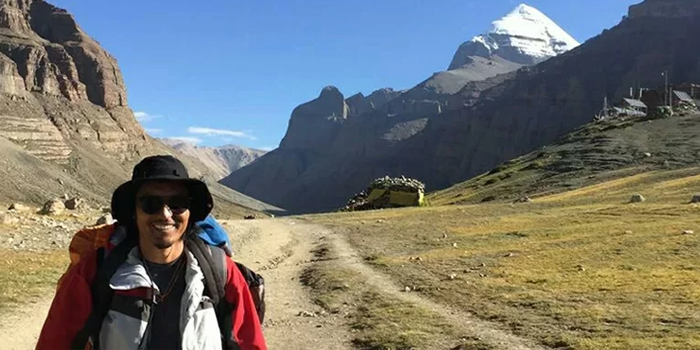

Enjoy a spiritual journey from Lhasa to Mount Kailash and experience its sacred atmosphere.
The Cultural Significance of Mount Kailash: A Living Center of Traditions
Mount Kailash is a living center of Tibetan traditions. Pilgrimage customs and festival celebrations continue to shape its cultural significance today.
Mount Kailash and Lake Manasarovar
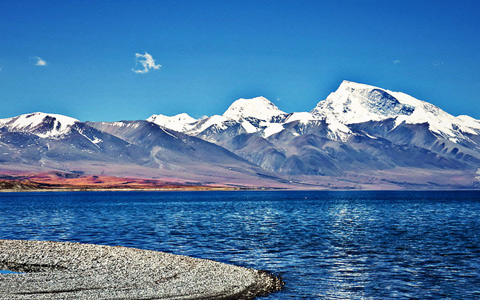
Lake Manasarovar, about 30 km southeast of Mount Kailash, has long shared a close connection with the mountain in local pilgrimage traditions. For centuries, the two have been mentioned together and visited as part of the same sacred journey. This longstanding practice remains an important part of Tibetan culture.
Pilgrims often complete the kora around Mount Kailash and visit Lake Manasarovar, whose waters are associated with spiritual purification. Together, these practices form the long-standing tradition of the Kailash Mansarovar Yatra. This tradition has been passed down through generations and is still practiced today. It shows how Mount Kailash continues to shape Tibetan pilgrimage culture and keep local traditions alive.
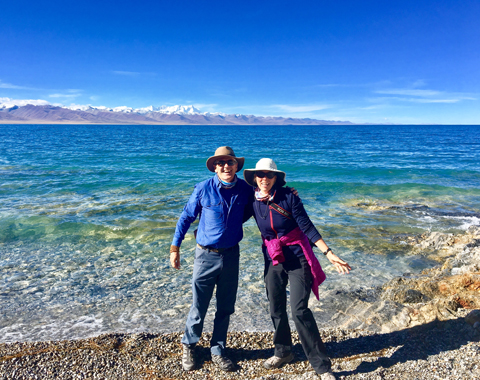
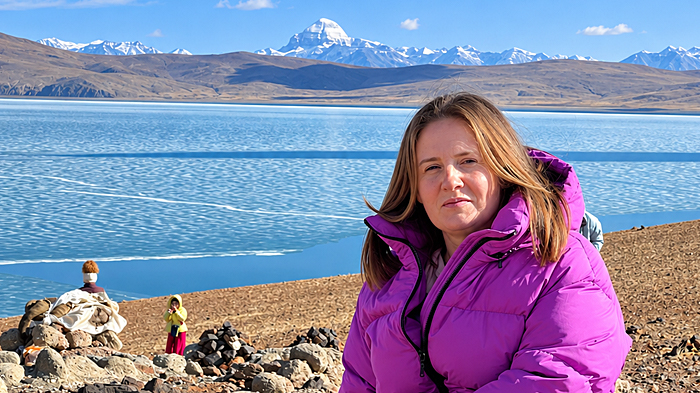 Our guest enjoys the sacred atmosphere of Lake Manasarovar and Mount Kailash.
Mount Kailash During Saga Dawa Festival
Saga Dawa Festival is one of the most important festivals in Tibet. It commemorates the birth, enlightenment, and nirvana of Shakyamuni Buddha. During the festival, Mount Kailash becomes a vibrant center of pilgrimage and Tibetan traditions. Large numbers of pilgrims gather at Mount Kailash to accumulate merit through good deeds, such as walking the kora, giving alms, and releasing animals.
For travelers, the Saga Dawa Festival offers a special opportunity to see Tibetan pilgrimage traditions come alive at Mount Kailash. You can see local pilgrims walk the kora, pray, make prostrations, turn prayer wheels, and gather at Mount Kailash. These living traditions show how Mount Kailash continues to play an important role in preserving Tibetan pilgrimage culture.
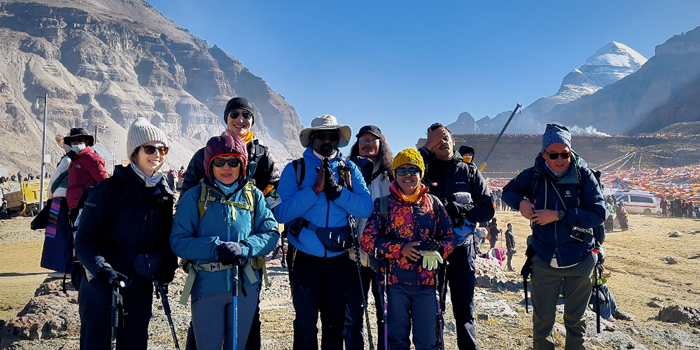
Enjoy an in-depth spiritual journey and explore Mount Kailash and Lake Manasarovar.
The Significance of Mount Kailash for Tibet Travel: A Highlight in Western Tibet
Mount Kailash offers a very different experience from a typical mountain destination. It remains unclimbed because Mount Kailash is respected as a pilgrimage destination rather than a mountain to climb. Travelers on Mount Kailash tours usually walk the kora alongside pilgrims and experience the sacred landscape and living traditions along the route. This distinctive experience makes Mount Kailash one of the most iconic destinations in western Tibet.
Its appeal to pilgrims and travelers also makes Mount Kailash important to the tourism economy of western Tibet. Every year, it attracts visitors from around the world, creating demand for hotels, restaurants, guides, porters, and yak and horse services. This tourism activity creates jobs and generates income for local communities, making Mount Kailash an important source of tourism income in the region.
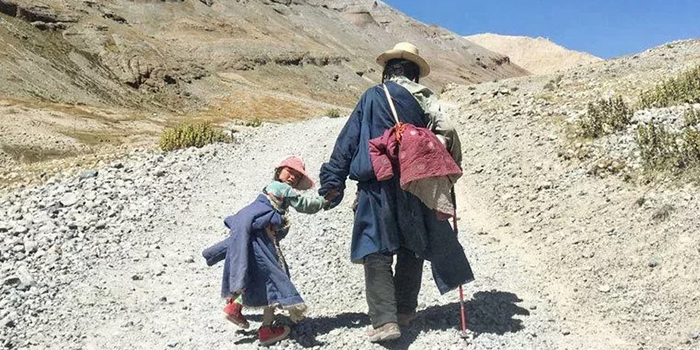
Experience a spiritual adventure to Mount Kailash on your journey from Lhasa to Kathmandu.
The Natural Significance of Mount Kailash: A Vital Water Source
Mount Kailash lies near the headwaters of four major Asian river systems: the Indus, Sutlej, Brahmaputra, and Karnali. From the Tibetan Plateau, these river systems extend far beyond Tibet and provide important water resources across large parts of Asia.
The Mount Kailash region is also home to a rich high-altitude ecosystem of mountains, alpine grasslands, wetlands, lakes, and river valleys. These habitats support wildlife adapted to the harsh conditions of the Tibetan Plateau. Representative species include snow leopards, Tibetan wild asses, and Himalayan marmots. These species reflect the rich biodiversity of this remote region.
Together, its role as a vital water source and its diverse high-altitude habitats make the Mount Kailash region a valuable natural ecosystem in western Tibet. When visiting the Kailash region, please travel responsibly and avoid disturbing wildlife or damaging the fragile high-altitude environment.
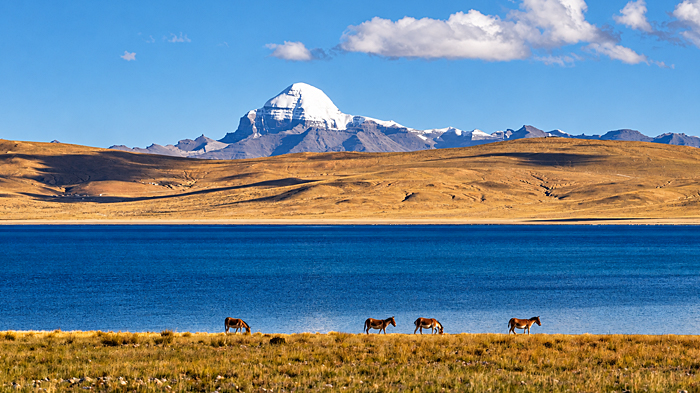 The Mount Kailash region provides important habitats for wildlife.
Frequently Asked Questions about the Significance of Mount Kailash
Q1: What is the religious significance of Mount Kailash?
Mount Kailash is sacred to Tibetan Buddhism, Hinduism, Bon, and Jainism. Each religion gives the mountain its own spiritual meaning.
Tibetan Buddhists regard Kailash as an earthly representation of Mount Meru, the sacred center of the universe in Buddhist cosmology. They also believe it is the dwelling place of the deity Chakrasamvara. Hindus regard it as the sacred home of Lord Shiva and Goddess Parvati.
In Bon, Kailash is regarded as a sacred cosmic center and has deep historical connections with the ancient Zhang Zhung region. In some Jain traditions, the Kailash region is associated with the sacred mountain Ashtapada, where Rishabhadeva, the first great spiritual teacher of Jainism, is believed to have attained spiritual liberation.
Q2: What makes Mount Kailash different from other sacred mountains?
What makes Mount Kailash especially remarkable is that it is revered by four religions and remains a living center of pilgrimage today. Its significance also extends beyond religion to Tibetan culture, travel in western Tibet, and the natural environment.
Q3: Why is Mount Kailash important to Tibetan culture?
Mount Kailash has been a center of Tibetan pilgrimage traditions for centuries. Tibetan pilgrims travel there to walk the sacred kora, pray, and make prostrations, especially during the Saga Dawa Festival. Mount Kailash is also closely connected with nearby Lake Manasarovar in local pilgrimage traditions. These traditions continue to be practiced today, making Mount Kailash an important part of Tibet’s living cultural heritage.
Q4: Why is Mount Kailash not a climbing destination?
Mount Kailash is sacred to several religions, and climbing the peak is considered disrespectful to these beliefs and traditions. Instead of attempting to reach the summit, pilgrims and travelers experience the mountain by following the kora around it. For visitors, respecting this tradition is an important part of experiencing Mount Kailash.
Q5: Can non-religious travelers visit Mount Kailash?
Yes. You do not need to follow any religion to visit Mount Kailash or appreciate its significance. As a traveler, you can enjoy the spectacular mountain scenery, walk the Kailash kora, see pilgrimage traditions firsthand, and learn about the different beliefs connected with the mountain. While visiting, please respect local customs, religious practices, and the pilgrims you meet along the way.
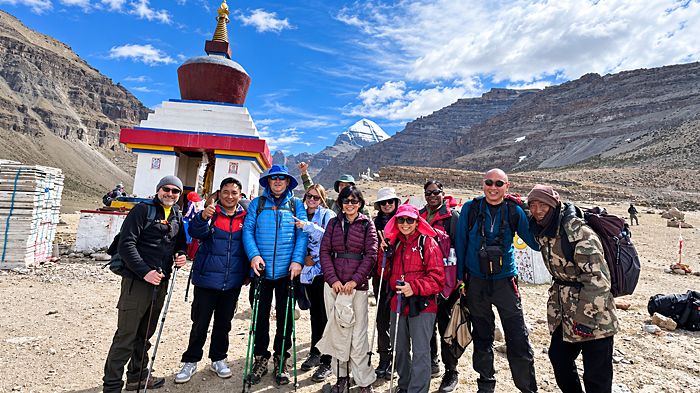 Our guests visit Mount Kailash and experience its spiritual atmosphere.
Conclusion
The significance of Mount Kailash extends across religion, local culture, Tibet travel, and the natural environment. It is revered by four religions and has been a center of pilgrimage for centuries. Its sacred traditions and remarkable natural setting make Mount Kailash one of Tibet’s most extraordinary destinations.
Come to Tibet and experience Mount Kailash on a journey through western Tibet. Walk the sacred kora, discover living pilgrimage traditions, and take in the remarkable landscapes of the Kailash region. Contact us to plan your Mount Kailash journey and make the most of your time in western Tibet.

 Email me about your travel idea