 Search

 Pioneer of Tibet Tourism for Overseas Travelers since 1984!

Shangri-La Tibet: The Ultimate Guide to Shangri-La Towns & Villages


Shangri-La lies in Diqing Tibetan Autonomous Prefecture in northwestern Yunnan Province. Once an important trade hub along the Ancient Tea Horse Road, Shangri-La is home to a vibrant Kham Tibetan community with a rich cultural heritage.
In Shangri-La City, you can wander through historic Dukezong Ancient Town, while the hidden Tibetan villages around the city offer you a deeper glimpse into intriguing local life, traditional architecture, and Buddhist traditions in the highlands.
In this travel guide, we’ll walk you through where the picturesque Shangri-La Tibet is, what makes this region so fascinating, and the otherworldly towns and villages worth visiting, so you can plan your journey with ease and confidence.
Where Is Shangri-La Tibet Located? The Location Map and How to Get There?
What Makes Shangri-La So Special? Kham Tibetan Culture, Ancient Trade Route & Alpine Landscapes
4 Best Shangri-La Old Towns & Villages to Visit: From Dukezong to Hidden Tibetan Villages
How Many Days in Shangri-La Tibet? The Most Recommended Tour Itinerary
What Is the Best Time to Visit Shangri-La Tibet? Sept to Oct and May to June
More FAQs about Visiting Shangri-La Tibet
Conclusion: Plan Your Visit to Shangri-La Tibet with Us Today!
Where Is Shangri-La Tibet Located? The Location Map and How to Get There?
Shangri-La, officially known as Shangri-La City, is the prefectural capital of Diqing Tibetan Autonomous Prefecture in the mountainous northwest of Yunnan Province, China.
Nestled on the southeastern edge of the Tibetan Plateau, Shangri-La sits at the crossroads of Yunnan, Sichuan, and Tibet, giving the area a unique blend of dramatic highland scenery and rich Tibetan culture.
To the south of Shangri-La lie Lijiang and Dali, two popular Yunnan destinations famous for their charming ancient towns, scenic valleys, and lower-altitude landscapes.
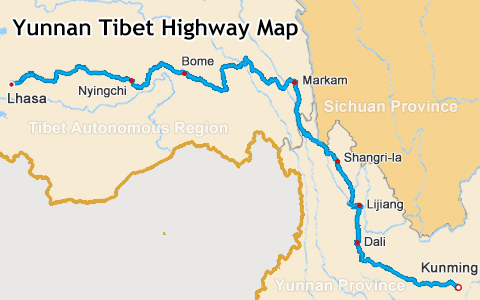
While traveling north from Shangri-La, the scenery gradually becomes higher and more dramatic as you head toward the lofty Meili Snow Mountain in Deqin County. Continue farther north along the Yunnan-Tibet Highway, and you’ll eventually enter the Tibet Autonomous Region and keep traveling from Chamdo and Nyingchi to Lhasa.
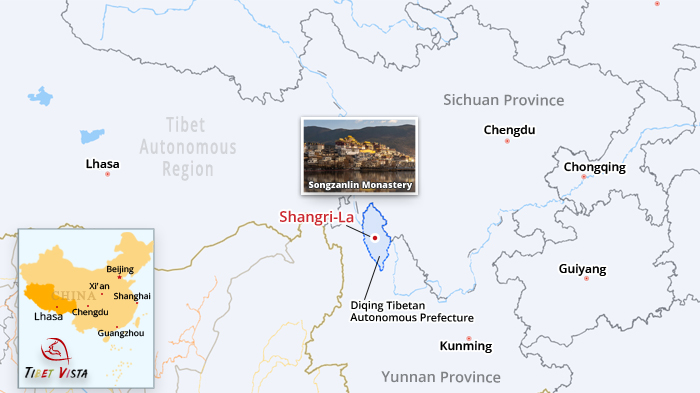 Map of Shangri-La in Diqing, Yunnan, bordering Sichuan and Tibet.
How to Get to Shangri-La, Yunnan?
You can reach Shangri-La easily by flight, high-speed train, or road. For most international travelers, the high-speed train from Lijiang or Dali offers the best balance of comfort, scenery, and gradual altitude gain, while flying is the fastest option if you are short on time.
| Transport | Typical Route | Travel Time | Best For | Local Tips |
|---|---|---|---|---|
| By Air (Fastest) | Fly directly to Diqing Shangri-La Airport from Chengdu, Chongqing, Guangzhou, or Kunming. | Approx. 50 mins to 3 hrs, based on departure city | Travelers short on time | The airport is only 5.2 km from Shangri-La City, about an 11-minute drive. |
| By High-Speed Train (budget-friendly, quick) | Take the high-speed train from Lijiang, Dali, or Kunming. | Approx. 1h24min to 5 hrs, based on departure city | Travelers who want to enjoy comfort and scenic views | Comfortable and scenic, with convenient connections from Kunming, Dali, and Lijiang. |
| By Road (convenient) | Lijiang to Shangri-La | Around 2 hrs via expressway | Families & travelers wanting flexibility | Direct and convenient, with flexible departure times. |
| Classic Yunnan to Tibet Overland Journey | Kunming - Dali - Lijiang - Shangri-La - Deqin - Yanjing - Markam - Zogang - Ranwu - Nyingchi - Lhasa | Around 2,293 km, and it takes around 12 to 15 days, based on departure city. | Adventure seekers & road-trip lovers with enough time | Most culturally diverse road to Tibet from Yunnan, with Shangri-La as a key stop along the way. |
 Fly from Chengdu, Chongqing, Guangzhou and Kunming to Diqing Shangri-La Airport.
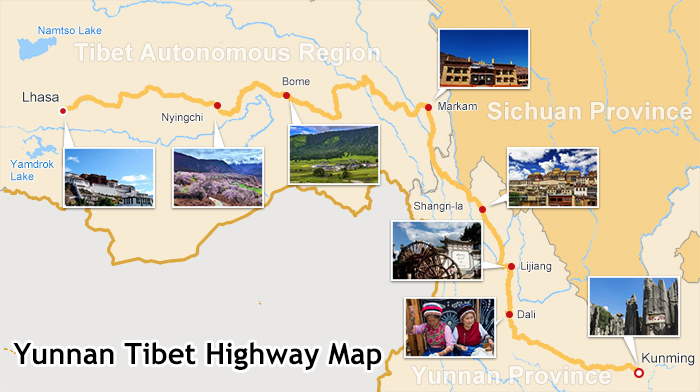 Travel overland from Kunming, Dali, Lijiang to Shangri-La and further to Lhasa on Yunnan-Tibet Highway.


Journey overland along the ancient Tea Horse Road from Shangri-La to Lhasa.
What Makes Shangri-La So Special? Kham Tibetan Culture, Ancient Trade Route & Alpine Landscapes
What makes Shangri-La truly special is how vibrant Kham Tibetan culture, centuries of Tea Horse Road history, and breathtaking alpine landscapes all come together in one remarkable place.
Experience the Living Culture of Kham Tibet
Shangri-La is traditionally part of the Kham Tibetan cultural region, which stretches across parts of eastern Tibet, western Sichuan, southern Qinghai, and northwestern Yunnan. Tibetan culture remains deeply woven into everyday life in and around Shangri-La.
As you stroll through Shangri-La City and the surrounding areas, you’ll see traditional Tibetan-style houses, colorful prayer flags fluttering above villages, Buddhist monasteries overlooking the valleys, and local Tibetans spinning prayer wheels, a tradition passed down through generations.
One of the best places to experience this spiritual heritage is Songzanlin Monastery, the largest Gelug monastery in Yunnan. Set against the mountains, this more than 300-year-old monastery complex is home to hundreds of monks.
If you visit during morning prayers, you may hear the deep sound of Tibetan horns echoing through the monastery. Standing in the courtyard and taking it all in, you can almost feel time slow down.
Besides, beyond Shangri-La City, hidden villages such as Bala, Niru, Nixi, and Yubeng offer you an even closer look at local Tibetan life, from traditional farming and pottery handicrafts to religious customs and village festivals.
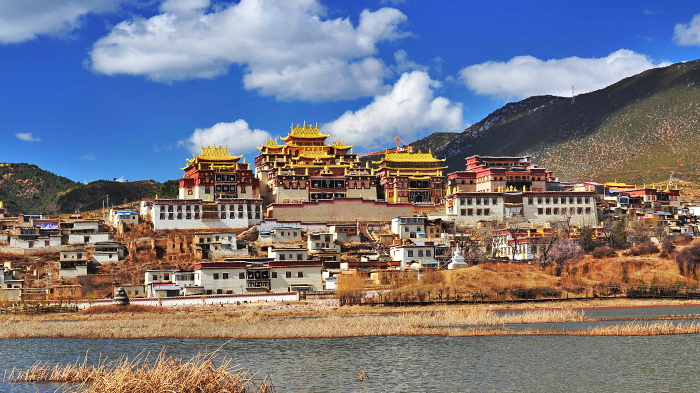 Songzanlin Monastery, Yunnan’s largest Gelug Tibetan Buddhist monastery, in Shangri-La.
Explore Shangri-La’s Ancient Tea Horse Road Heritage
Shangri-La was once an important stop along the Ancient Tea Horse Road, a historic trade network connecting Yunnan with Tibet and the Himalayas. For centuries, horse caravans carried tea, salt, herbs, wool, and other goods through these mountains.
Today, you can still feel this history while wandering through the cobbled lanes of Dukezong Ancient Town, where old caravan routes, Tibetan architecture, and local traditions remain alive. In the evening, you may join locals in Sifang Street for a lively Guozhuang circle dance and experience the cultural spirit of this historic town.
Beyond trade, the Ancient Tea Horse Road also turned Shangri-La into a cultural crossroads where Tibetan, Naxi, Bai, Han, and Lisu communities shared traditions and stories.
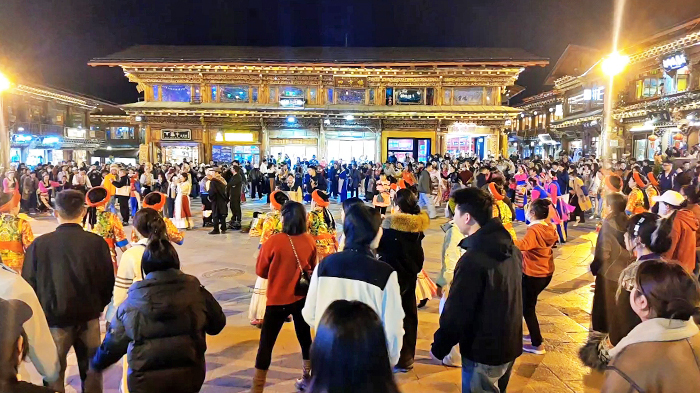 Guozhuang dancing lights up the night in Dukezong Ancient Town in Shangri-La.
Step Into the Alpine World That Evokes James Hilton’s Lost Horizon
In fact, before 2001, Shangri-La was originally known as Zhongdian County. With its snow-capped mountains, deep valleys, peaceful Tibetan villages, and diverse ethnic cultures, the area closely resembles the fictional paradise of Shangri-La described in James Hilton’s 1933 novel Lost Horizon.
In 2001, Zhongdian County was officially renamed Shangri-La County, eventually becoming the Shangri-La City we know today.
Around Shangri-La, you can explore alpine lakes, wildflower meadows, deep gorges, forests, grasslands, and traditional Tibetan villages. Travel farther north toward Deqin, and the landscape becomes even more dramatic, with the magnificent Meili Snow Mountain rising above the valleys.
Places such as Pudacuo National Park, Napa Lake, Balagezong, Niru Village, and Yubeng Village each reveal a different side of this beautiful highland region.
So, to many travelers, visiting Shangri-La isn't just about discovering an otherworldly place that seems straight out of a novel. It's about experiencing a sense of peace that stays with you long after you return home from Shangri-La.
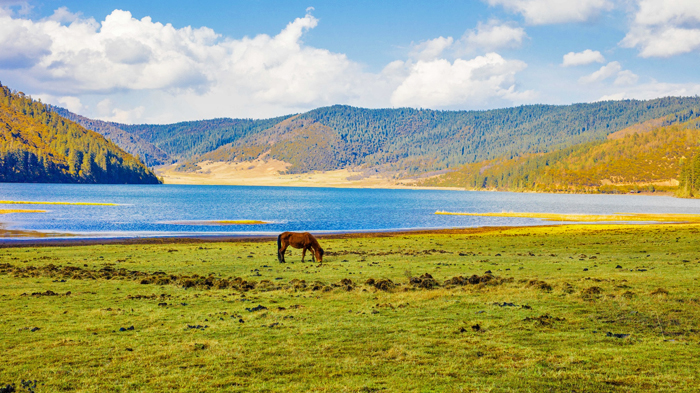 Enjoy the vast green grasslands and grazing horses beside serene Napa Lake in Shangri-La.
4 Best Shangri-La Old Towns & Villages to Visit: From Dukezong to Hidden Tibetan Villages
| Place | Best Known For | Top Experience | Time Needed | Best For |
|---|---|---|---|---|
| Dukezong Ancient Town | Over 1,300 years of history and a key stop along the Ancient Tea Horse Road | Walk the cobbled lanes, see Tibetan architecture, visit Guishan Park and the giant prayer wheel, join evening Guozhuang dancing. | Half day to 1 day, located right in Shangri-La City | First-time visitors, families, culture lovers, photographers |
| Bala Village | Centuries-old Tibetan mountain village surrounded by Balagezong's dramatic scenery | Explore traditional Tibetan houses, experience local village culture, and enjoy canyon, mountain, and forest scenery | 1 full day, located north of Shangri-La City, 2h26min’s drive) | Culture lovers, photographers, nature lovers, light outdoor explorers |
| Niru Village | Remote Tibetan village and pristine trekking landscapes | Hike or ride horses through forests, alpine meadows, valleys, and pastures; experience traditional village life | 1 to 3 days, located southwest of Shangri-La City, 3hrs’ drive | Hikers, nature lovers, photographers, adventurous travelers |
| Nixi Village | Traditional Tibetan black pottery | Visit local pottery workshops, watch artisans at work, try pottery making, and shop for handmade pottery. | Half day, located north of Shangri-La City, 1 hr’s drive | Craft lovers, families, cultural travelers, hands-on experience seekers |
Beyond the iconic Songzanlin Monastery, Shangri-La’s historic old town and hidden Tibetan villages offer you some of the best opportunities to experience authentic local life, culture, and traditions.
Based on my years of experience as a local Tibetan guide, here are 4 of the best places to explore.
1. Dukezong Ancient Town: The Most Famous Tibetan Town in Shangri-La
Dukezong Ancient Town is the historic heart of Shangri-La City and the easiest place for first-time visitors to experience Tibetan architecture, Tea Horse Road history, local food, and everyday culture in one place.
With a history of more than 1,300 years, Dukezong was once an important stop on the Ancient Tea Horse Road, where caravans traveling between Yunnan and Tibetan regions exchanged tea, horses, salt, medicinal herbs, and other goods.
Today, the best way to experience Dukezong is on foot. Wander through its old lanes, browse local handicrafts, and stop for a cup of Tibetan sweet tea. Then walk up to Guishan Park, where you can join locals in spinning the massive 21-meter golden prayer wheel and enjoy panoramic views over Dukezong Ancient Town.
If you stay until evening, head to the central square, where locals often gather for Guozhuang, a traditional Tibetan circle dance. Don’t be shy! You’re more than welcome to join in and follow the locals!
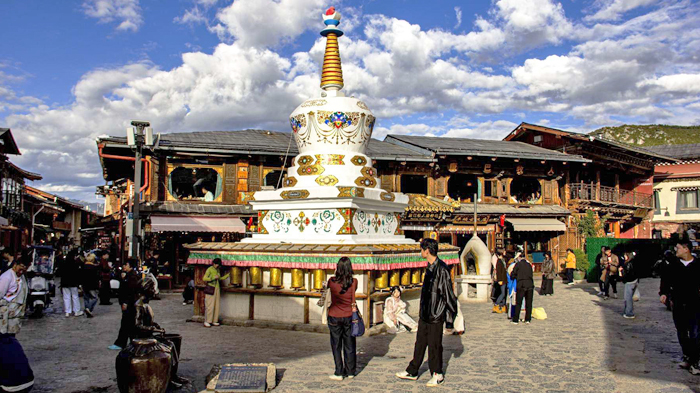 Discover the timeless Tibetan charm of Dukezong Ancient Town in Shangri-La.
2. Bala Village: A Centuries-Old Tibetan Settlement in Balagezong
Bala Village is a centuries-old Tibetan settlement inside Balagezong Scenic Area, about 2.5 hours northwest from Shangri-La City. It is best for travelers who want to combine traditional Tibetan village culture with some of the Shangri-La's most dramatic canyon scenery.
As you walk through Bala Village, you’ll see distinctive Tibetan fortress-style houses built with thick earthen walls. Prayer flags flutter from the rooftops, while mani stones, incense offerings, and the sounds of yak bells and prayers offer glimpses into traditional Tibetan village life.
The villagers have also preserved their Tibetan traditions and a distinctive local dialect with deep roots in Khampa Tibetan culture.
What makes Bala especially worth visiting is the combination of centuries-old Tibetan culture and spectacular canyon scenery. It’s a great place to slow down and experience a quieter, more traditional side of Shangri-La.
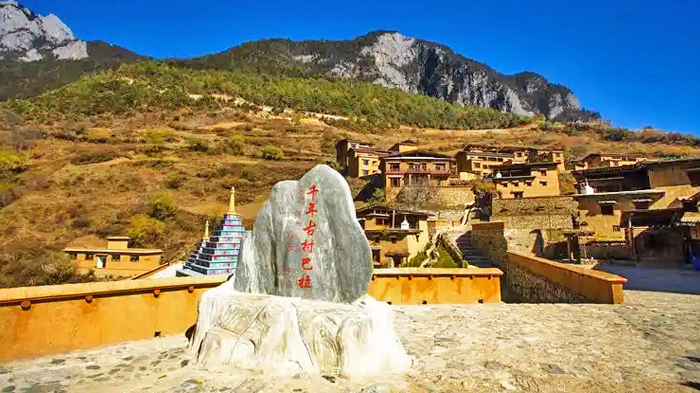 Explore traditional Tibetan houses nestled deep in the dramatic gorges of Bala Village.
3. Niru Village: A Hidden & Pristine Tibetan Village Perfect for Trekking
Niru Village is one of the best choices around Shangri-La for travelers seeking a remote Tibetan village, pristine forests, alpine meadows, and rewarding hiking trails.
About a 3-hour drive from Shangri-La City, this peaceful mountain village sits at around 2,700 meters and is home to generations of Khampa Tibetans who still maintain a traditional farming and herding lifestyle.
Unlike the more developed attractions around Shangri-La, Niru remains wonderfully quiet and authentic. With forests covering over 90% of the area, you’ll find pristine valleys, alpine meadows, traditional Tibetan houses, and a slower way of life surrounded by nature.
Walking through the village, you can discover old Tibetan customs, local handicrafts, and a deep respect for the mountains and forests that has been passed down for generations.
For outdoor lovers, Niru is a paradise for trekking. The highlights include the Seven-Color Waterfall, where crystal-clear cascades flow through moss-covered ancient forests, and Nambao Pasture, a breathtaking alpine meadow above 4,000 meters dotted with lakes, wildflowers, and grazing animals.
Because Niru is remote and some trails have little or no phone signal, longer hikes are best arranged with our local guides. Overall, Niru Village is a perfect choice for hikers, nature lovers, photographers, and travelers seeking an authentic off-the-beaten-path Tibetan experience.
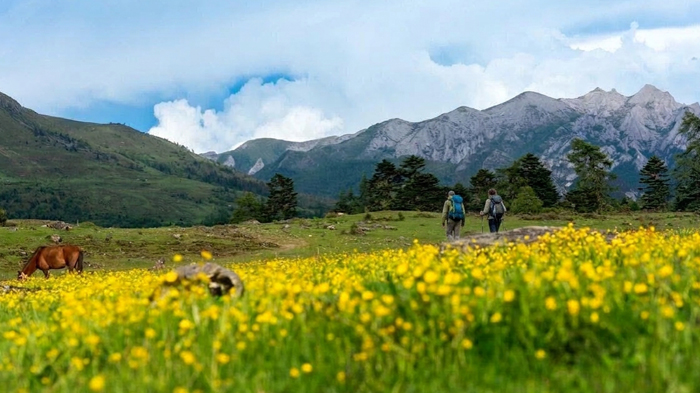 Trek through Niru Village, a hidden Tibetan paradise of forests, meadows, and mountain trails.
4. Nixi Village: Discover Traditional Tibetan Black Pottery
Nixi Village, about 30 km from Shangri-La City, is best known for its traditional Tibetan black pottery and is one of the easiest nearby villages for travelers seeking a hands-on cultural experience.
The village is home to a traditional pottery technique that has been passed down for more than 2,000 years and is now recognized as a national intangible cultural heritage.
Local artisans still make black pottery entirely by hand, using special local clay and traditional firing methods. Without modern pottery wheels or chemical glazes, each piece is shaped, polished, and fired through a slow process that gives it its unique dark shine.
During your visit, you can step into a local workshop, watch skilled craftsmen create pottery, or even try making your own small piece as a memorable souvenir.
Beyond pottery, Nixi is also a great place to experience authentic Khampa Tibetan village life. Wander among traditional Tibetan houses, enjoy the warmth of the family fireplace culture, and taste the famous Nixi clay-pot chicken, a local specialty cooked slowly in traditional black pottery. Highly recommended for both cultural explorers and foodies.
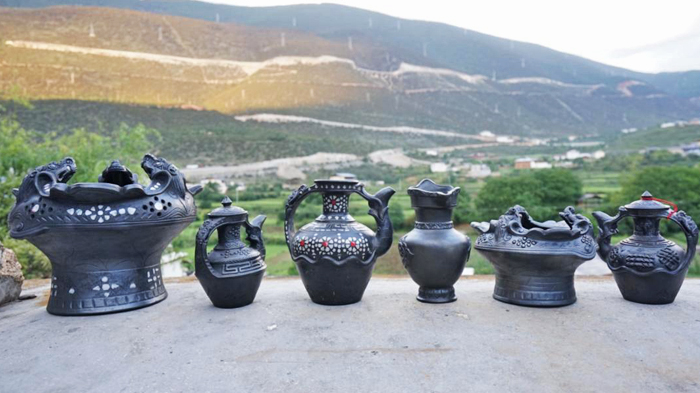 Discover the unique Nixi black pottery tradition in Nixi Village near Shangri-La City.
How Many Days in Shangri-La Tibet? The Most Recommended Tour Itinerary
The Classic 3-Day Shangri-La Itinerary for First-Time Visitors
When planning a Shangri-La tour, three days is enough for first-time visitors to see Shangri-La's essential highlights at a comfortable pace, including Dukezong, Songzanlin Monastery, Napa Lake, and Pudacuo National Park.
A classic Shangri-La itinerary usually begins in Dukezong Ancient Town, the heart of Shangri-La City, where you can wander along the old cobblestone streets once traveled by horse caravans on the Ancient Tea Horse Road, turn the world’s largest gilded prayer wheel for blessings, and join locals in a traditional Guozhuang circle dance in the evening.
The next day, you can explore Songzanlin Monastery, often known as the “Little Potala Palace of Yunnan,” before venturing into the surrounding countryside. And later, you can admire the peaceful beauty of Napa Lake, take a scenic walk through Pudacuo National Park, savor authentic Tibetan cuisine, and experience the slower, more peaceful rhythm of highland life.
| Day | Route & Altitude | Travel Experience | Main Highlights | Overnight |
|---|---|---|---|---|
| Day 1 | Fly to Diqing Shangri‑La Airport - Dukezong Ancient Town (around 3,300m) | Slow‑paced arrival day to adjust to the high altitude and explore the historic Tibetan town. |
|
Dukezong Ancient Town |
| Day 2 | Dukezong Ancient Town - Songzanlin Monastery - Napa Lake (around 3,200 m) | Visit Shangri‑La’s most famous Tibetan monastery and surrounding highland landscapes |
|
Dukezong Ancient Town |
| Day 3 | Dukezong - Pudacuo National Park and departure (around 3,500 m) | Enjoy peaceful walks through forests, meadows, and crystal‑clear lakes in Shangri‑La. |
|
The tour ends |
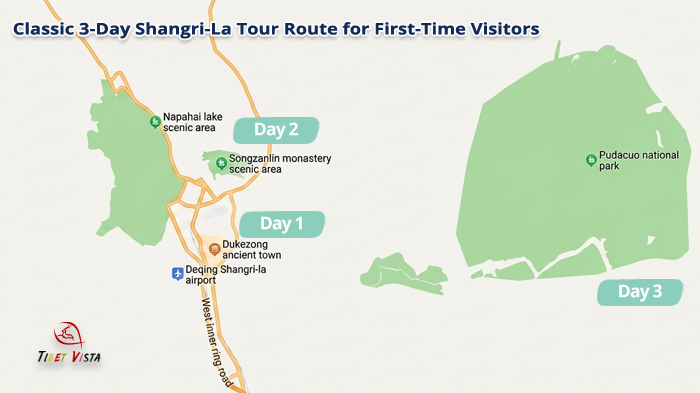 The classic 3-day tour route around Shangri-La City for first-time visitors.
8-Day In-Depth Shangri-La Itinerary: Explore Tibetan Culture, Hidden Villages & Alpine Scenery
If you want to go beyond Shangri-La's famous sights, 7 to 8 days gives you enough time to explore remote villages such as Niru, Nixi and Bala without rushing.
The following 8-day Shangri-La journey is perfect for culture and nature lovers who want to experience authentic Tibetan traditions, peaceful village life, and breathtaking alpine landscapes at a relaxed pace.
Along the way, you will discover Nixi Village and its centuries-old black pottery tradition, hike through the pristine forests and alpine meadows of Niru Village, and visit Bala Village in Balagezong, where ancient Tibetan homes blend beautifully with dramatic canyon landscapes.
| Day | Route & Altitude | Travel Experience | Main Highlights | Overnight |
|---|---|---|---|---|
| Day 1 | Fly to Diqing Shangri‑La Airport - Dukezong Ancient Town (around 3,300m) | Slow arrival day to adjust to the high altitude and enjoy a relaxed evening |
|
Dukezong Ancient Town |
| Day 2 | Dukezong Ancient Town - Songzanlin Monastery - Napa Lake (around 3,200 m) | Visit Shangri‑La’s most famous Tibetan monastery and surrounding highland landscapes |
|
Dukezong Ancient Town |
| Day 3 | Dukezong (3,300m) - Balagezong Scenic Area (4,250 m) | Discover a dramatic Tibetan mountain valley and ancient village with a slower pace. |
|
Balagezong |
| Day 4 | Balagezong - Nixi Village - Dukezong (Around 3,200 m) | Enjoy local crafts and Tibetan village life while returning to Shangri‑La. |
|
Dukezong Ancient Town |
| Day 5 | Dukezong - Niru Village (Around 2,750 m) | Travel deep into a remote Tibetan village surrounded by pristine nature |
|
Niru Village |
| Day 6 | Niru Village – trek to Seven‑Colored Waterfall (Around 2,750 m) | Experience Shangri‑La’s otherworldly landscapes through a rewarding nature walk |
|
Niru Village |
| Day 7 | Niru Village - Shangri‑La City (3,200 m) | Return to town for a full rest day after trekking and enjoy a relaxed evening. |
|
Dukezong Ancient Town |
| Day 8 | Dukezong - Pudacuo National Park, Departure (Around 3,500 m) | Finish the journey with Shangri‑La’s pristine alpine scenery before departure |
|
The tour ends. |
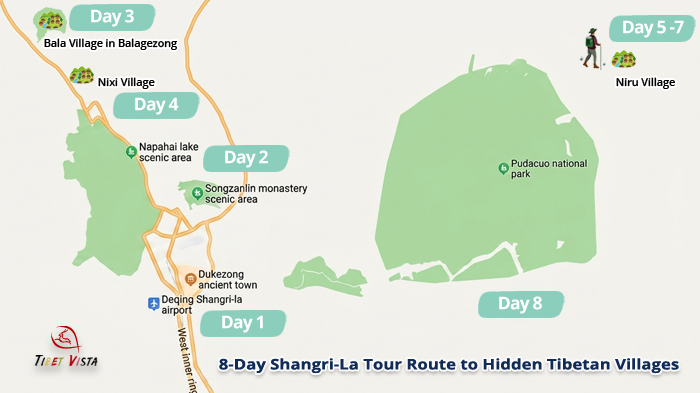 8-Day Shangri-La tour takes you go beyond Shangri-La's landmarks to discover hidden villages and alpine landscapes.
What Is the Best Time to Visit Shangri-La Tibet? Sept to Oct and May to June
Shangri-La is a year-round destination, and each season reveals a different side of its beauty.
For first-time travelers, the best times to visit Shangri-La are September to October for clear skies, autumn colors, and excellent hiking conditions, and May to June for Rhododendrons, fresh green landscapes, and fewer crowds.
| Season | Best For | Our Recommendation |
|---|---|---|
| September to October (Autumn) | Autumn colors, photography, village visits, hiking | Best season for photography, hiking, and outdoor adventures |
| May to June (Spring) | Rhododendrons, nature, fewer crowds | Best for wildflowers, hiking, photography, and fresh alpine scenery with fewer crowds. |
| July to August (Summer) | Green landscapes, cool summer escape | Good if you don't mind rain and crowds |
| November to April (Winter) | Snow mountains, peace, winter scenery | Low-season charm with fewer crowds and lower costs, but limited hikes and seasonal closures. |
September to October: The Best Time for Golden Autumn Scenery
September to October (Autumn) is our top recommendation for visiting Shangri-La. After the summer rains, the sky becomes clearer, the air is fresh, and the visibility is excellent. The mountains and forests gradually turn into shades of gold, orange, and deep green.
The weather is also very comfortable, with daytime temperatures around 10 to 22°C. Roads and hiking trails are in great condition, making it a great time to visit hidden Tibetan villages such as Nixi Village and Bala Village at a relaxed pace.
Top highlights in the Autumn Season in Shangri-La:
- Niru Village, where forests glow with autumn colors along scenic hiking trails.
- Pudacuo National Park, where golden forests surround peaceful alpine lakes.
- Napa Lake, where blue skies, mountain views, and colorful grasslands create a classic Shangri-La autumn scene.
Insider Tips: Autumn is Shangri-La’s peak travel season, especially during China’s National Day holiday in early October. If you plan to visit during this period, please book your hotels, guided service, and transportation with us well in advance.
| Season | Avg Temp | Sunny Days | Wind | Rain | Snow |
|---|---|---|---|---|---|
| Autumn (Sep to Oct) | 10°C to 22°C | 18 to 25 days | 8 to 12 km/h | 50 to 100 mm | 0 to 5 mm |
May to June: The Best Time for Alpine Flowers and Fewer Crowds
If you prefer a quieter trip, May to June (spring) is another perfect time to visit Shangri-La, offering blooming flowers, fresh alpine scenery, and fewer crowds.
During this period, Shangri-La’s highland landscape bursts into color with blooming alpine Rhododendrons. Around Pudacuo National Park and Niru Village, hillsides and valleys are covered with pink, white, and purple flowers.
Strolling through these peaceful landscapes, you can enjoy fresh mountain air, colorful wildflowers, and the beauty of nature awakening after winter.
The weather is mild, with pleasant daytime temperatures, although mornings and evenings can still feel chilly. Occasional rain showers may occur as the rainy season approaches, but they often bring beautiful mountain clouds, rainbows, and misty scenery.
| Season | Avg Temp | Sunny Days | Wind | Rain | Snow |
|---|---|---|---|---|---|
| Spring (May to June) | 5°C to 18°C | 20 to 25 days | 10 to 15 km/h | 50 to 130 mm | 0 to 5 mm |
July to August: The Greenest Season for Alpine Meadows and a Cool Summer Escape
July and August (summer) are the months when Shangri-La becomes its greenest and most vibrant.
The alpine grasslands turn into vast green carpets, wildflowers decorate the valleys, and Napa Lake reaches its fullest and most beautiful stage. If you are looking to escape the summer heat, Shangri-La offers refreshing mountain weather, with temperatures usually around 15 to 26°C.
However, summer is also the rainy season and the busiest travel period because of school holidays in China. Afternoon showers are common, and mountain areas may experience temporary fog or reduced visibility. Some hiking routes, especially around Niru Village and Balagezong, can become muddy after rain.
So, if you do not mind changing weather and want to enjoy cool temperatures and lush green scenery, summer can still be a rewarding time to visit.
| Season | Avg Temp | Sunny Days | Wind | Rain | Snow |
|---|---|---|---|---|---|
| Summer (July to August) | 15°C to 26°C | 10 to 18 days | 8 to 12 km/h | 120 to 260 mm | 0 mm |
November to April: A Peaceful Winter Wonderland with Fewer Crowds
November to April (Winter) brings a quieter and more peaceful Shangri-La. With fewer visitors, lower prices, and clear skies, it is a good season for travelers who want solitude and snowy landscapes.
You may also have a higher chance to witness Meili Snow Mountain’s golden sunrise glow when the first rays of sunrise turn the snow-covered peaks golden, and spot wintering black-necked cranes around Napa Lake.
However, temperatures can drop below freezing, and some mountain roads or hiking routes may become less accessible. For first-time visitors wanting to experience the full range of Shangri-La’s villages, lakes, and outdoor scenery, winter is not the best choice.
| Season | Avg Temp | Sunny Days | Wind | Rain | Snow |
|---|---|---|---|---|---|
| Winter (Nov to April) | -8°C to 10°C | 20 to 28 days | 8 to 15 km/h | 10 to 60 mm | 5 to 30 mm |
More FAQs about Visiting Shangri-La Tibet
Q1: Is Shangri-La Tibetan culture the same as Tibet?
Not exactly. Shangri-La is part of the traditional Kham Tibetan cultural region, so it shares many Tibetan religious and cultural traditions with Tibet, but it also has its own distinctive local character.
You'll find Tibetan monasteries, prayer flags, traditional villages, Tibetan architecture, butter tea, and Buddhist customs throughout the region. At the same time, centuries of interaction among Tibetan, Naxi, Bai, Lisu, and Han communities have given Shangri-La a distinctive cultural identity.
Compared with Lhasa and central Tibet, Shangri-La offers a different expression of Tibetan culture rather than an identical experience.
Q2: Can foreigners visit Shangri-La?
Yes. Foreign travelers can visit Shangri-La freely, and a Tibet Travel Permit is not required for visiting Shangri-La in Yunnan.
Unlike the Tibet Autonomous Region, where overseas visitors need a Tibet Travel Permit and must travel through a pre-booked and guided Tibet tour with a local Tibet travel agency like us, Shangri-La in Yunnan is much easier to explore independently.
Getting to Shangri-La is also convenient. You can fly directly to Diqing Shangri-La Airport, take the scenic high-speed train from Lijiang, or travel overland from popular Yunnan destinations such as Dali and Lijiang.
Q3: Which are the must-visit places in Shangri-La?
For first-time visitors, we recommend combining Shangri-La’s famous landmarks with a few hidden Tibetan villages for a deeper cultural experience.
- Dukezong Ancient Town: Start your journey here and stroll through its 1,300-year-old stone-paved lanes, explore traditional Tibetan architecture, turn the giant prayer wheel at Guishan Park, and join the lively evening Guozhuang circle dance with locals.
- Songzanlin Monastery: Often called the “Little Potala Palace,” this is the largest Tibetan Buddhist monastery in Yunnan. Its grand prayer halls, golden rooftops, Buddhist artworks, and mountain setting make it one of the best places to experience Tibetan Buddhism outside Tibet.
- Napa Lake: A stunning highland wetland surrounded by grasslands, mountains, and Tibetan villages. In summer and autumn, you can see yaks and horses grazing across the meadows, while winter brings migratory birds to the lake.
- Pudacuo National Park: One of Shangri-La’s most famous natural attractions, featuring crystal-clear alpine lakes, ancient forests, wetlands, and colorful wildflower meadows. It is ideal for travelers who enjoy gentle walks and peaceful mountain scenery.
- Bala Village: Hidden in Balagezong, this traditional Tibetan village is known for its stone houses, centuries-old culture, and dramatic canyon landscapes.
- Niru Village: One of the most pristine Tibetan villages near Shangri-La, perfect for travelers seeking hiking adventures, untouched forests, alpine meadows, and quiet countryside experiences.
- Nixi Village: A charming Tibetan village famous for its centuries-old Nixi black pottery tradition, where travelers can discover local craftsmanship and authentic village life.
Q4: How many days are needed for visiting Shangri-La, Tibet?
For most first-time travelers, 3 to 5 days is ideal for Shangri-La. Three days covers the classic highlights, while 4 to 5 days allows time for nearby villages and a more relaxed pace.
- 2 to 3 days: Suitable for a quick first visit. You can see Dukezong Ancient Town, Songzanlin Monastery, Napa Lake, and other nearby iconic attractions.
- 4 to 5 days: The best choice for most travelers. You can explore hidden Tibetan villages such as Nixi or Niru and enjoy the scenery without rushing.
- 7 days or more: Perfect for travelers who want deeper cultural experiences, trekking, or a combination with Meili Snow Mountain and Yubeng Village.
Since Shangri-La sits at around 3,200 meters above sea level, we recommend avoiding an overly packed schedule. A slower pace allows your body to adjust to the altitude while enjoying the peaceful rhythm of the Tibetan Plateau.
Q5: Is Shangri-La suitable for first-time high-altitude travelers?
Yes, Shangri-La can be a good introduction to high-altitude travel, but at around 3,200 m, some visitors may still experience altitude-related discomfort. Plan a slow first day and avoid strenuous exercise immediately after arrival.
For a smoother experience:
- Spend your first day taking it easy and allowing your body to adjust.
- Drink water more often and avoid alcohol on arrival.
- Walk slowly, especially when visiting monasteries or climbing steps.
- Avoid arranging intense hiking immediately after arrival.
In fact, many travelers use Shangri-La as a gentle introduction to high-altitude areas before continuing to destinations such as Lhasa, Everest Base Camp, and beyond.
Q6: How do I get to Shangri-La in Yunnan?
Shangri-La is easier to reach than many travelers expect.
By Air: The fastest option is flying to Diqing Shangri-La Airport, which is only about 6 km from Dukezong Ancient Town. Direct flights are available from major Chinese cities such as Kunming, Chengdu, Chongqing, and Guangzhou.
By High-Speed Train: The newly connected railway makes Shangri-La easy to reach from Lijiang (about 1.5 hours), Dali (about 3.5hours ), and Kunming (around 5 hours). The journey itself is scenic, passing through mountain valleys and dramatic landscapes.
By Road: Many travelers combine Shangri-La with a Yunnan journey. The drive from Lijiang to Shangri-La takes around 2 to 3 hours, offering beautiful mountain scenery along the way.
Q7: Can I visit Shangri-La and Tibet on the same trip?
Yes, and it is actually one of the most rewarding combinations for travelers interested in Tibetan culture.
Shangri-La and Tibet offer different but complementary experiences:
- Shangri-La: A gentle introduction to Kham Tibetan culture, traditional villages, alpine forests, lakes, and mountain landscapes.
- Tibet Autonomous Region: The spiritual heartland of Tibetan Buddhism, home to Lhasa, the Potala Palace, Jokhang Temple, Everest Base Camp, and Mount Kailash.
After visiting Shangri-La, you can directly fly from Diqing Shangri-La Airport to Lhasa Gonggar Airport, which takes about 2 hours. Flight schedules vary by season, so please check the latest flight schedule online when planning your trip.
Alternatively, for road trip lovers, another popular route is traveling overland from Shangri-La to Lhasa via Chamdo and Nyingchi in eastern Tibet.
This epic journey covers around 1,700 to 2,000 km and takes about 7 to 10 days, offering a breathtaking transition from Kham Tibetan villages and deep river valleys to the high-altitude landscapes of the Tibetan Plateau.
Conclusion: Plan Your Visit to Shangri-La Tibet with Us Today!
Shangri-La is more than just the paradise imagined in a famous novel. From wandering through the centuries-old lanes of Dukezong Ancient Town to discovering hidden Tibetan villages like Niru, Nixi, and Bala, every stop offers a deeper connection with the unique charm of Kham Tibetan culture.
Whether you are planning to visit Shangri-La in Yunnan or combining it with a journey to Lhasa and beyond in Tibet, as a local Tibet travel agency since 1984, we are here to help you create a seamless and meaningful experience. With experienced Tibetan guides, professional drivers, comfortable accommodations, and personalized support, we take care of the details so you can travel with confidence.
If you have any questions about Shangri-La or Tibet travel, feel free to contact us for free and personalized advice. We look forward to helping you plan an unforgettable journey to the Tibetan world. Tashi Delek!

 Email me about your travel idea