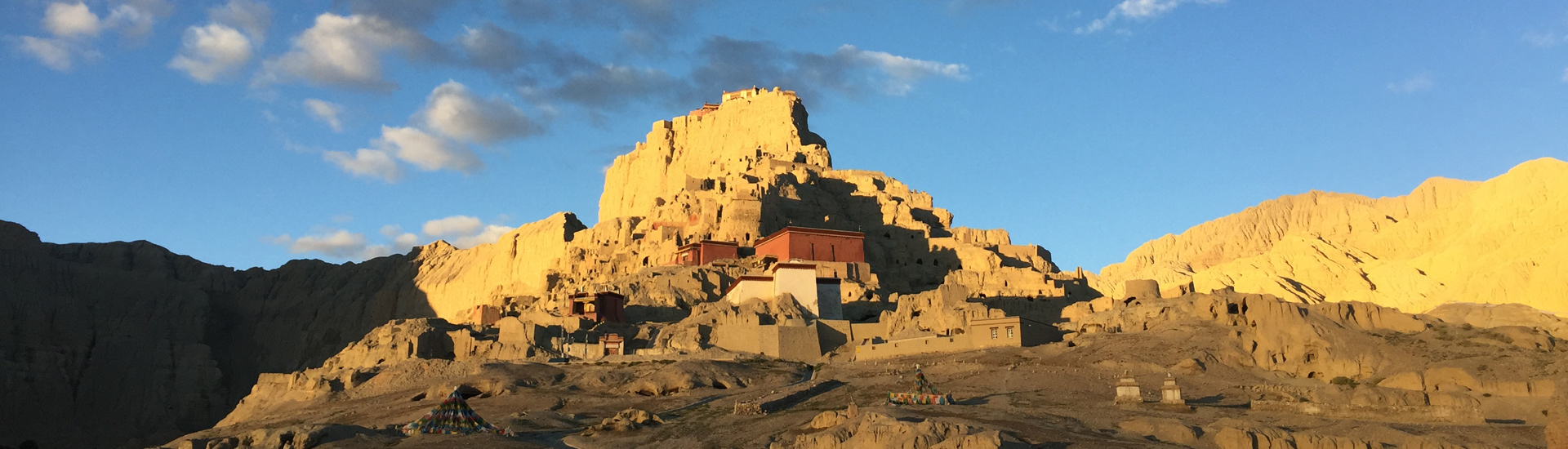
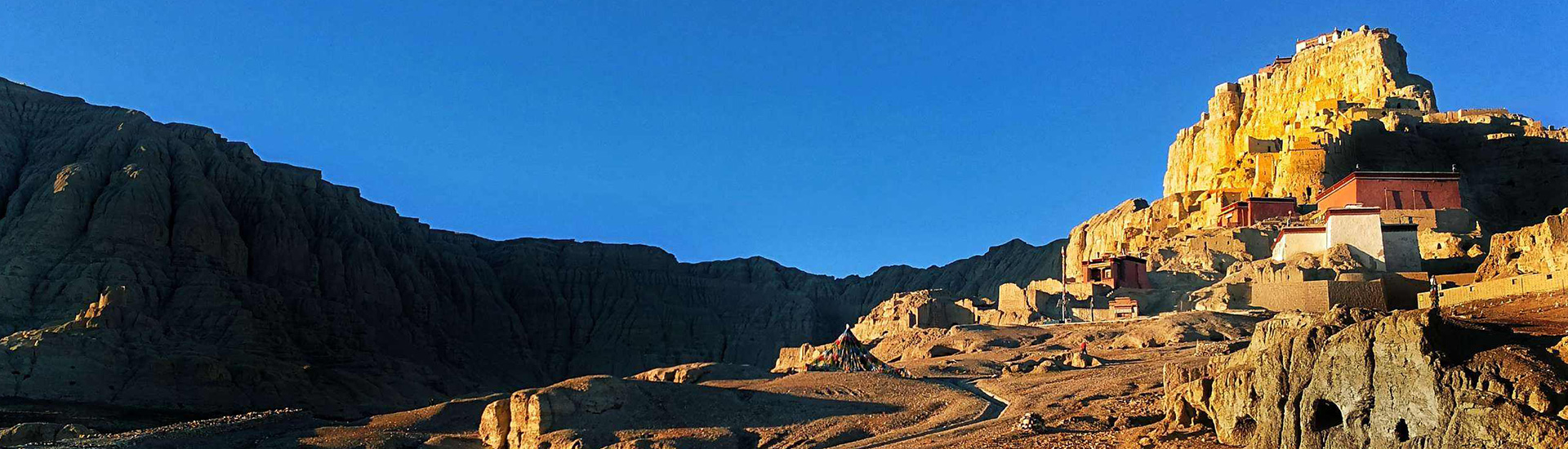
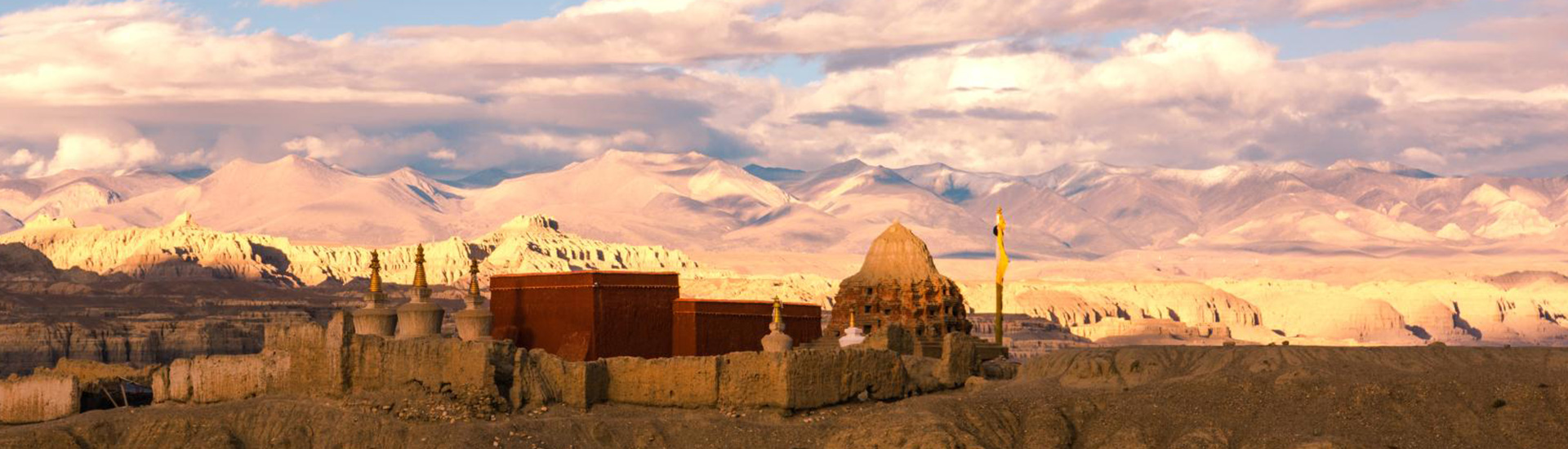
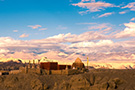
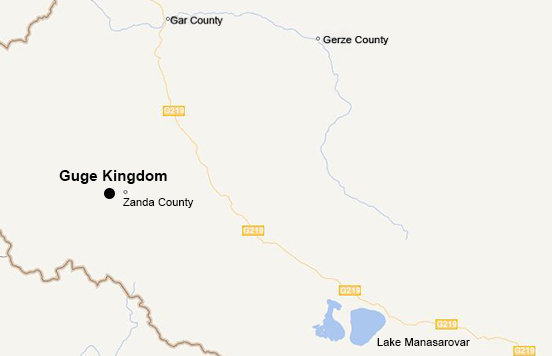
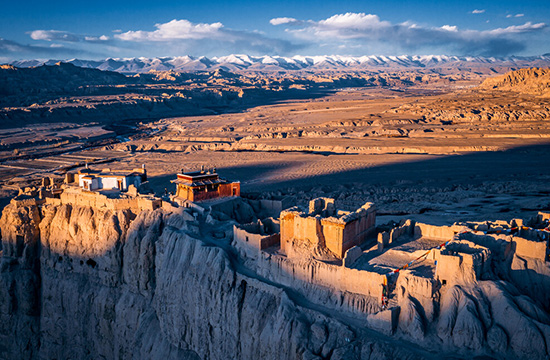
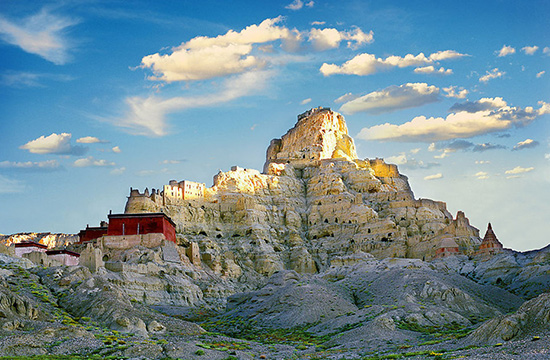
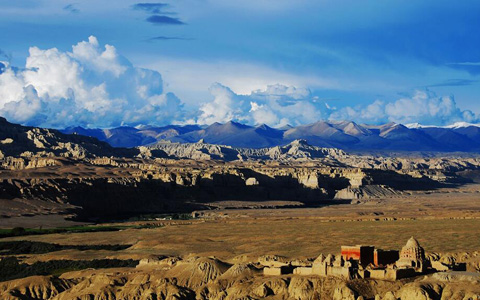
One of the first important cultural relic sites under protection, the grand palace ruins stand on a 300-meter tall yellow earth hill on the banks of the Xiangquang River in the Zaborang District, 18 km away from the Zada County. The Xiangquang River runs northwest from the Lake Manasarovar. Rising abruptly from the river bank, the ruins add much mystery to this area.
The local regime known as Guge Kingdom started in the 10th century by the descendants of the Tobo Kingdom. In the 9th century, when Lang Dharma was assassinated, the Tubo Kingdom fell apart as civil wars surged. Jide Nyimagon, the great-grandson of Lang Dharma, led his followers to Ngari and set up the Guge Kingdom.
The 3 sons of Jide Nyimagon and their descendants later set up 3 regimes: Guge, Ladakh and Burang. The region had a glorious past. At its peak, the regime covered not only the entire Ngari, but also extended to Kashmir and today’s Pakistan.
There are many opinions on how the Guge Kingdom disappeared. A widely acclaimed view says that in 1635, soldiers from the Ladakh Regime finally conquered the Guge Palace and ravaged the place into ruins. Every human being here was hunted down. The last King of Guge and his family members were captured and taken away. Nothing was ever heard of them. The great Guge Kingdom thus bade adieu to the stage of history.
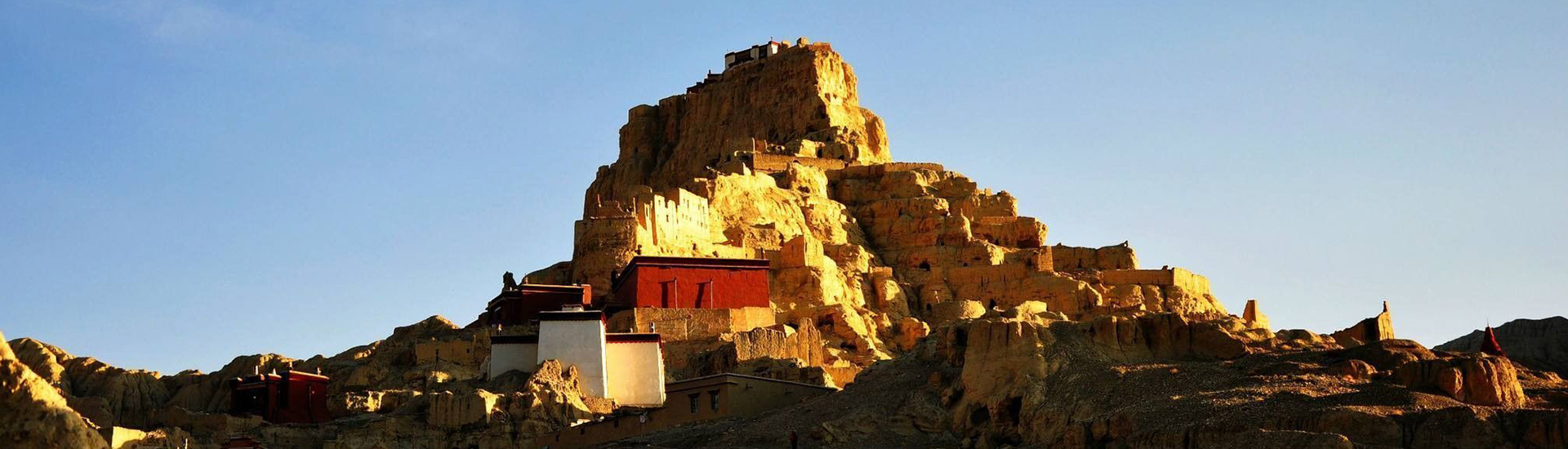
Until today, the grandeur of the Guge Palace still strikes awe in the beholder's heart. The castle-like palace was built along the mountain and commands a strategic point. Inside, there are underground tunnels leading to various directions; outside, the strong and thick walls are invincible.
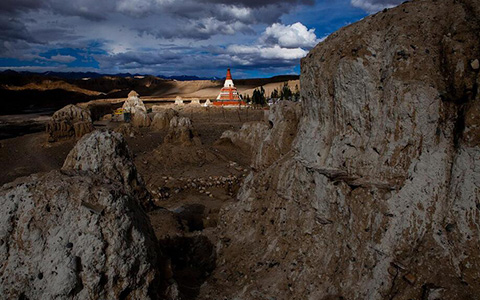
The ruins take up an area of 720,000 square meters, consisting of 445 rooms, 879 caves, 58 pillboxes, 4 secret tunnels and 28 Buddhist pagodas. The hundreds of rooms were piled up one after another till the top of the mountain. This is truly an unique imperial palace. Most of the cave palaces have grand domes and are differentiated for summer and winter functions.

.jpg "Tibetan Local Travel Agency")



0 Comment ON "Ancient Guge Kingdom"
Check All Tibet Travel FAQs Here